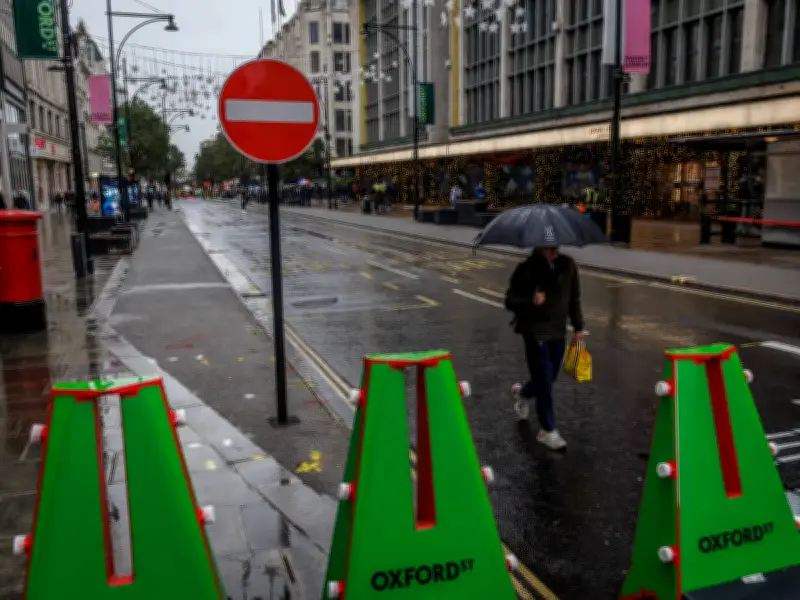
Oxford Street has become fully pedestrianised today, with all traffic banned from the iconic London shopping street as of October 26. The change, which restricts the street to pedestrians only, has divided the nation, with concerns raised over access for the elderly and disabled, while a poll found nearly two thirds of Londoners were in favour of the move.
Traffic ban comes into force
The pedestrianisation, masterminded by the Oxford Street Development Corporation (OSDC) and championed by London mayor Sadiq Khan, aims to boost shopping figures and footfall amid years of decline. The street, home to hundreds of shops, pubs and restaurants and visited by millions every year, has up until today been a key thoroughfare for taxis, buses and bicycles.
Under the new rules, as laid out by TfL, Oxford Street is now traffic-free between Orchard Street and Great Portland Street. Private vehicles, buses, taxis, private hire vehicles, cycles, scooters and pedicabs will not be allowed to enter the traffic-free area. The restriction will operate 24 hours a day, 7 days a week.
Concerns over disabled access
OSDC Chairman Nabeel Khan described the shift as a "transformative change" that in a year or so will leave Londoners asking "Why did it take us so long to do this?" In a statement he claimed: "Generations will look back at this, the same way people look back at Trafalgar Square or Southbank or Victoria Embankment, and say, 'why did it take so long for us to do the obvious thing to do here?'"
However, the move has drawn criticism, with questions raised over how disabled shoppers who relied on their vehicle for access will manage to still use the street. Political commentator and former Lib Dem MP Lembit Opic wrote on X: "London Mayor Sadiq Khan has destroyed access to Oxford Street for the old, disabled & infirm by banning traffic. London is being destroyed by Khan’s virtue-signalling stupidity", while one impacted individual warned at a council meeting back in January: "The proposed pedestrianisation will serious impact on residents particularly the disabled, the old and parents with babies who find it difficult or impossible to use the Tube."
Council and transport groups respond
In response, a Westminster council spokesperson stated that, despite disagreeing with the pedestrianisation, they were working with TfL to introduce "step-free routes, tactile paving, dropped kerbs, safe crossings, access to buses, taxis and toilets, and how disabled people, older residents and parents with buggies could actually get to and move along Oxford Street."
Motorists and cyclists have also expressed their unhappiness with the change. The London Campaign for Cycling have backed the removal of cars, but called on officials to immediately outline "massively needed parallel routes" for cyclists or else see them pushed onto dangerously congested roads. The London Taxi Drivers’ Association also warned that banning cabs from the iconic street could further isolate older and disabled passengers, and see drivers out of pocket.
Delivery and emergency access
Delivery and servicing vehicles will be allowed to enter and exit the traffic-free area of Oxford Street between midnight and 7am. In addition, emergency vehicles (fire, ambulance and police) can enter the traffic-free area at any time, as per My London. TfL stated: "Our priority is to keep London moving safely and reduce delays, not to raise revenue through fines. The revenue from fines is used to cover the cost of enforcement and any surplus is reinvested in making roads safer."