

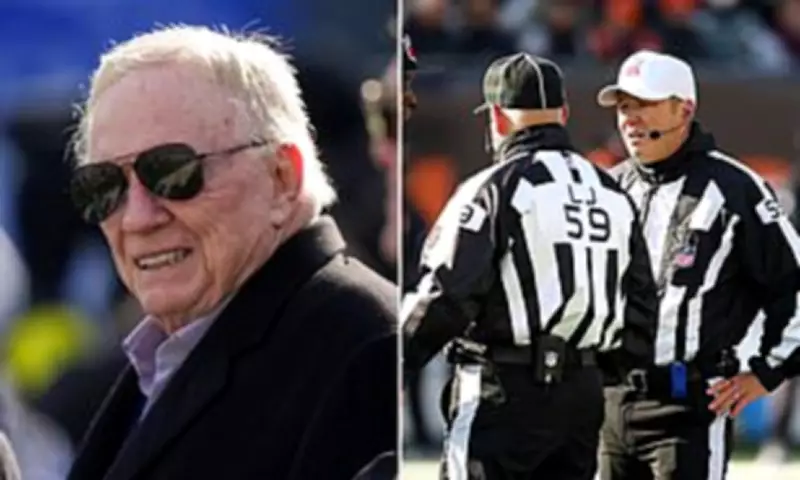
National Football League team owners have formally authorised the immediate commencement of hiring replacement referees for the upcoming 2026 season. This decisive action follows what sources describe as 'alarming' and 'dire' stagnation in contract negotiations with the existing NFL Referees Association.
Contract Negotiations at a Critical Impasse
The league is currently engaged in high-stakes discussions with the NFL Referees Association concerning compensation packages and working conditions for its full-time officials. According to reports from ESPN, the NFL has presented a formal offer that includes an annual salary increase of 6.45% structured within a comprehensive six-year agreement. This proposal comes against the backdrop of officials earning an average annual salary of $385,000 during the 2025 season.
Despite these ongoing talks, negotiations have reportedly reached a complete standstill, with neither side able to bridge significant economic divides. The profound gap in expectations has compelled league management to initiate contingency planning to ensure the 2026 season can proceed without disruption.

Preparing for a Potential Lockout
As league meetings commenced on Sunday at the prestigious Arizona Biltmore, multiple sources revealed to ESPN that the NFL office is actively 'expecting and preparing for a lockout' scenario. The atmosphere surrounding these discussions has grown increasingly tense as the expiration date of the current collective bargaining agreement approaches.
'We are so close to expiration and so far apart on economics, that unless an act of God gets involved...', a confidential league source disclosed to the sports network. This statement underscores the genuine apprehension about who will officiate NFL games when the new season kicks off in September.
Proactive Recruitment of College Officials
In response to this escalating situation, the NFL and its constituent teams are now aggressively compiling extensive lists of qualified college-level officials for potential recruitment. Formal authorisation has been granted to proceed with hiring and onboarding these replacement officials in the coming weeks, with employment scheduled to begin as early as May 1.
Owners are simultaneously expected to approve new replay enhancement protocols in the immediate future, adding another layer of complexity to the preparation process for any incoming officiating personnel.
Concerns About Transition Challenges
However, significant concerns have emerged regarding the capability of college-level officials to adapt to the professional game's heightened speed and complexity within the constrained timeframe. 'To expect people to jump from college to the pros and change in speed in that short of time is destined to be a challenge to succeed,' ESPN's league source cautioned.
The same source emphasised the league's determined approach: 'We're not going to do that. There will be no panic, and we have begun preparations for the expiration. We have to do it. Otherwise, it would be just gross negligence.'
Learning from Past Lockout Experiences
The current proactive stance marks a significant departure from the league's handling of the previous officiating lockout in 2012. During that contentious period, team owners delayed contingency planning until July, a decision that subsequently contributed to operational challenges.
A league source reflected on this historical context, noting that the 2012 lockout demonstrated the critical mistake of waiting until the last possible moment to prepare replacement officials. The current accelerated timeline aims to avoid repeating those errors.
Imminent Deadline and Communication Restrictions
The existing collective bargaining agreement between the NFL and the NFL Referees Association is set to expire definitively on May 31. While negotiations continue behind closed doors, the league has implemented strict communication protocols.
ESPN confirms that a formal memorandum was distributed to all teams last week explicitly prohibiting public commentary on the negotiation status. Despite this directive, news has gradually emerged from the Arizona meetings, revealing deepening concerns about the potential absence of a new agreement and the deteriorating state of discussions with officiating personnel.






