The UK government's devolution drive is set to deliver historic changes, but the benefits are unevenly distributed, leaving many areas without mayors years behind. The English Devolution and Community Empowerment Act, passed earlier this year under Keir Starmer, will replace two-tier local government with unitary councils. The most significant move, however, involves regional mayors, which the government calls "strategic authorities," and a shift described as a "fundamental rewiring of the way our country works, surrendering power that for too long has been held in Westminster and Whitehall."
New Funding Powers for Mayors
By April 2027, regional and metro mayors will be able to keep unspecified quantities of business rates generated in their areas. From the following year, they will retain a share of local income tax receipts, though the exact amounts are yet to be announced. These revenue streams will replace existing Whitehall grants rather than being additional money.
Among established mayors, these changes have sparked visions of greater independence from Westminster, including potential control of schools, GP services, and childcare. There are also predictions of loans being taken out against projected income to fund long-overdue projects, particularly in housing and public transport.

Uneven Progress Across England
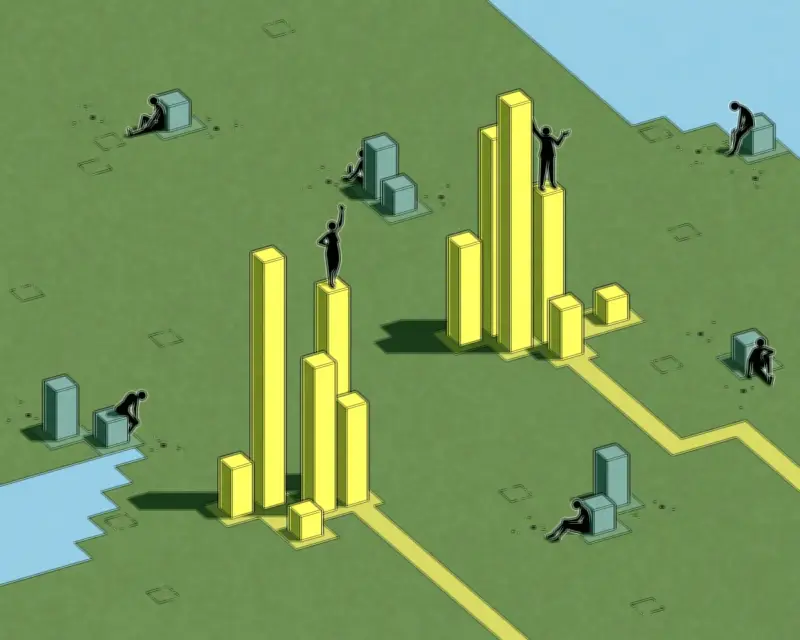
England's 14 regional and metro mayors see a growing opportunity for a civic political renaissance. However, the core of the vision is city-based. As Tony Travers, a local government expert at the London School of Economics, told the Guardian: "The whole idea of this version of economic change, which is very embedded, is that the only way to make the economies of city regions work is by letting the central part of the city develop fast, and hope that people will commute in and out to take advantage of it."
Places like Somerset, which sits outside the West of England mayoral combined authority, have no regional leader or strategic authority. Towns such as Melksham, Bridgwater, Calne, Minehead, and Trowbridge have experienced serious decline and been denied a voice, according to the article.
Three Tiers of Authorities
Established mayoral strategic authorities, including Greater London, Greater Manchester, the Liverpool city region, and the West Midlands, qualify for the widest range of powers and integrated multi-year funding settlements. A second tier, including Tees Valley, Greater Lincolnshire, and Hull and East Yorkshire, must wait at least 18 months after foundation to join the top rank. Foundation authorities, such as Lancashire and Devon and Torbay, have no elected mayor yet.
Some areas are only beginning their devolution journey. Stoke-on-Trent took its first steps to joining a foundation authority in March this year, while Cornwall agreed to become a single-foundation authority at the end of last month. The government has postponed mayoral elections in Greater Essex, Sussex and Brighton, Hampshire and the Solent, and Norfolk and Suffolk from 2026 until 2028.
Rapid Timetable and Accountability Concerns
On 31 July, the new government set out its ambition to make central government "smaller and more strategic" and to ensure every area in England has a strategic authority by the end of 2027, with them in place everywhere by the end of 2028. This is a remarkable timetable given that most councils and public services are cash-strapped.
There are also concerns about accountability. Only London has an elected assembly to monitor its mayor; other areas will have "scrutiny committees" that the article suggests are not very convincing. Additionally, most established mayoral strategic authorities are in the north and Midlands, which might avenge years of southern dominance but could replace one unfairness with another.