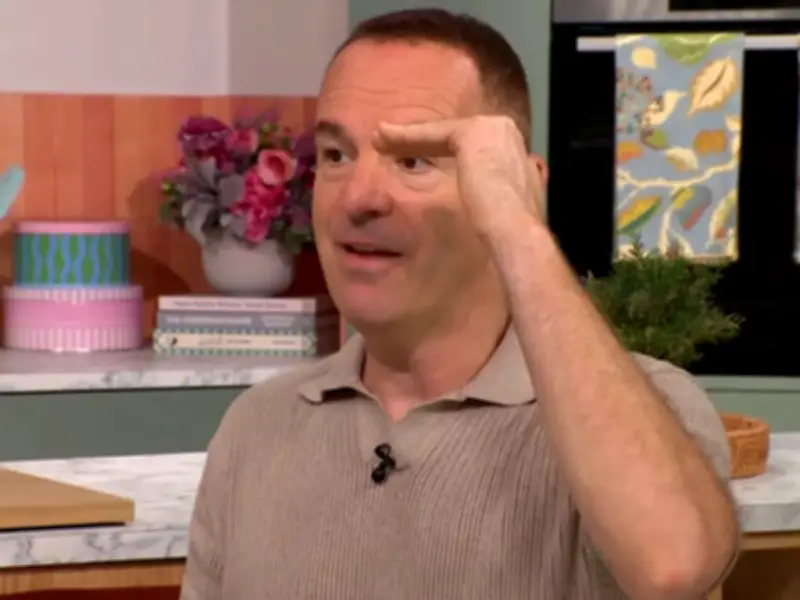
Martin Lewis has said he is 'delighted' about some of the changes announced in the Budget this afternoon - but added that the 'biggest' tax rise Brits are seeing is something that wasn't even mentioned. It comes after John Healey announced his first Budget as Chancellor today (October 28).
Mr Healey announced a host of changes and new plans as he unveiled his first Autumn Budget as Chancellor of the Exchequer as he tried to 'ease the cost of living' for people and businesses across the UK.
One of the key announcements from this afternoon was the news that 20 million UK households are set to receive a one-off £100 payment this winter to provide financial support over the cold months. Mr Healey also announced a new tax rule that will prevent low income state pensioners paying income tax when the full state pension amount exceeds the personal allowance next year.
'The biggest single tax rise we've had in years'
In a reaction video posted to Martin Lewis's social media accounts, the finance expert went through what the Budget means practically for households. He covered areas including energy bills, buying property, driving, claiming benefits, saving money and investing.
Mr Lewis started his analysis by pointing out "what wasn't in the Budget". He said: "It's the biggest single tax rise we've had for years and it's carrying on."
The finance expert was referring to fiscal drag, explaining that it is the effect of income tax thresholds staying frozen. "That's what fiscal drag is, that's the biggest revenue raiser, that isn't changing," he said.
Mr Lewis said that because the income tax threshold is frozen at £12,570, people end up paying more tax as their earnings go up. He said it looked as though the threshold would stay frozen "for a few more years".
He added that the situation was even worse if you're paying a Plan 2 student loan. He said: "Rachel Reeves announced last year that the student loan repayment threshold on Plan 2 would be frozen from April 2027 until 2030 and there's no change on that either. So you have double fiscal drag."
'Big win' on energy bills
Another change he mentioned was how standing charges on gas bills - fixed daily fees added to bills - will be scrapped from next year for around 23 million homes. Instead, fixed costs will be paid on the unit rate, which the Treasury said could save 60% of households an average of £45 on their annual bills.
Mr Lewis said: "I think it will be less than 1p/KwH put onto the unit rate of gas which means lower users will pay less, higher users will pay more but ultimately, that is a big win because it means the more you use the more you pay, and the less you use the less you pay. It's a much simpler system and they're looking to do it on electricity too."
However, he said the "big news on energy" was the £100 payment to certain council tax bands. He explained: "In January, if you live in a household that pays council tax Band A to D, your house will get £100 of energy support paid to you by direct debit." He added that the payment was not means-tested and those eligible "will simply get the £100".
He added: "Of course it means some people who don't need it will get it and it means some people who do need it won't get it. For the latter group, there's £100 million being made available for councils for extra support."
But, he said the payment comes at the same time as a huge leap in energy prices. "If you look at why this is being done, we're expecting the energy price cap to go up 27% in January," he said.
He said that over that three month period, someone with typical bills will see around £100 extra on their bill, so the £100 payment to households is "pretty much going to cover" that rise.
Cash ISA cut 'gone' and savings tax rise
Moving on to good news for savers, he said: "Next - a good one - the cash ISA limit, which was due to be slashed for under 65s to £12,000 a year to £20,000 a year is gone, that's no longer happening. And all the anti-avoidance measures that have been put in place, like you couldn't transfer from a shares Isa to a cash Isa, that's all gone too, it's not happening anymore."
Mr Lewis said he was happy the chancellor has listened to him after he suggested getting young people into investing 'with a carrot rather than a stick'. He said: "I'm delighted to say that the Chancellor has listened to the idea I suggested to him, which is 'don't do it with a stick, you want to get young people to invest, do it with a carrot', and he is consulting on the new starter investment ISA."
However he said there was a new 'problem' on savings. He said for those people who pay tax on the interest - those who have used up their ISAs and the £1,000 in interest you can make a year tax free from savings - the tax rate on savings would be going up from next April.
He said basic rate tax payers will pay 24%, higher rate tax payers 44%, top rate tax payers 49% - basically the normal rate plus 4% - so it's worth making sure you use your tax free allowances.
'Most happy' about Lifetime ISA change
Mr Lewis said the First Time Buyer ISA launching in April 2029 will be a "much simpler product than the Lifetime ISA".
He said overall he was "probably most happy" about a change to the Lifetime ISA penalty as he had been campaigning on it for years.
Explaining the change, he said: "So right now, if you buy a house and it costs over the £450,000 threshold, you have to pay a penalty, effectively a fine of over 6% to the state to get your money out to use it on a house. That's gone.
"The technical way this works is that currently the penalty is 25% of what you've got, it's going to be 20%. This all sounds like gobbledygook, but just think for a second. You put money in, up to £4,000 a year, you get 25% added on top.
"If they take 25% off, that leaves you with less than you started with. If they take 20% off, the way the maths works is, you get back what you started with plus interest."
Under the new system, if you buy a house with a Lifetime ISA that is under £450,000 you get the 25% bonus, if you buy once that is over £450,000 then you don't get the bonus but you get what you put in plus interest, he explained.
"You will be no worse off putting your money in a Lifetime ISA than in a normal cash ISA as long as you're definitely buying a house," he said. "It de-risks it and it gets rid of some of the penalties for people buying bigger houses who've been priced out, say, because they live in the south-east of England."
The best thing is, the penalty is wiped out from tomorrow, Thursday, October 29, he added.
How pensioners will benefit from new tax allowance
Mr Lewis also explained how the new pension tax allowance would work. He said: "This all stems from the fact that for the first time in April 2027, the full new state pension - £13,040 - is higher than the tax free personal allowance which is frozen at £12,570. Effectively, if you had to pay tax on it, it would be £94 of tax that you would pay."
He explained that while Ms Reeves previously confirmed that no one on the full new state pension would be paying tax, she did not say how it would work. This announcement now explains it, he said.
Mr Lewis said: "If you earn under £13,040 and you're a state pensioner, you just won't pay tax. If you earn slightly above that, for every £3 you earn above it, you lose £1 of tax gain - £1 of that £94."
"So that means if you earn say £13,186 - £150 above it - you would still get a tax gain of £44 compared to someone who wasn't a state pensioner. By the time you earn £13,319 then this has disappeared. So it is just a way of giving you a slight taper above that."