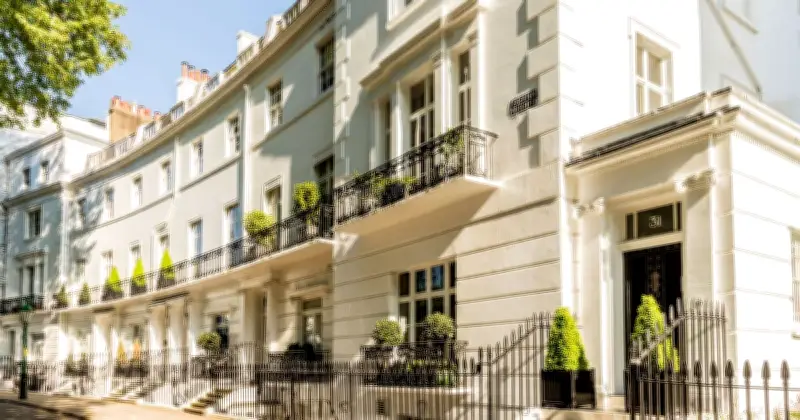
Some homeowners in England face paying up to £7,500 a year on top of their council tax under the so-called Mansion Tax, with experts warning that cash-poor pensioners are being trapped in properties they can no longer afford as bills spiral and buyers are put off.
Eligible homeowners will have to pay between £2,500 and £7,500 in addition to their annual council tax bill from April 2028, following proposals in the 2025 autumn Budget. The levy applies to properties worth £2 million or more.
Fears over threshold cut
Chancellor John Healey is allegedly considering slashing the threshold to £1.5 million in tomorrow's Budget, which could double the number of families and pensioners liable for the tax. According to data from property agent Hamptons, 271,000 homes would be brought into the levy, instead of 134,000 under current proposals.
Paula Higgins, CEO of the Homeowners Alliance, warned it was "definitely a tax on London and the southeast". She told The Express an elderly London flat owner who has lived for decades in St. John's Wood is "really worried about not being able to pay her bills" if her home is valued at £2 million, and loan sharks have been leaping in to offer her high-interest loans.
A 50-year-old, who chose to remain anonymous and lives near Highgate, north London, says she has invested all her money in a house she bought in 2006 for £900,000, and she does not have cash to spare if her property is valued at £2 million.
"I'm not expecting people to feel bad for us because I'm very, very fortunate. But we've invested in the house, that's our thing. We've bought something that was a wreck and done it up over the years. It's not like we've got a lot of disposable income."
Her older neighbours who purchased affordable family homes decades ago are also worried. "We've got people on our street who are very elderly, who bought their house for £200,000 pounds 30 years ago. They don't have that type of money," she said.
"It's an incredibly stressful thing. My neighbour's trying to sell his house. It hasn't been sold. My in-laws are quite old, but they live outside Cambridge, so it's quite expensive. They have absolutely no money, but they live in a big house, and they don't have that sort of money to raise it."
Concerns for older homeowners
Caroline Abrahams, charity director at Age UK, believes the Government must take this reality into account when designing the tax so people can pay any debts after their death.
"With any kind of tax on high-value properties, there will always be a concern that an older person living in one may be 'asset rich but income poor'," she told the Express. "The Mansion Tax must be designed in a way that takes this reality into account, and the obvious way of doing so is to offer anyone in this situation the opportunity to pay any tax they owe from their estate, after their death, rather than up front and immediately."
Arun Advani, the director of the Centre for the Analysis of Taxation, said a transition process might be necessary for people facing a large increase in their bills.
Richard Marks, 70, who bought a five-bed family home in north London in 1994, which is now worth around £2 million, described it as "completely random and unfair". He added: "You're already paying stamp duty, you're already paying death duties. This is just another one out of the blue. If I lived with acres of land and tennis courts outside of London, it still would be worth less."
Impact on buyers and the market
Alex Greaves, managing director of London-based buying agency Ridgestone Property, said purchasers are reluctant to buy homes at the threshold because they already face "massive" stamp duty levies. He thinks the Government could shoot itself in the foot, because stamp duty is worth £153,750 on every £2 million house.
"The problem is, it's compounding the existing taxes we have at these higher price points. It doesn't sit right for a lot of people. I think for a lot of people, it's 'what's next?'. If it's £2,500 now, we can see this doubling in five years. There is a point where it does just impact transactions altogether, and then, actually, will there be a negative benefit overall? The more they suppress the market by taxing these price points, I think it's going to damage net receipts for the economy."
The construction industry could take a hit too. Ms Higgins also said people were stalling home renovations for fear of pushing their homes above £2 million.
"What's happening at the moment is these houses above £2 million are just not moving at all. There are people who have stopped doing home improvements. Why would you improve your kitchen if you're going to up the price of it?"
She is also sceptical about invasive in-person inspections, which could reportedly be used as a last resort, saying they would be widely contested and eat into any profits through administrative costs.
A Treasury spokesperson said the tax is expected to raise around £430 million per year to help fund public services.
Regarding the rumoured £1.5 million threshold, a spokesperson said: "As has always been the case, decisions on tax are a matter for the Chancellor to set out at fiscal events, rather than routinely commenting on rumour, speculation or proposals."
Homeowners are expected to be told in autumn 2027 if their property is liable, giving them around six months to challenge the valuation before it starts in April 2028. The industry will find out on Wednesday whether the Chancellor reduces the threshold set by Ms Reeves.