When entrepreneur Sir Billy Butlin opened his first holiday camp in Skegness in 1936, he had a simple vision. Inspired by his own time spent at a Canadian holiday camp, he wanted to bring affordable holidays to working people in the UK. Not a luxury for the few, but breaks that ordinary families could afford.
Butlin's Ethos Endures
Ninety years later, that ethos continues to underline a big part of our identity at Butlin’s. Today, it is not just parents and children who enjoy a traditional British seaside break with us, but guests of all ages and generations and, more recently, groups of friends attending our adults-only music weekends and live entertainment events too. They make up the 1.5 million guests who visit annually across our three resorts.
But recent years have been different. The pressures on hospitality have not come from unpredictable and unforeseen circumstances – but parliamentary decisions that have created a cost pile-on for our sector. Every new measure has squeezed already tight margins and made it harder to deliver affordable holidays to guests who are grappling with the cost of living.

The Proposed 'Holiday Tax'
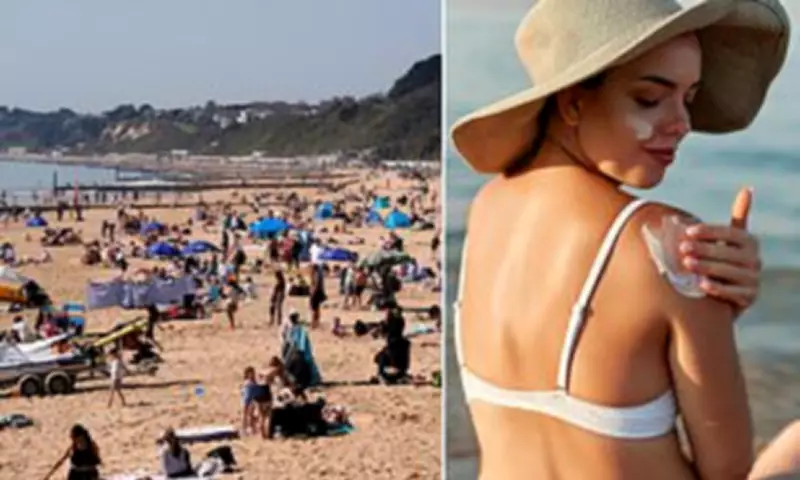
Which brings me to the latest government proposal. In the King’s Speech this week, we learned of plans to proceed with the introduction of an ‘Overnight Visitor Levy Bill’. This title conceals a simple but expensive proposal. Councils in England would be given powers to introduce a ‘holiday tax’ on overnight stays, likely to be in the region of £2 per person per night.
On paper, of course, this does not sound like very much – or certainly not to politicians in Westminster, who often seem ignorant as to what life looks like for ordinary families. But it adds up. According to our industry body UK Hospitality, a two-week family holiday could end up costing up to £100 extra once these levies are added in. When you consider that the measure will have the biggest impact on those who can afford it the least, it becomes even more regressive and absurd.
Impact on Working Families
Last year alone, 45,000 people booked one of our off-peak breaks, at just £49 for four nights for a family of four. Now apply this proposed levy to that holiday. Suddenly that’s an extra £32 on to a £49 break: effectively a 66 per cent tax increase. Once again, this hits working families hardest: those who deserve a memorable break without breaking the bank. And this year, with uncertainty around overseas travel due to potential jet fuel shortages, now should be the time to back staycations.
Flawed Arguments
Labour’s defence for the policy is that England is behind the curve because other countries, such as Italy, France, Spain and Germany, operate tourism levies. Scotland and Wales, too, are already introducing their own versions: in July, Edinburgh will become the first UK city to charge visitors for staying overnight. But there is one glaring flaw in that argument. Britain already taxes hospitality more heavily than almost every major tourism economy in Europe through National Insurance, Corporation Tax, VAT and Council Tax.
Whether you compare us with Spain, Greece, Portugal, France, Germany or Italy, our sector is already carrying a heavier burden. It’s no exaggeration, frankly, to say our sector has become the Labour Government’s scapegoat. How else could you look at our struggling industry and conclude that the answer is to tax it even more?
Lack of Understanding
This is what frustrates so many of us in business. It increasingly feels as though ministers fundamentally do not understand how hospitality works. Vanishingly few of them have ever worked in the private sector at all or have had to worry about a balance sheet. They don’t understand how finely balanced so many businesses are, how price-sensitive guests have become – and, perhaps most crucially of all, the economic role companies like ours play in communities that desperately need jobs and investment.

At Butlin’s, we operate in areas of the UK that historically relied heavily on traditional industries and seasonal tourism – for a long time, many of them Labour heartlands. We don’t just employ hundreds of people directly: thousands more are supported indirectly through suppliers and contractors, many of them also local businesses. In other words, when a business like Butlin’s thrives, the communities in which we operate benefit.
Job Losses Ahead
Yet despite constantly talking about ‘growth’, ‘working people’ and wanting families to be able to afford a holiday, this Government continues to make employing people more difficult and more expensive even as we face some of the worst conditions our sector has known. It’s no exaggeration to say hospitality has been battered in recent years. During the pandemic, Butlin’s had to close for more than 100 days, and even after reopening, the pressures didn’t ease. Food costs rose, energy prices surged, and employment costs climbed dramatically.
Then came Labour’s rise in employer National Insurance contributions. UK Hospitality estimates the sector has already lost more than 100,000 jobs since those changes were introduced – a number it had prophesied with uncanny accuracy. Now, this same industry body – who got that last figure so right – warns this new tourist tax could cost another 33,000 jobs.
Economic Consequences
The working out is simple: Higher costs lead to higher prices, fewer bookings, and eventually fewer jobs. Our own data already shows clearly that guests are becoming far more cautious. Families are booking later because they’re uncertain what their finances will look like in a few months’ time. They are also incredibly price-sensitive: Sometimes even relatively small increases – single figures – can determine whether someone books a holiday or stays at home.
Figures from Barclaycard last month showed that spending on travel in Britain had fallen by 3.3 per cent, the first drop in five years. And now politicians want to add yet another unpredictable extra charge on top. You have to ask: where does it stop?
Politicians Not Listening
The truth is that business leaders have repeatedly tried to warn ministers about the consequences of their ill-judged policies. I have written to politicians directly and met ministers face to face to explain clearly the likely impact. In each case, it has fallen on deaf ears. Even politically, this proposal looks wrongheaded. Further polling commissioned by UK Hospitality suggests voters are almost ten times more likely to punish MPs who support a tourist tax than reward them for it. Perhaps that might finally focus minds in Westminster.
A Call to Action
British hospitality should be one of this country’s great success stories. We have world-class tourism and employ millions of people, many of them younger workers crying out for opportunities to get on the earnings ladder. Just as importantly, we provide enjoyment and escape for ordinary people during difficult times. That should be encouraged – but instead, the sector increasingly feels punished for existing.
We are proud that Butlin’s remains a great British success story. Increasingly, though, it feels like we are succeeding despite government policy, not because of it. If this Government wants to show it really is listening, it needs to pull the holiday tax now.
Jon Hendry Pickup is CEO of Butlin’s.