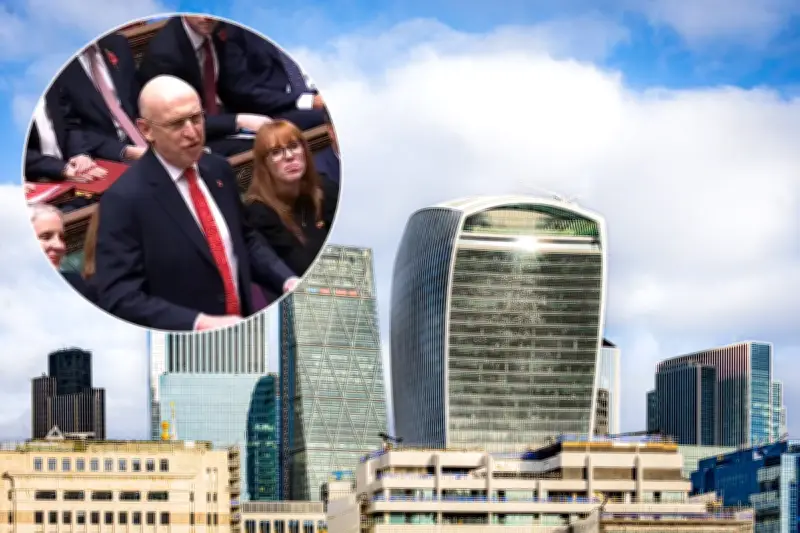
The full impact of John Healey's first Budget on London may only become clear in coming days, but winners and losers are already emerging from the Chancellor's tax and spend plans, and the "radical" devolution of powers including to London.
Lord Khan gains new fiscal powers
As part of the Government's devolution revolution, Lord Khan will be given sweeping new powers including keeping a share of income tax and more business rates. The landmark fiscal reforms, the most significant since the creation of the London mayoralty in 2000, will allow City Hall to borrow billions to fund schemes such as the Bakerloo line extension and the West London Orbital. It is expected to make him one of the most powerful mayors in Europe.
Banks hit by tax rise
While the Mayor of London may be celebrating in City Hall, in the City itself banking chiefs were nursing a fresh tax blow. The Chancellor announced what he called a temporary rise in the bank surcharge, currently levied at 3% on top of the 25% corporation tax rate, by an extra 3% to help fund energy support for struggling households. However, the rise is not as steep as had been mooted, to a possible 8% surcharge, and fell well short of the sums, of up to £60 billion over four years, being demanded by union chiefs.
Housing market pressures
Amid London's housing crisis, plans to increase taxes for landlords risk a "steady rise" in rent prices, the Budget watchdog is warning. The Chancellor announced that he would hike the rates of tax on income from property and savings by a further two percentage points from April next year. It comes on top of an increase of the same size introduced under his predecessor Rachel Reeves at last year's Autumn Statement, which is due to take effect at the same time. The Office for Budget Responsibility said these steps along with measures over the past decade that have reduced private landlord returns "collectively risk leading to a steady rise in rents".
Mortgage rates could also increase as inflation is set to rise to a peak of around 3.75% by the start of next year, particularly driven by a jump in household energy bills in January, says the OBR. Inflation is forecast to average 3.1% this year and then 3.4% in 2027, in a significant hike to previous forecasts of 2.3% in 2026 and 2% for the following 12 months. The upward pressure could push up Bank of England interest rates from 3.75% to 4.25% by the middle of next year.
Help for first-time buyers and transport
The new £4.7 billion Your First Home scheme will help around 70,000 households to take their first step onto the housing ladder and support the delivery of an estimated 20,000 new homes, says the Treasury. It will provide 20% equity loans to first-time buyers who would not otherwise be in a position to buy a home. Income caps will be set at £110,000 per household outside London and £140,000 inside the city. Price caps will be based on local authority average prices, with inner and outer London caps of £650,000 and £500,000 respectively. The deposit requirement will be set at 2.5%, with a maximum deposit of 15%.
Devolving tax powers to City Hall could unlock £10 billion of borrowing to fund major transport schemes in London including the Bakerloo line extension and the West London Orbital. These projects could be partly funded by a new levy on businesses which benefit from them, as happened with the financing of the Elizabeth line. The Chancellor also gave the green light for cross-Channel trains to stop at Stratford International Station under a £20 million plan being pushed by Lord Khan. A Business Rate Retention Zone (BRRZ) is to be established to fund the scheme. Mr Healey also gave initial support for Tax Increment Financing, also based on a BRRZ, to upgrade Euston station, mainly through improvements to the Tube.
However, there could be a sting in the Budget for commuters as the Chancellor's figures do not bake in the freeze on regulated rail fares continuing beyond March 2027, so they could rise by around 3% or more, based on the mechanism for setting them linked to inflation.
Household energy support and other impacts
Twenty million households, including two million in London, who are in council tax bands A-D will get a £100 'Household Energy Payment' paid directly into their bank accounts to help deal with rising energy bills. The scheme will cost £2.6 billion. The vast majority of these people will also benefit from the axing of standing charges for gas bills, as well as VAT being cut from electricity bills. However, the help may not be enough to offset rises in energy bills which could hit £2,200-a-year on average later this winter.
The tax on income from savings will rise to 24% for basic rate taxpayers from April 2027 after it had been scheduled to rise to 22%. The savings higher rate will be 44%, and the savings additional rate will be 49%. However, the planned cut to the cash ISA allowance from £20,000 a year to £12,000 has been axed.
The Chancellor announced an increase in the threshold for 100% small business rates relief for some hard-hit retail and hospitality firms from £12,000 to £18,000, with tapered relief from £21,000, up from £15,000. This will mean an extra 70,000 firms taken out of paying business rates altogether, he stressed. Some 3,500 pubs, 3,900 restaurants, 2,200 cafes and 1,700 hairdressers and beauty salons will be exempted from paying business rates, according to the Treasury.
The vast majority of households will benefit from the axing of gas standing charges, according to analysis by energy experts Nesta. The impact will depend on the size of homes, which is often linked to income, and amount of gas used. People who run a gas-guzzling Aga are likely to see their bill rise. Households with an income below £15,000 will on average be £51 a year better off, those with an income between £40,000 and £49,999 £21 better off, those with an income of between £60,000 and £69,999 around £15 better, according to the research. But households with an income of £100,000 will on average be nearly £9 worse off and those with an income of more than £150,000 £50 worse off. Nesta said: "Abolishing the gas standing charge efficiently transfers costs from poorer households to wealthier ones."