

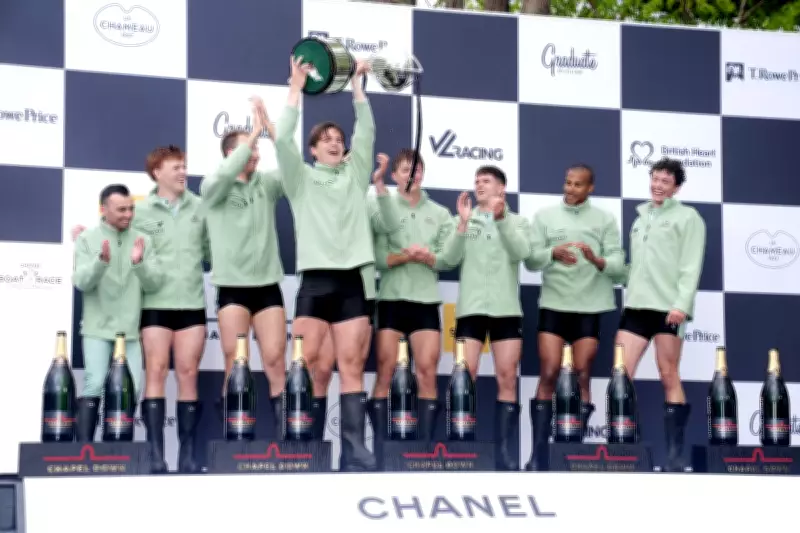
The Boat Race 2026: Tradition Clashes with Modernity in Iconic Rowing Event
The Chanel J12 Boat Race, one of Britain's most prestigious and longstanding sporting institutions, finds itself navigating turbulent waters in 2026. This famous duel between Oxford and Cambridge universities faces a central tension between preserving its nearly 200-year heritage and embracing modernization to attract new audiences. Allegations of elitism and snobbery persistently follow the event, even as organizers implement innovative strategies to maintain relevance in contemporary sports culture.
Competitive Landscape and Historical Context
Recent years have witnessed remarkable dominance from Cambridge crews, with the women's team pursuing their ninth consecutive victory and the men's squad aiming for their fourth straight win, having secured seven of the last eight contests. Despite this competitive imbalance, enthusiasm remains undiminished, with approximately 200,000 spectators regularly lining the Thames banks to witness the spectacle. Encouragingly, signs indicate this trend may be slowly reversing, particularly in the women's race, which promises exceptional closeness this year.
On the men's side, Cambridge fields what many consider their strongest-ever squad, making them overwhelming favorites against a revamped but underpowered Oxford crew. The absence of external drama, including last year's contentious eligibility disputes, allows focus to shift toward how the event simultaneously honors its past while embracing its future during the 80th women's race and 171st men's edition.

The Core Tension: Heritage Versus Innovation
Much of the Boat Race's enduring appeal stems from its quintessentially British character, largely unchanged through centuries of competition. Unlike American sporting spectacles featuring elaborate halftime shows, this remains pure sport rather than theatrical entertainment—two boats racing for approximately twenty minutes along affluent west London's leafy riverbanks. Yet this genteel setting, combined with perceptions of Oxbridge elitism and rowing's exclusive nature, creates a paradoxical dynamic that both attracts and criticizes the event.
In reality, this year's competition features more international athletes than privately educated British participants. A significant proportion of Oxford's men's squad learned rowing at university level, while Cambridge star Carys Earl—a state-educated medical student—exemplifies diversity, balancing overnight hospital shifts delivering babies with early morning training sessions.
Strategic Partnerships and Sponsorship Evolution
The 2026 edition particularly illustrates how the Boat Race Company navigates conflicting values and audiences. This marks the second year of a groundbreaking partnership with luxury fashion house Chanel, whose J12 watch—named for an early twentieth-century racing boat—serves as title sponsor. This collaboration represents a strategic coup, given Chanel's rare foray into sports sponsorship, characterized by subtle branding reminiscent of Wimbledon's commercial approach rather than overt advertising.
The timing proves particularly symbolic as both men's Blue Boats feature French presidents for the first time: Oxford's Tobias Bernard and Cambridge's Noam Mouelle. Chanel founder Gabrielle "Coco" Chanel maintained strong British connections, opening her Mayfair atelier in 1927—coincidentally the inaugural women's Boat Race year—while moving within high society circles that included Winston Churchill and the Duke of Westminster. More significantly, Chanel pioneered women's sportswear using jersey fabric in 1913, fourteen years before the first women's race, enhancing female mobility in athletics despite accessibility limitations.
Broadcasting Revolution and Audience Expansion
Addressing concerns about declining linear television viewership, the Boat Race undergoes its most significant broadcasting transformation in decades. After years of BBC association, with brief interruptions during the 2000s, the 2026 edition marks Channel 4's inaugural coverage under a five-year rights agreement spanning the women's centenary in 2027 and men's bicentenary in 2029. Simultaneously, Times Radio secures a three-year radio coverage deal, creating a dual approach targeting different audience demographics.

Television presentation features the familiar presence of Clare Balding alongside unconventional addition Jamie Laing, the Made in Chelsea reality star turned broadcaster. Laing's description of the event as "London's party by the river" signals Channel 4's emphasis on atmosphere and fan engagement rather than purely sporting action. Fellow presenter Ade Adepitan emphasizes "opening up" the race, with increased focus on athlete personalities rather than solely their rowing prowess, representing a deliberate shift toward influencer culture and accessibility.
Future-Proofing a British Institution
These strategic moves—combining Chanel's prestige partnership, Channel 4's contemporary broadcasting approach, and Times Radio's traditional appeal—demonstrate concerted efforts to "future-proof" the Boat Race amid evolving sports media landscapes. The tension between heritage and modernity remains inherent to an institution dependent on both elements for survival. Following years dominated by water quality concerns and eligibility controversies, the 2026 Boat Race appears to be entering calmer waters while skillfully balancing tradition with necessary innovation.





