A study by researchers at a university in Sweden recorded the highest number of conflicts between states in 2025 since World War II, and the highest number of fatalities recorded since the Rwandan genocide. While the conflicts in Ukraine, Iran and Israel-Palestine continue to dominate the headlines, many others continue to disrupt multiple nations around the world.
Some are driven by struggles for political power, while others involve territorial disputes, military coups or Islamist insurgencies. Despite their devastating toll, these conflicts often receive far less international attention than the wars dominating the news cycle.
Sudan and Myanmar
Sudan is currently one of the biggest conflicts in the world, which started due to a vicious power struggle within the country's military leadership. In April 2023, a power struggle between the Sudanese Armed Forces (SAF) and the paramilitary Rapid Support Forces (RSF) emerged, leading to the world's worst humanitarian disaster, leaving nearly 34 million people - a staggering 65% - in urgent need of humanitarian support. The SAF has recaptured Khartoum, the country's capital, but the RSF controls much of Darfur, where attacks on non-Arab ethnic groups have drawn genocide accusations.
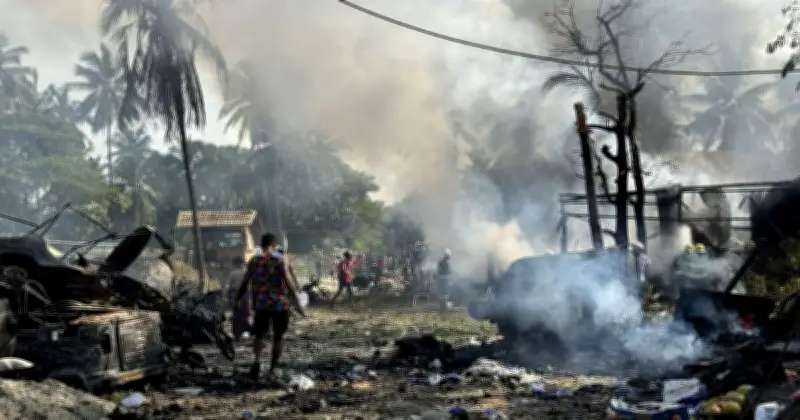
Myanmar's conflict first emerged in the news in 2021, after a military coup overthrew the democratically elected government. The civil war has since killed over 100,000 people and displaced 5.2 million. The conflict dates back to a decades-long struggle for political power and autonomy between Myanmar's diverse ethnic minorities and its highly centralised military. The situation has evolved into a brutal war of attrition and a humanitarian crisis, marked by aggressive military conscription, heavy aerial bombardment of civilians, and widespread poverty that leaves neither the fractured resistance nor the entrenched junta able to secure a decisive victory.
Yemen and DR Congo
Yemen's civil war began in 2014 when Houthi insurgents - Shiite rebels with links to Iran and a history of rising up against the Sunni government - took control of Yemen's capital and largest city, Sanaa, demanding lower fuel prices and a new government. This prompted a Saudi Arabia-led military coalition to intervene in 2015 to restore the internationally recognised government. What started as an internal power struggle evolved into a regional rivalry between Iran and Saudi Arabia, causing severe famine, mass displacement, and one of the world's worst humanitarian crises. Though a fragile UN-brokered truce in 2022 reduced large-scale fighting for a time, periodic clashes, Houthi attacks on Red Sea shipping and regional infrastructure, and renewed internal fighting have kept the conflict active. Just yesterday (14 October 2026), a missile launched by Yemen's Houthi movement hit a building owned by Saudi Arabia's state oil company Aramco in the eastern city of Dhahran overnight.
The Democratic Republic of Congo (DRC) has suffered decades of conflict over its mineral wealth and unresolved tensions. The conflict stems from a combination of post-colonial instability, Cold War power struggles, and the spillover of the 1994 Rwandan genocide. Rwanda-backed M23 rebels seized Goma and Bukavu in early 2025 and continue to hold significant territory in eastern DRC despite a US-brokered peace agreement and ongoing Qatar-mediated talks. With over seven million people displaced, Rwandan troops remain on the ground, and key provisions of the peace deal are unimplemented.