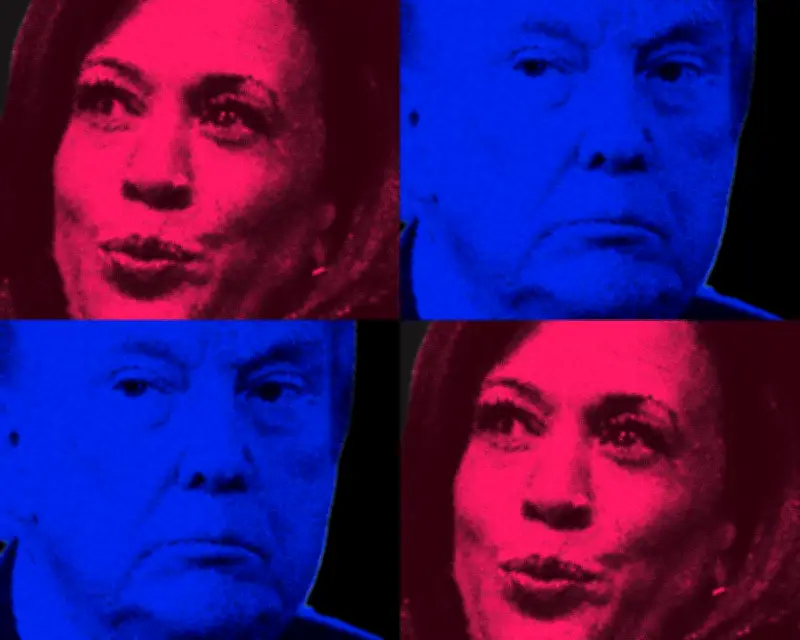
The association of red with Republicans and blue with Democrats is a surprisingly recent development in American political symbolism. For most of US history, both parties used red, white, and blue interchangeably, with no fixed color allegiance. The now-familiar color coding emerged only in the 21st century, driven by media election maps and political rhetoric.
Historical Origins: Animals, Not Colors
In the 19th century, parties were identified by animals: Democrats adopted the donkey, reclaiming Andrew Jackson's 'jackass' insult as a badge of pride, while Republicans became linked with the elephant after Thomas Nast's cartoons in the 1870s and 1880s. Colors held no partisan meaning. When color associations did appear, Democrats were more likely linked to red, mimicking the British Labour party's red symbolism, to connect with labor movements. By the 1930s, under Franklin D Roosevelt, red was an effective nod to the working class, before communism tainted the hue. Republicans leaned into blue, evoking Union army uniforms and Abraham Lincoln.
The 2000 Election: A Turning Point
The modern red-blue binary crystallized during the 2000 presidential election. Television networks, including NBC, CBS, ABC, CNN, and Fox News, used color-coded maps on election night: red for George W Bush (Republican) and blue for Al Gore (Democrat). As the election outcome remained contested for weeks due to the Florida recount, these maps were broadcast repeatedly, searing the color-party association into public consciousness. According to media historians, the choice was arbitrary—networks had previously used different colors—but it stuck.

Barack Obama's 2004 Speech: Connecting Colors to Ideology
Then-Illinois state senator Barack Obama linked the emerging color binary to ideology in his landmark 2004 Democratic National Convention speech. He criticized 'pundits who like to slice and dice our country into blue states and red states, red states for Republicans and blue states for Democrats.' Identifying religious prayer and small government as 'red' values and protection of gay rights and civil liberties as 'blue,' Obama argued that both exist across the country. 'We are one people, all of us pledging allegiance to the stars and stripes,' he declared. Despite his call for unity, the color associations only deepened.
Entrenchment and Political Strategy
By 2010, Republicans capitalized on their red affiliation with the Redmap campaign—a gerrymandering effort that stood for 'Redistricting Majority Project.' The campaign aimed to seize control of state legislatures before post-census redistricting, visually painting redrawn districts in red to symbolize Republican takeover. According to political analysts, this solidified red as a marker of Republican dominance. By 2012, states like Ohio and Iowa were labeled 'red states' despite voting for Obama, reflecting cultural rather than electoral reality.
Impact on Political Discourse
The red-blue framework oversimplifies America's diverse political landscape. It creates an in-group/out-group mentality, discouraging collaboration and ignoring nuanced positions on issues like abortion, immigration, and democracy. The binary also masks minority voices: Kamala Harris received nearly 5 million votes in 'red' Texas in 2020, while 43% of voters in 'blue' New York supported Donald Trump. As political scientist and author Lilliana Mason notes, 'The colors become stereotypical labels, erasing the fact that people contain multitudes, not conformity.'
A Call for a Fuller Palette
While the red-blue shorthand aids party identification and messaging, it flattens the complexity of American beliefs. Pundits argue that all states are inherently purple, mixing varied electorates and viewpoints. Expanding the color palette—or treating it as a spectrum—could foster more accurate understanding. As Obama said in 2004, 'We are one people... all of us defending the United States of America.'