

When I first arrived in Britain in 2019, I was given some clear political advice. As a Pakistani immigrant and a woman of colour, I was told again and again that there was only one place my vote belonged: with Labour.
Well-meaning friends endlessly insisted the party was my 'natural home' – the only one that stood for people like me.
Today, I see that patronising and reductive claim for what it is. The notion that ethnic minorities must somehow all think alike, vote alike and fall into neat categories for the convenience of the authorities is not just lazy but insulting: a form of bigotry dressed up as solidarity.

At the time, though, I believed it – and, yes, I admit I've voted Labour in my time. Like many, I once absorbed the narrative – often faithfully peddled by the BBC – that the Conservatives were largely out-of-touch, middle-aged, white men with little interest in anyone beyond their own privileged circles.
It took time – and experience – to realise just how flimsy that caricature was.
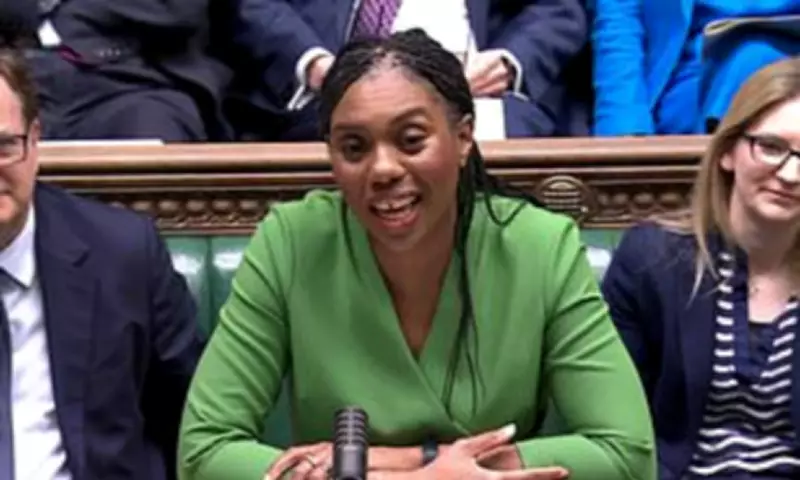
For me the most important epiphany came in November 2024, when Kemi Badenoch was elected leader of the Conservative Party. Yes, she had a slow start – and her early performances at Prime Minister's Questions could be shaky. She attracted criticism and hostile briefings – including from disgruntled elements within her own party. She sometimes appeared hesitant in interviews, cautious and shy when boldness and confidence were needed.
But I remember thinking even then that, whatever one's politics, her appointment mattered. The Tories, so often lazily branded 'racist', had chosen a black woman as their leader – the fourth female, in fact, to lead Britain's oldest political party.
Labour has always been happy to count on votes from minorities, but has typically been less 'diverse' in its own ranks than the 'evil' Tories. It's remarkable how much Badenoch has managed to turn things around. Take her spirited performance yesterday when in a fiery exchange at Prime Minister's Questions, she eviscerated Sir Keir Starmer as a man who had lost control, before accusing him of 'broken promises' and 'U-turn after U-turn after U-turn'.
'This Government is like a bad episode of Game Of Thrones,' she continued, referring to the popular fantasy series. Discussing a potential leadership challenge from Manchester mayor Andy Burnham, she added: 'His own people have turned against him and all the while, the Prime Minister is holed up in his castle, wetting himself about a visit from the King in the North.'
As time has gone on – and I'm hearing this from more and more people – Badenoch has grown into her role as leader with new confidence and clarity. Above all, she has shown a willingness to say the right thing and not just the easy thing – a quality in short supply in modern politics.
Take her response to yesterday's horrific terrorist attack on two Jewish men in north London. Against the usual empty platitudes offered by Starmer, London mayor Sadiq Khan and Green Party leader Zack Polanski, Badenoch's statement was a clarion call. 'There is an epidemic of violence against Jewish people. It is now a national emergency,' she wrote online.
She then rushed to the scene to show solidarity, while Mayor Khan, although he did make a sombre statement on TV, did not cut short his trip discussing Gaza – naturally – in Madrid with Spanish politicians.
Time and again, Kemi has demonstrated a clarity her opponents lack. Take events in March, when her Shadow Lord Chancellor Nick Timothy raised legitimate concerns – widely felt by countless other Britons – about the appropriateness of large-scale religious rituals in shared civic spaces after a mass Muslim prayer event in Trafalgar Square. Predictable outrage followed, with shrieks from the Left for Timothy to be sacked.
Many politicians would have folded under the pressure. Badenoch did not. Instead, she stood firm, calmly defending the ancient principle that British public spaces should reflect shared civic norms, not be transformed into arenas for competing displays of 'identity'.

For me, this is personal. Labour generally seem terrified of upsetting their powerful Muslim vote bloc – just look at their decision to pursue a formal definition of 'Islamophobia'. As a former Muslim who has rejected her faith, I know the dangers of equating legitimate criticism of the religion with 'blasphemy'.
In my native Pakistan, someone like me – outspoken in their criticism of Islam –would not simply be condemned, but in mortal danger. It is no exaggeration to say I would be lynched.
Yet Kemi – unlike Britain's Islamists and their useful idiots on the Left – understands the value of freedom of speech, and shows courage in espousing it.
She has repeatedly shown a willingness to confront fashionable orthodoxies. From challenging the creeping influence of identity politics in public institutions to questioning the ugly assumption that Britain must endlessly apologise for its past, she has made it clear that she is willing to risk political capital on crucial matters.
Equally striking is her growing authority at the despatch box. Her takedown of Rachel Reeves's second tax-raising Budget in November exposed the Government's broken promises with forensic precision. Her clashes with Starmer, too, have become increasingly assured – not least in holding the Government to account over its unforgivable appointment of Peter Mandelson, that friend to a paedophile, as Britain's ambassador to America.
Starmer appears increasingly diminished, as though the weight of a party unsure of its own convictions is slowly eroding his authority. It is clear, too, that – like many – he underestimated Badenoch, all 5 ft 4 in of her.
Rather than chasing the sugar-rush of cheap headlines, she has signalled a commitment to long-term thinking on everything from economic discipline and institutional reform to restoring public trust in government.
Yes, it took her a long time to confirm that the Tory Party would leave the European Convention on Human Rights if they win the next election – but she has to bring her parliamentary party with her and many of them would find such a move anathema. And she is commendably reluctant to make promises she can't keep.
All this is an uphill battle, and a lengthy one, as she has acknowledged. A long-term strategy rarely delivers instant rewards, and it is likely that in some seats the Conservative Party will be battered at the ballot box at the local elections.
It remains to be seen, too, if her own improved performances will ever be enough in the long run. The Tory brand is severely damaged, with upstart new parties on the Right vying to replace it – and with voters unhappy at the party's liberal drift over its 14 years of government.
Badenoch has acknowledged these difficulties, conceding that the elections would be a 'challenge' – but insisting she would not change her approach no matter the result.
I am glad to hear it. It is not that I agree with her on everything – far from it. It is that I respect her principles and her courage to stand by them. No matter the brickbats thrown at her, she stands up and fights – which sets her apart in a political culture increasingly defined by conformity and fear.
Khadija Khan is politics and culture editor at A Further Inquiry magazine, and is also co-host of A Further Inquiry Podcast.





