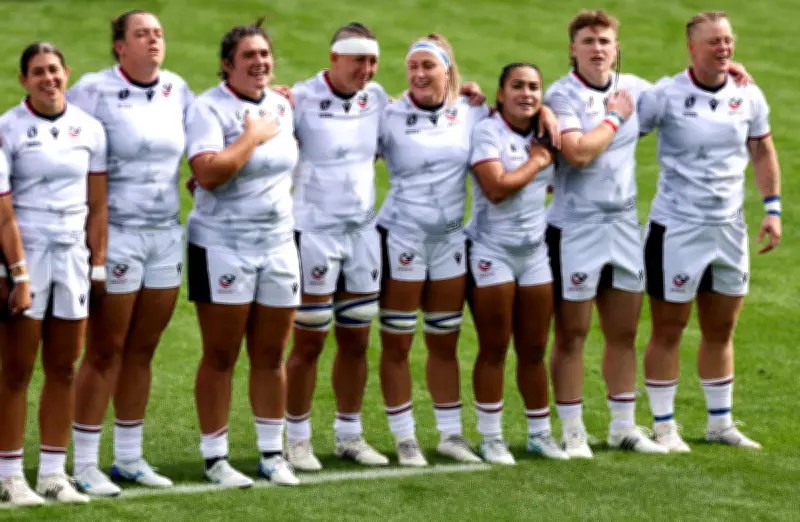
The United States women's rugby community is rallying against a new policy that bans transgender women from competing, with many players and teams considering a collective move to a newly created 'open' division as a form of protest. The ban, implemented by USA Rugby (USAR) in February 2025, aligns with recent directives from the US Olympic and Paralympic Committee following an executive order by former President Donald Trump.
Outrage and Organizing
Within days of the announcement, hundreds of players and supporters joined an emergency call organized by Rugby for All, a grassroots advocacy group. Dozens of teams publicly declared they would not play without their transgender teammates, and a fund was launched to support potential legal action. Cameron Michels, a PhD student studying queer and trans experiences in women's rugby, described the sport as one of the 'queerest and most gender-inclusive,' where the mantra 'every body is a rugby body' has long prevailed.
Creative Resistance
Rugby for All is leading efforts to resist the ban, which affects not only elite competition but also local club teams. The group has proposed several solutions, including forming an independent league, staging a mass strike, or moving all women's teams to the open division. The latter option has gained significant traction on social media, as it would effectively render the women's category obsolete while creating a viable and competitive open division.

Chris Mosier, an advocate for transgender inclusion in sports, praised the strategy as 'creative and potentially groundbreaking.' He noted that the open division, often seen as a token solution, could backfire on policymakers if it becomes the primary competitive space.
Challenges and Uncertainties
Despite the momentum, USA Rugby has yet to outline how the open division will function. Minutes from a March meeting of USA Club Rugby indicate that logistical details are 'still in development.' Meanwhile, USAR has stated it will not actively enforce the policy unless a formal complaint is filed, leading critics to call it a 'don't ask, don't tell' approach.
For some teams in conservative states, the risk of losing their non-profit or sanctioned status has forced them to exclude transgender players from competitive matches. Rosie M., a player with the San Antonio Riveters, received a text informing her that while she could practice, she could not compete due to the union's decision to comply with the ban.
Looking Ahead
Rugby for All continues to organize, building a collective bargaining movement and exploring options like moving to a new league. The Northern California Rugby Football Union is preparing for a potential mass transition to a separate division, while the Charlotte Royals have already announced their intent to use the open division for sanctioned matches.
'There's a lot of people who are passionate on the organizing side within our sport,' said Grace McKenzie, a Rugby for All organizer. 'It's not like we're going to see all these Instagram posts, and then we're going to stop talking about this and just accept what happened.'