Donald Trump has set off on a 32-day campaign blitz aimed at helping Republicans defend narrow congressional majorities in next month's midterms, but some fear his presence is driving the party towards an electoral wipeout. The president's approval rating is at an all-time low, and voters are angry about the cost of living, the war in Iran, and immigration crackdowns.
Rallies as a Double-Edged Sword
Trump's signature campaign rallies have been a mainstay of his brand, but political strategist Steve Schmidt said, "They've been a mainstay of his brand, but they're also the engine of his doom. Everybody knows the obvious, which is that his presence hurts every Republican candidate on the ballot because the race is fundamentally about Trump and the American people are sick and tired of him."
Schmidt added: "He's surrounded by people who tell him that he's beloved and that the answer to his problem is to keep talking, to keep performing, to keep doing the rallies, that the answer is more, not less. These rallies have become his lead weight, his proverbial anchor that's going to drown them all."
Supporters Defend the Rallies
Despite the criticism, rally regular Blake Marnell, who wears a brick-patterned suit resembling Trump's border wall, defended the events. He said: "Getting in the motorcade, driving 100 miles an hour to Durant – he's not gonna let stuff get in his way. He enjoys the rallies. They're energising for the crowd and for him. It's a way for him to connect with the grassroots."
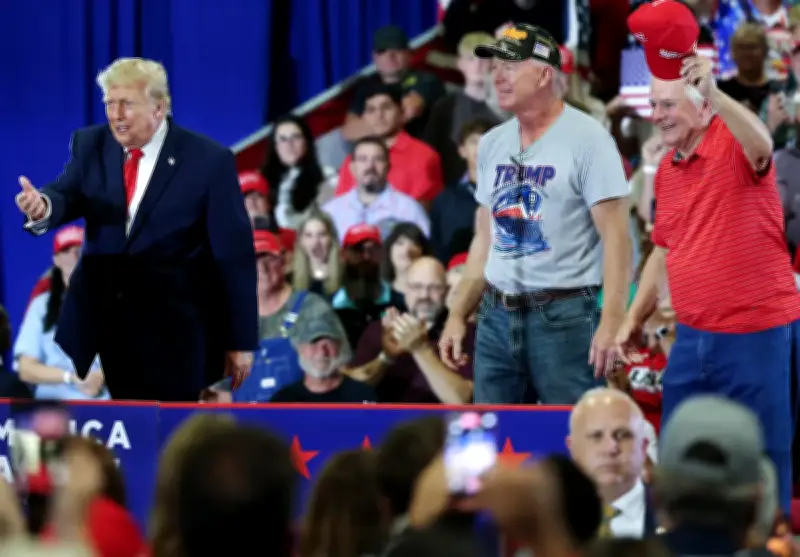
At a rally in Durant, Oklahoma, Trump summoned two supporters on stage, who praised him as working harder than any American and called him "the greatest president this country has ever had." Marnell dismissed the notion that rallies are hurting Republicans, saying, "That's ridiculous. How many years now have we heard critics saying that Trump is done, the end is near, the walls are closing in, this is the beginning of the end, he can't possibly win."
Underlying Anxieties and Polling Numbers
Yet beneath the carnival atmosphere lay anxiety. Trump entreated the audience, "Pretend I'm running, please," and admitted, "We're worried about Michigan, we're worried about Texas, we're worried about a few states." A survey by the Associated Press-Norc Center for Public Affairs Research found that just 17% of US adults approve of Trump's handling of the cost of living, while 26% approve of his handling of the economy – a new low.
A major Republican political action committee has reportedly pulled back spending in North Carolina, diverting resources to Kansas. Even dedicated fans known as "front-row Joes" have doubts; Trisha Hope declared him a "fraud and liar," citing his dismissal of the Jeffrey Epstein investigation and unfulfilled promises regarding the war in Iran.
Criticism and Defensive Campaigning
Pollster John Zogby said, "It looks as if he's very out of touch with the reality of most Americans." He noted Trump's rally performances have deteriorated, marked by rambling digressions. A secret audio recording obtained by The New York Times revealed Texas attorney general Ken Paxton admitting that Trump's midterm convention in Dallas damaged Republican prospects, saying, "When we did that convention, it dropped our numbers; everybody's numbers dropped."
Trump's early campaign schedule includes Texas, Oklahoma, Alabama, Ohio, and Nebraska – all reliable Republican strongholds. Schmidt observed, "When you're campaigning in October as a Republican in those states, not only does it mean you're losing, it means you're losing in a biblical sense." Generic congressional polls show Democrats holding a lead approaching double digits.
New Mexico Governor Michelle Lujan Grisham suggested reminding voters of Trump's presidency is a strategic blunder, saying, "In those places, I would hope that it hurts. People are angry and you shouldn't be reminding them." She criticised his second term, pointing to broken promises, economic mismanagement, and foreign policy overreach, including the war in Iran and ICE policies.
Trump hopes the rallies that featured in his victories in 2016 and 2024 will help Republicans in 2026. Schmidt drew a parallel with the faded Hollywood star from Sunset Boulevard, saying, "He needs attention like Norma Desmond and that's who he's become here at the nadir of his presidency as he moves from king of the hill into decrepit lame duck."