The war against Iran has been a strategic disaster for the US, leaving President Donald Trump with few diplomatic options as his second term enters its twilight, according to a Guardian analysis.
The US remains the world's richest and most heavily armed nation, but Trump's contempt for law and a supine Congress have not prevented him from looking thwarted and impotent with more than two years of his term remaining. History will record the Iran war as a turning point in the administration's fortunes and a grievous wound to national prestige.
Iran's hardliners emboldened
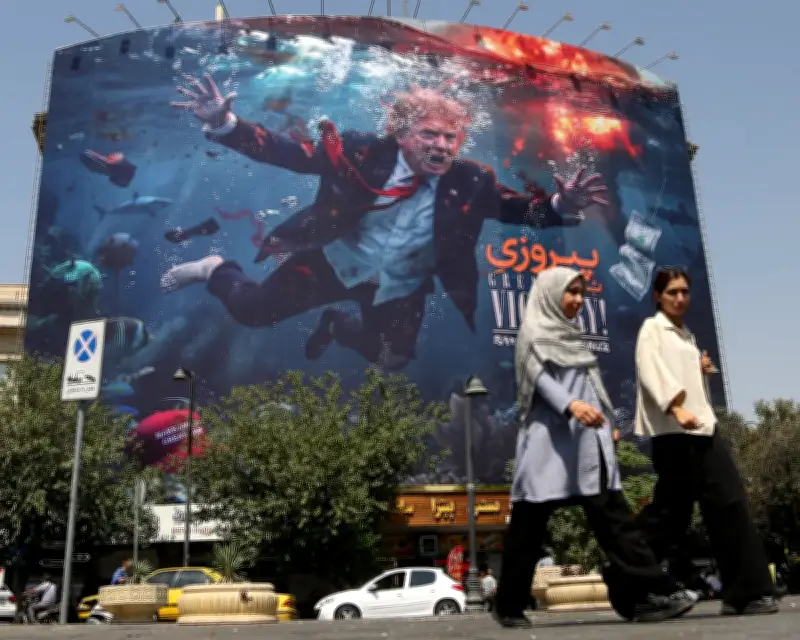
After the audacious military operation to kidnap Venezuelan president Nicolás Maduro, Trump believed a similar triumph was possible in the Middle East, expecting to decapitate the Tehran regime and exploit Iran's hydrocarbon resources. Six months later, Iran is controlled by a new generation of hardliners, emboldened by resilience under US and Israeli bombardment. They demand financial concessions from Washington as the price for peace, including reparations and a right to toll the strait of Hormuz.

The war has turned cold. Trump believes Iran's fragile economy is close to collapse and threatens "D-day" sanctions, but ordinary Iranians' suffering is limited in its political impact by repression. US consumers, aggrieved by the war's inflationary consequences, can express their unhappiness in November's midterm elections.
Military and diplomatic constraints
The calculation in Tehran is that American tolerance for economic pain is low enough to force Trump to blink first. If sanctions fail, diplomatic climbdown is the only remaining move, as Operation Epic Fury burned too much of the national munitions stockpile. Iran can frighten ships with mines and harry neighbours with drones costing less than $50,000, while Patriot interceptors protecting US forces cost $4-5m apiece, with more than 1,500 fired in the war and fewer than 830 left in the US inventory.
That depletion has global repercussions, most pressingly in Ukraine, where top-end US interceptors are essential for shielding civilians from Russia's most sophisticated ballistic missiles. Trump's attitude to that conflict has evolved from pro-Kremlin partisanship to grudging respect for Volodymyr Zelenskyy, but the shift depends on Nato's European members covering the cost of arming Kyiv.
Allies feel burned
European drives to autonomy look less like burden-sharing and more like a hedge against American perfidy, while Gulf states on the frontline of Iranian retaliation feel unrewarded for hosting US bases. Last week, Trump abruptly cut short a joint military exercise with South Korea, framing it as an amicable gesture towards North Korean tyrant Kim Jong-un, whose regime he judged "unthreatening and respectful".
Such civility is withheld from Canada, which Trump dismisses as an economic freeloader that should be the 51st US state. Canadian prime minister Mark Carney pulled out of trade talks last weekend, citing unreasonable last-minute demands, and Trump responded with punitive tariffs, to which the Canadians promise "dollar-for-dollar" retaliation.
Carney weighed the cost of reduced commerce against political damage from capitulation, knowing November's midterms are likely to flip the House of Representatives to Democratic control, and possibly the Senate. Trump would rather deny unwelcome election results, but irrefutable evidence of failure may stir some Republicans out of obedience to a commander-in-chief whose governance has left the country friendless.
Even if constitutional checks are only partly rehabilitated, the spell of impunity is broken. The cult of personality has shrunk to a sycophantic sect, and the administration looks more like a kleptocratic junta. Trump's reign is far from over, but the rest of the world has learned to read his lurches and manoeuvre around him. The phase of deference is past; now is the time of planning for whatever comes next.