

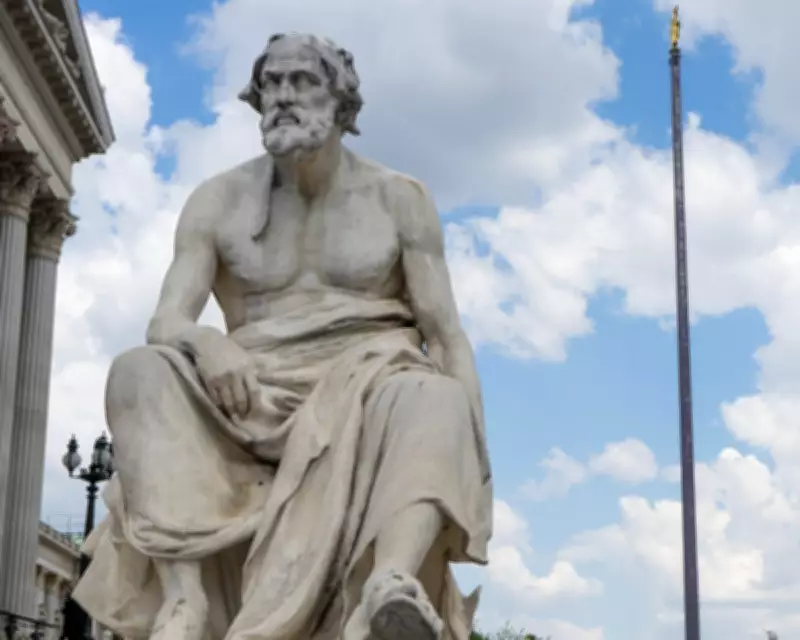
A statue of the Greek historian Thucydides in Vienna, Austria, serves as a reminder of his enduring influence on political thought. However, recent discussions about the so-called Thucydides trap have sparked debate over the accuracy of the translation that underpins this concept.
The Thucydides Trap: A Misleading Translation
In a letter to the editor, Tim Rood and Phil Coughlin examine the reference made by Chinese President Xi Jinping to the Thucydides trap during his meeting with former US President Donald Trump. Kate Lamb, in her article explaining Xi's allusion, cited Thucydides' statement that 'it was the rise of Athens and the fear that this instilled in Sparta that made war inevitable.' This translation, attributed to Richard Crawley's 1874 edition, was popularized by Harvard political scientist Graham Allison, who coined the term 'Thucydides trap.'
A Closer Look at the Original Greek
Scholars argue that Thucydides' Greek is more accurately rendered as 'the Athenians growing great and creating fear in the Spartans compelled them towards making war.' This interpretation emphasizes a subjective impression of necessity on the Spartans' part, rather than an absolute claim of inevitability. The distinction is crucial, as it suggests that perceptions of necessity can become self-fulfilling prophecies.

Interestingly, the translation used by Allison was introduced into Crawley's edition by his nephew Richard Feetham in 1903, a time when the threat of 'inevitable war' between Britain and Germany was gaining traction. This historical context underscores how translations can be shaped by contemporary anxieties.
Implications for Modern Politics
Rood and Coughlin hope that Allison's misleading reading of Thucydides might at least help modern politicians avoid the misnamed trap more effectively than their early 20th-century predecessors. The Thucydides trap, though based on a flawed translation, remains a powerful metaphor for the dangers of escalating tensions between rising and established powers.
In a separate letter, Phil Coughlin humorously notes that Xi's mention of the Thucydides trap was particularly cruel to Trump, given his difficulty with pronouncing classical names like Thucydides or Peloponnese. He jests that this might lead to a new conflict being added to the classical canon: the polo ponies war.
These letters highlight the importance of accurate historical interpretation in contemporary political discourse and the potential consequences of misreading ancient texts.






