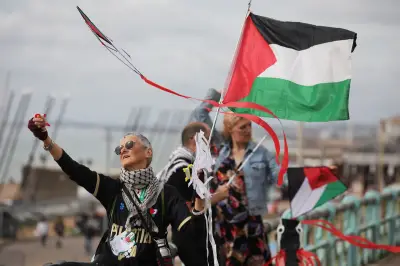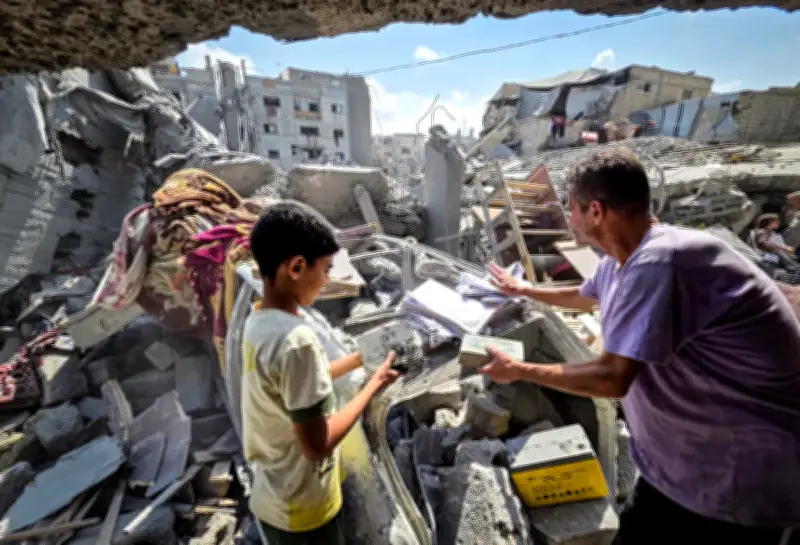
Three years after the Hamas attack on 7 October 2023, the world has changed profoundly, with the conflict in Gaza reshaping the Middle East and undermining the international rules-based order. The war, which has killed more than 73,000 Palestinians, including 21,000 children, has also triggered regional conflicts affecting countries from Lebanon to Yemen, and has exposed western hypocrisy over international law, according to an analysis in the Observer.
Regional Escalation and New Conflicts
Israel, under the pretext of protecting its borders, has launched military offensives across the region, sending troops into Syria, effectively annexing parts of southern Lebanon, and starting an unwinnable war with Iran that has spiralled into a regional conflict affecting all six Gulf states. The Iran war has sparked a new conflict between the Houthis in Yemen and Saudi Arabia, which triggered a mutual defence pact with Pakistan and Turkey, dragging two other countries into the maelstrom. Across the Red Sea, some of the same combatants are involved in the war in Sudan and a fresh conflict inside Ethiopia.
More than a dozen countries across two continents are now entangled in a rising number of wars, with overlapping participants and numerous competing interests. The article notes that the before-and-after pictures tell part of the story, with satellite images showing entire towns reduced to rubble, mosques and hospitals disappeared, and the once-empty shoreline now crammed with tents.
Erosion of International Law
The rule of international law has been openly replaced by military might, the article argues. In 2022, western leaders made moral appeals based on the violation of international law in opposing Russia's invasion of Ukraine, but in Gaza they encouraged and supported Israel even when rules were being broken. This hypocrisy has not gone unnoticed, not just in the global south but among many millions of citizens in the west.
War crimes have never before been broadcast in real time, relentlessly, every hour of every day, around the world, with hundreds of Palestinian journalists reporting on the bombing of hospitals, schools, cafes and wells. Israel has also pioneered the use of AI to select targets, accelerating our descent into a future for which we are unprepared, the article states.
Western Complicity and Shifting Politics
The article criticises the Biden administration for ensuring the flow of weapons to Israel continued uninterrupted, vetoing UN security council resolutions calling for a ceasefire, and attacking the international criminal court when it sought to indict Netanyahu for war crimes. It contrasts this with past Republican presidents who used influence over Israel, citing Ronald Reagan's suspension of an arms deal in 1981 and Colin Powell's review of Israel's use of American arms in 2002.
However, the article notes a ray of hope: political winds have shifted in many countries. The UK now has a prime minister who was one of the few western politicians to call for a ceasefire just weeks after 7 October, and Ed Miliband's willingness to describe Israel's actions in the West Bank as "ethnic cleansing" indicates a change in attitude. In the US, support for Israel has fallen through the floor, and for a Democrat who wants to be president in 2028 there is no credible path to the White House that doesn't involve support for the Palestinian cause.
Accelerated Trends and Unpunished Crimes
The article argues that Gaza has accelerated trends seen in previous conflicts, such as in Tigray and Sudan, where wars killed 600,000 people with no accountability. It concludes that the wars that have begun cannot easily be stopped, and if war crimes go unpunished, they only escalate. Two million Palestinians in Gaza are still living under the brutal rule of Hamas and the daily threat of death from a military force that fears no consequences, the article states.