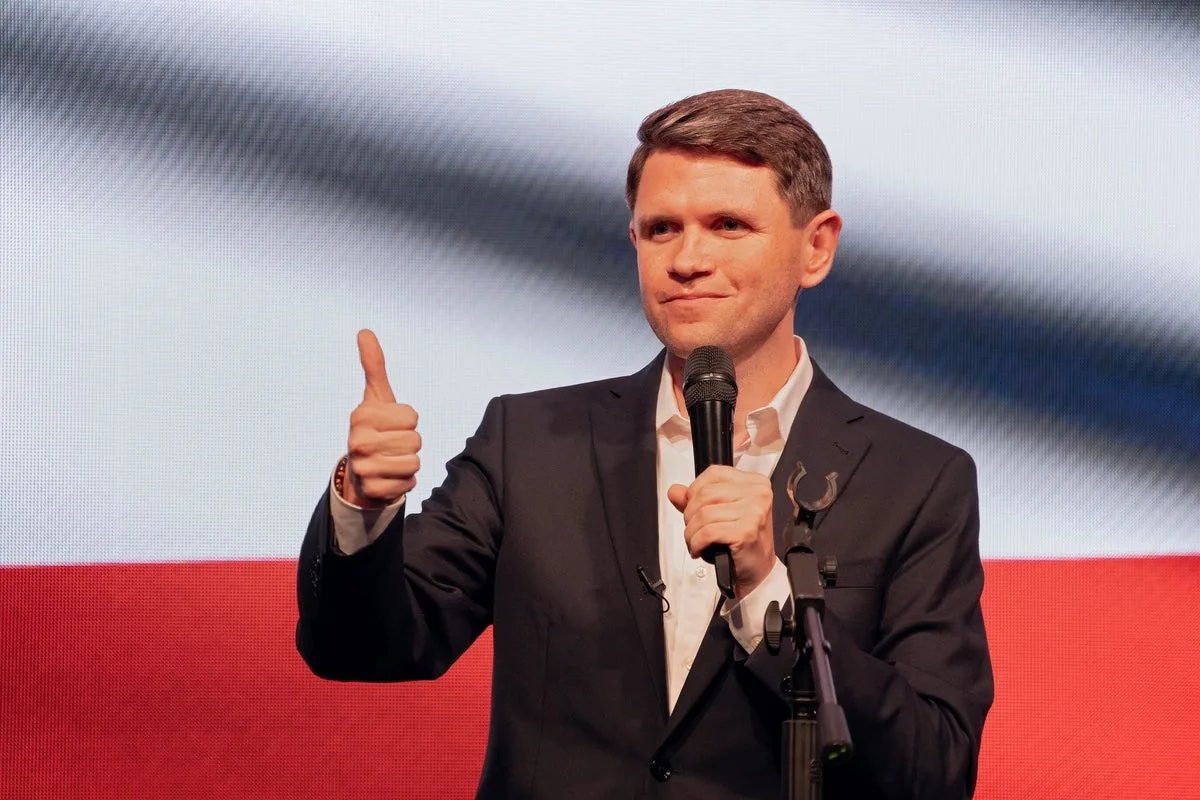
Even before all ballots were tallied in last week's Republican Senate primary in Texas, party members swiftly launched a barrage of attacks against the Democratic candidate, James Talarico, signaling an early and aggressive start to the general election campaign. Texas congressman Brandon Gill declared on X on May 22 that Talarico 'wants to trans your kids.' Days later, White House Deputy Chief of Staff Stephen Miller falsely asserted that Talarico himself was 'transgender.' Online attack advertisements circulated, highlighting controversial past statements from the state representative and seminarian, dismissing him as a 'woke weirdo.'
With Republicans facing increasing pressure over high gas prices and an unpopular conflict in Iran, the party appears to be shifting its focus to more familiar ideological ground ahead of the November midterm elections. The strategy centers on gender identity and other cultural wedge issues in a race that could prove pivotal in determining control of the U.S. Congress. Some of these attacks are specifically tailored to Talarico, 37, a rising figure in the Democratic Party who frequently discusses how his progressive policy stances are rooted in his Christian faith. Others are designed for Texas, a state that has not elected a Democrat to the Senate since 1988.
Political operatives suggest this strategy is drawn from a broader Republican playbook that contributed to nationwide gains in the 2024 election cycle, and which they hope will help them navigate political challenges across the country in 2026. The stakes are considerable: Democrats face a narrow and challenging path to reclaiming the Senate, but a victory in Texas would significantly boost their prospects. Democratic strategists view the Republican candidate, state Attorney General Ken Paxton, as an unusually vulnerable opponent, burdened by corruption scandals and marital infidelities. A poll released Friday by Texas Public Opinion Research indicated a tight contest, with Talarico leading Paxton 47% to 44% among likely voters.

Strategists contend that Talarico’s campaign represents an early test for Democrats on how to address a recurring dilemma: responding to culturally charged attacks without being defined by them or alienating key voter groups. 'Republicans need to mobilize voters,' explained Daron Shaw, a professor of politics at the University of Texas at Austin and a member of the bipartisan Fox News polling team. 'Painting Talarico as just unacceptable to Texas voters,' he added, is not merely an appeal to the base but will be 'targeted at non-MAGA Republicans and independents.'
So far, Talarico has prioritized economic issues, accusing Republicans of attempting to re-ignite 'old, tired culture war fights.' In an interview with CBS, he acknowledged that some past remarks 'missed the mark,' including a 2021 statement that 'God is nonbinary.' Yet, his campaign has also embraced the criticism, selling 'I’m a Talafreako' T-shirts to supporters. 'This is how puppet politicians like Ken Paxton stay in power,' Talarico told Reuters at a campaign stop in San Antonio on Friday, when asked about the attacks. 'They divide us by party, by race, by gender, by religion, by culture ... And I think Texans are done being divided.'
The Paxton campaign did not respond to a Reuters request for comment. Samantha Cantrell, a spokeswoman for the National Republican Senatorial Committee, the party’s Senate campaign arm, stated it was crucial for Texans to understand Talarico's positions on various issues. 'Saying that God is non-binary is a very, very radical leftist viewpoint,' she said. Yemisi Egbewole, a Democratic strategist and former adviser to President Joe Biden, commended Talarico for his direct approach in countering the attacks. 'He just addressed straight to camera across multiple outlets that his comments were cringe, and characterized himself as being a bit provocative,' she said. 'I think you've just got to knock it out of the way, right away.' Other Democratic candidates should take note, Egbewole and other strategists advised, as Republicans aim to divert the conversation from economic concerns. Polls show a clear majority of Americans are dissatisfied with Donald Trump’s handling of the economy, typically an area of strength for him and his party.