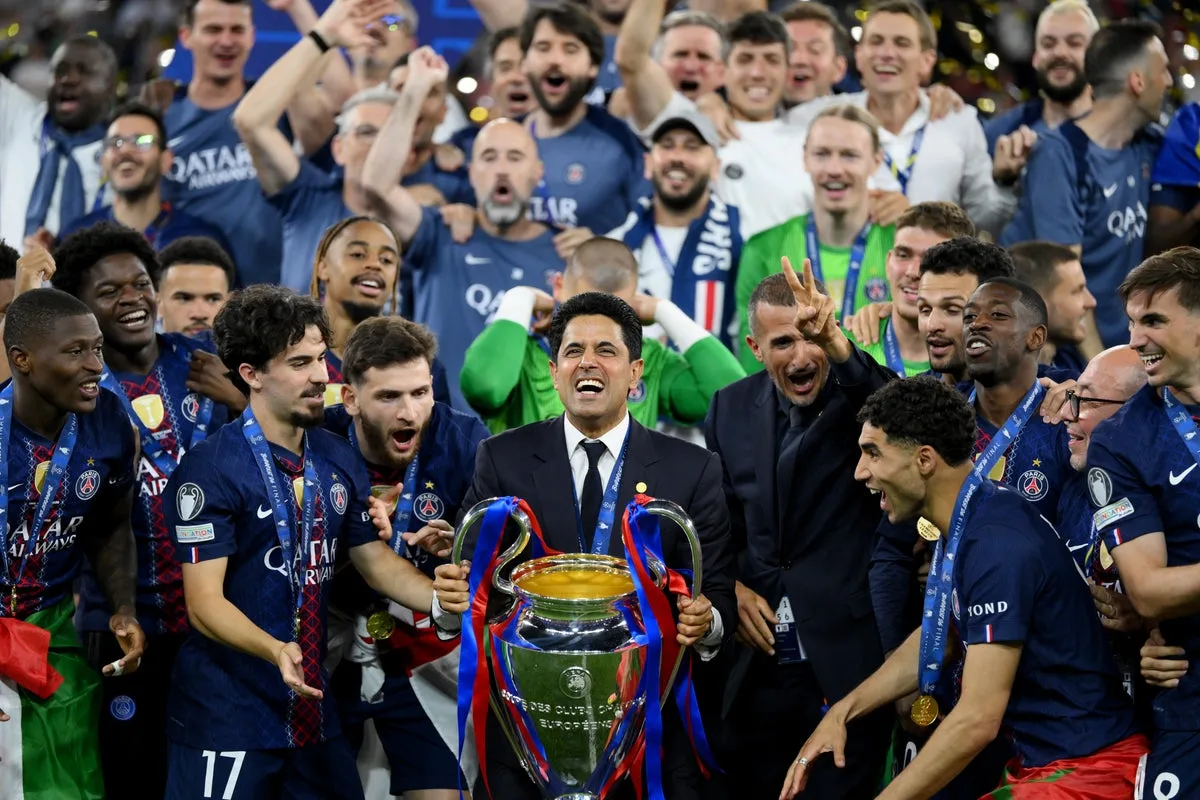
Qatar once again holds the European Cup, a reality that critics say has become normalised amid celebrations of Paris Saint-Germain’s Champions League victory. Four years ago, the tournament’s proximity to the World Cup sparked fury over sportswashing, human rights abuses and the imprisonment of whistleblower Abdullah Ibhais. Now, such concerns have largely faded, replaced by praise for PSG’s football and endearing details like Khvicha Kvaratskhelia’s sunglasses.
The response to PSG’s retention of the trophy and Pep Guardiola’s departure marks a moment when autocratic state money has become fully integrated and accepted in elite football, with objections pushed to the margins. This normalisation has been the long-term goal, and it has largely succeeded: three state-owned teams have won the Champions League in four years, yet the prestige of retaining the trophy feels less special when outcomes are predictable due to greater forces.
Mention of Qatari sportswashing this weekend prompted pushback on social media, with demands to “change the record” and accusations of whataboutery referencing Arsenal’s sponsorships and Western imperialism. While capitalist billionaires also extract money from football, critics argue that autocratic state influence is worse for the wider game, as state owners like PSG president Nasser al-Khelaifi answer to the Emir of Qatar, who sets laws by fiat.

The power dynamics of the Champions League are increasingly shaped in executive boxes, not on the pitch. Images of Florentino Perez, Aleksander Ceferin and Khelaifi together illustrate where real influence lies. As the sportswashing debate recedes, the integration of state money into football appears complete, with any remaining concerns effectively silenced.