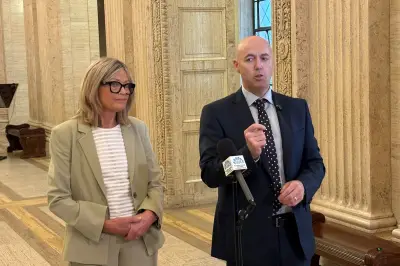
Geoffrey Watson, a board member at the Centre for Public Integrity, has backed Prime Minister Anthony Albanese's call to restore faith in the political system, but suggests starting by ending private dinners with billionaires. Watson argues that any money paid to dine with the prime minister should be a matter of public record.
Private dinners raise concerns
Watson questions whether Albanese discussed pressing issues like cost of living or housing during a dinner at the multimillion-dollar home of a billionaire's son, or at recent dinners in Adelaide and Perth where a select group reportedly paid $10,000 each to dine with him. He notes that these were private events, with Albanese stating, "I don't talk about private dinners."
The perception, Watson says, is that politicians are inaccessible and remote from everyday problems, and that they are not listening to the public. He argues that no one pays money unless there is value to be gained, and that these dinners are about gaining access to decision-makers, not supporting democracy, as direct donations would serve that purpose.

Problems with the current system
Watson highlights that some attendees were reportedly from public companies and may owe a fiduciary duty to shareholders to get value for money. He suggests that national matters of planning and policy were likely under discussion, which could be valuable information to the public. He insists there should be no occasions where information of general public importance is shared with a select audience.
He also criticises the high price of participation, which only allows the powerful and rich to be involved, and notes it is unfair to smaller parties and independents who cannot attract such funding. The current disclosure rules around political donations are inadequate, with government frontbenchers responding "that is a matter for the party" when asked for details.
Call for reform
Watson agrees with Albanese that faith in the system needs urgent restoration, but suggests cutting out dinners with billionaires. He believes the ALP, as the party claiming to represent ordinary Australians, could make such a concession. He calls for breaking the donation and spending cycle, noting that a package of federal reforms has passed but is biased in favour of major parties, and has been challenged in the high court for infringing the implied freedom of political communication.
He concludes that while elections cost money, the involvement of money in the election system should not come at the cost of its integrity. He fears that politicians, given their inherent conflict of interest, cannot be trusted to handle it properly.