

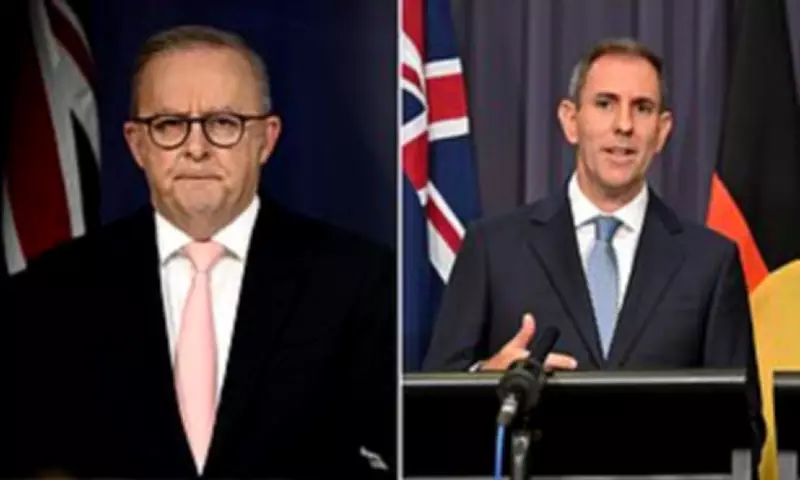
Labor has been condemned as the 'highest taxing government in Australia's history' as income tax bracket creep leaves Australians $2,000 worse off. The Coalition argues that soaring tax receipts reflect more than just stronger employment and wage growth. It says inflation has pushed workers into higher tax brackets without a real lift in purchasing power, steadily increasing the tax burden on households.
Understanding Bracket Creep
Bracket creep occurs when inflation and nominal wage growth push taxpayers into higher brackets, lifting their average tax rate even though their living standards have not improved. Because income tax thresholds are not indexed to inflation, the burden rises automatically during periods of sustained price growth.
Figures released by the Parliamentary Budget Office in 2025 show the average tax rate is projected to rise to 27.8 per cent over the next decade, up from about 24.5 per cent today, underscoring the long‑term impact of bracket creep. Personal income tax has already surged to an all‑time high of 12.7 per cent of GDP in 2023‑24 and, under current Labor policy settings, is forecast to climb further to 14.5 per cent by 2035‑36.

Historical Tax Comparisons
On average across its time in office, Labor has collected more tax as a share of the economy than any government in Australian history, with the tax take averaging 23.55 per cent of GDP, according to the Opposition's analysis. Income tax under the Albanese government climbed to a record 12.7 per cent of GDP in 2024. That figure rises further once Labor's forward estimates are included.
Budget data also shows the Albanese government's tax‑to‑GDP ratio has averaged 23.6 per cent between 2022‑23 and 2025‑26. That compares with an average of 22.2 per cent under the Abbott‑Turnbull‑Morrison Coalition and 20.8 per cent under the Rudd‑Gillard Labor government, which governed through the global financial crisis and a sharp commodity downturn.
Shadow Treasurer's Remarks
Shadow treasurer Tim Wilson told an event hosted by the Australian Chamber of Commerce and Industry on Monday that Australians have lost $2,000 a year to bracket creep since the Albanese government came into power in 2022. 'That’s why, over their time in government, the Albanese government is the highest-taxing government in Australian history,' he said.
Economist Warns of Intergenerational Inequity
AMP chief economist Shane Oliver said Australia was becoming overly dependent on personal income tax. 'There is a broader problem in Australia that we are more and more reliant on income tax to balance the budget and pay for the cost of an ageing population,' he told Daily Mail. Oliver warned the trend was creating growing intergenerational inequity.
'To me, that's a key issue of intergenerational inequity, that Australian self‑funded retirees when they retire often don't face a lot of tax, whereas younger people or workers will face potentially ever higher tax rates over time just to balance the budget,' he said. He said the problem extended well beyond high‑income earners. 'Even low‑income earners will still be going into higher tax brackets over time, so this doesn't really fix the problem. The bracket creep problem still remains. As wages and inflation go up, you will go into higher tax brackets and pay a higher tax rate unless we change the tax brackets every year, and governments don't do that.'
Potential Tax Changes Ahead
As Labor prepares to hand down its May 12 federal budget, the government is also considering further tax changes that would hit property investors. Measures under review include unwinding capital gains tax concessions, restricting negative gearing, and implementing a Treasury proposal to impose a 25–30 per cent minimum tax on trust distributions.

Speaking on Monday, Treasurer Jim Chalmers addressed expectations that Labor could reverse its earlier position on tax changes, including capital gains tax and negative gearing, after Albanese previously ruled out changes before the election. Chalmers framed the shift as a matter of generational fairness. 'Our responsibility is to calibrate the budget to the conditions, to understand and respond to the very real pressures that people are under now and in intergenerational terms as well,' he said. Chalmers said any departures from Labor's election platform would be explained, comparing the approach to the government's changes to the stage three tax cuts.





