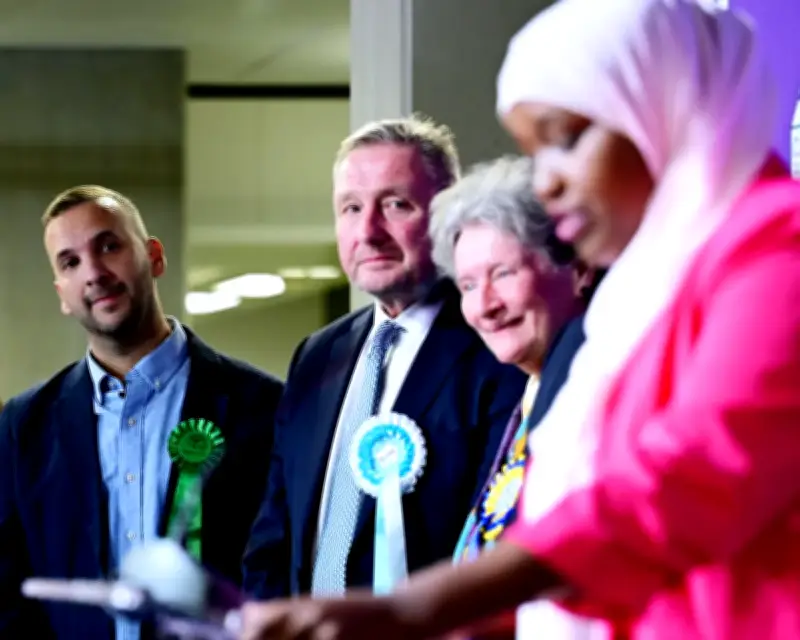
Labour's hold on Holborn and St Pancras has left the Green Party facing a perilous future, with its leader Zack Polanski under scrutiny after a byelection defeat that exposed deep internal divisions.
According to polling expert John Curtice of Strathclyde University, the result echoed national opinion polls, reflecting two undeniable facts: the Greens need a period of contrition and reflection, and Labour should be less than ecstatic. Labour's majority of 3,364 shows the party "are in a much better position than they were six months ago, but still not as popular as they were in 2025," Curtice said.
Greens' Ground Lost
The Greens remain "a more significant player than historically they have ever been," but have lost much of the ground gained during Polanski's first year as leader, when the failures of local MP Keir Starmer provided opportunities. The Greens' earlier success in Gorton and Denton played a major role in Starmer's departure, but now the party's claim of tripling its vote share in the seat is "very specious," according to pollster Peter Kellner.
Kellner noted that two years ago, the leftwing vote was divided between the Greens' 10.4% and independent Andrew Feinstein's 18.9%, totalling 29.3%. The true increase in the leftwing anti-Labour vote is only 3.5 percentage points, leaving Polanski to face a choppy period ahead.
Voter Sentiment Shifts
During two days in the constituency filming the Guardian's Anywhere But Westminster series, conversations revealed a politics in flux. Young people of colour in Somers Town voted Green, citing Gaza and the cost of living in London. A woman in Primrose Hill said she no longer reveals her Jewish identity for fear of uproar about Israel. Most notably, a 24-year-old trainee teacher named Tom, who once was an enthusiastic Green member and activist, switched to Labour after the "Zionism is racism" motion passed at the party conference.
Polanski, who endorsed the idea that Zionism is a form of racism eight days before the conference, was notably absent from the debate and vote. This has left him looking not just morally questionable but distinctly weak.
Broader Green Appeal at Risk
In Frome, Somerset, the Greens provide four of six councillors on the unitary council. Rural climate-fear aligns with Ellie Chowns's election as Green MP for North Herefordshire and Adrian Ramsay's success in Waveney Valley. Bristol Central, held by former co-leader Carla Denyer, also reflects this trend. The Greens' resurgence was powered by radical, empathetic social democracy and urgency about the planet, but Polanski's approach risks wrecking these successes by welcoming embittered former Corbyn supporters and ultra-leftists.
Former leader Caroline Lucas and activist Rupert Read are set to publish Climate Popularism on 15 October, arguing for "centrally funded, locally appropriate action to adapt neighbourhoods, infrastructure and ways of life" to climate change. They propose a domestic retrofit programme creating "secure green jobs" and discuss an "exhausted majority" tired of shrill politics, suggesting "depolarisation" of the climate issue—the opposite of Polanski's approach. They advocate for citizens' assemblies and a politics of "courage, hope, love of place."
Burnham still has work to do, and the Greens face massive self-questioning and reinvention as the fallout from Polanski's crash deepens. Whether they will even have the inclination is another question entirely.