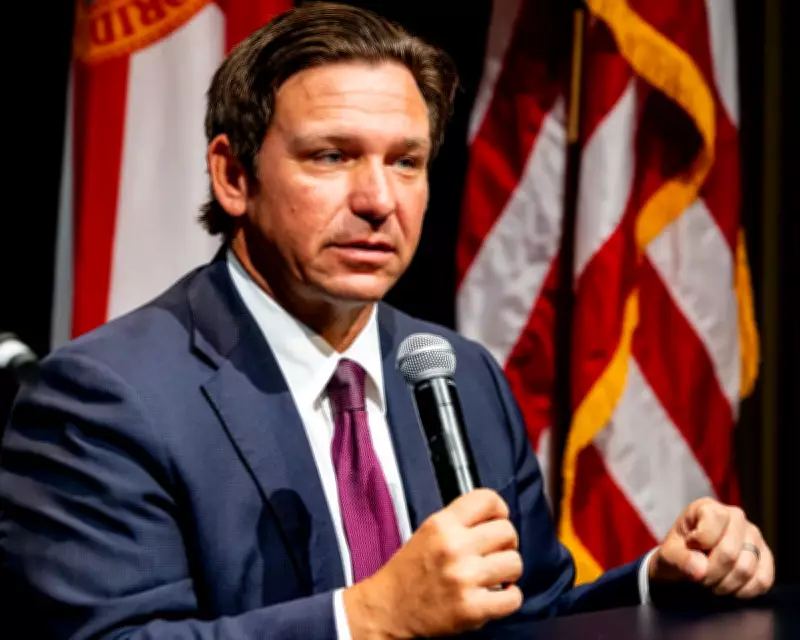
Florida Governor Ron DeSantis, a Republican, unveiled his proposal for redrawing the state's congressional districts on Monday, aiming to secure up to four additional US House seats for his party in the upcoming midterm elections. The plan, which will be debated during a special legislative session starting Tuesday, represents a pivotal move in the nationwide gerrymandering struggle for control of Congress, a battle that appears to be swinging back in Republicans' favor.
National Context and Legal Battles
The Supreme Court recently sided with Texas Republicans by reinstating a redrawn electoral map that could flip up to five seats. Meanwhile, Virginia remains embroiled in a legal dispute over Democratic efforts to capture four Republican-held seats. A district court judge blocked a new map approved by referendum, and the Virginia Supreme Court is now hearing arguments. In California, Democrats succeeded when voters approved maps that could yield five additional seats, with the Supreme Court rejecting a Republican challenge in February.
DeSantis's Proposal and Political Reactions
If approved by Florida's Republican-controlled legislature, DeSantis's maps would take effect for the 2026 midterms, subject to legal challenges. Currently, Republicans hold 20 House seats in Florida, Democrats seven, with one vacancy after Democrat Sheila Cherfilus-McCormick resigned amid allegations of misusing federal disaster funds. DeSantis argues the plan is necessary to balance representation in districts with significant population changes, but it could reduce Democrats to just four seats: one in central Florida and three in the Miami-Fort Lauderdale-Palm Beach region.

DeSantis told Fox News, "Florida got short-changed in the 2020 census, and we've been fighting for fair representation ever since. Our population has grown dramatically, and we have moved from a Democrat majority to a 1.5 million Republican advantage. Drawing maps based on race, which is reflected in our current congressional districts, is unconstitutional." His stance contrasts with Republican criticism of Virginia's referendum, which Donald Trump called "rigged" and House Speaker Mike Johnson labeled a "dishonest gambit." However, Johnson supported Florida's redistricting, stating the state "has the right and the intention to do it."
Democratic Response and Campaign Spending
House Democratic Minority Leader Hakeem Jeffries warned DeSantis that the move could backfire, urging him to "F around and find out." In a statement, Jeffries added, "If Florida Republicans proceed with this illegal scheme, they will only create more prime pick-up opportunities for Democrats. We are prepared to take them all on, and we are prepared to win." DeSantis responded by inviting Jeffries to campaign in Florida, offering to host him at the governor's mansion and take him fishing. Jeffries then announced a $20 million advertising campaign targeting eight vulnerable Republican incumbents in Florida, part of a $272 million national investment by the House Majority PAC. The group's communications director, CJ Warnke, stated that Republican members "are on notice" and that DeSantis's plan "will put even more Florida Republicans at risk." Nikki Fried, chair of the Florida Democratic Party, has previously called the redistricting push "unconstitutional gerrymandering."