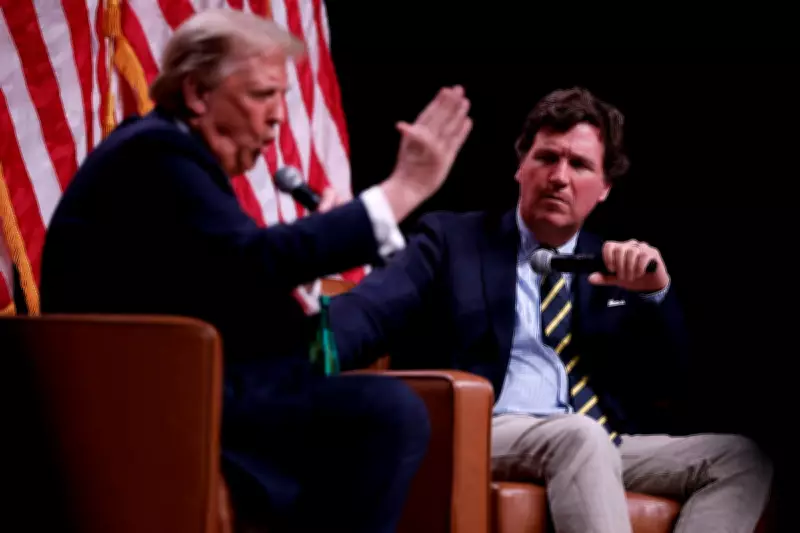
Former Fox News host and longtime Trump ally Tucker Carlson has launched a scathing attack on President Donald Trump, accusing him of prioritising global ambitions over the welfare of ordinary Americans. In a recent episode of his podcast, Carlson claimed that Trump would rather 'run the world' than make life better for people in struggling US cities and rural areas.
Carlson's Criticism of Trump's Priorities
Carlson specifically called out Trump for neglecting places like Baltimore, Maryland, and Gary, Indiana—cities that have faced economic decline and social challenges. He alleged that the president shows no genuine concern for these communities and that rural America makes him 'sick'. The podcaster argued that Trump's focus on international affairs has come at the expense of domestic issues.
Iran War and 'Maximum Frustration'
Carlson also criticised the ongoing US military campaign against Iran, which has now entered its third month. He described the conflict as a failure, leading to what he called 'maximum frustration' within the Trump administration. According to Carlson, the war has not achieved its objectives and has instead bogged down the US in a costly and unpopular conflict.

Regret for Supporting Trump
In a striking turn, Carlson expressed regret for his previous support of President Trump. He stated that he feels 'implicated' in the current political situation and is 'sorry for misleading people' who followed his earlier endorsements. This marks a significant shift for Carlson, who was once one of Trump's most vocal defenders on Fox News.
Trump's Response
President Trump did not hold back in his response to Carlson's remarks. On social media, he described Carlson as 'a Low IQ person – Always easy to beat, and highly overrated!!!' The president dismissed Carlson's criticism as the words of a disgruntled former ally seeking relevance.
This public feud between two prominent conservative figures highlights growing divisions within the right-wing media and political landscape. Carlson's break with Trump could signal a broader realignment among conservative commentators and voters as the 2026 midterm elections approach.