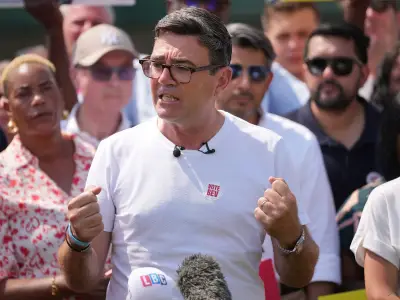
As the nomination period for the next Labour leader approaches, there is uncertainty not about who will become prime minister but about what kind of leader Andy Burnham will be. Bound by the same manifesto and facing the same challenges, Burnham is seen as having a vision his predecessor lacked, though interpretations of that vision vary widely across Labour factions.
Different Visions of Burnham's Leadership
Old-school Blairites view Burnham as one of their own, citing his background and his appointment of James Purnell as chief of staff. The Labour right is encouraged by rumours of Shabana Mahmood as chancellor and Josh Simons' role in the policy team. The soft left bets on Burnham's transformation via the Hillsborough scandal, the infected blood scandal, and Covid inequalities, seeing him as a new kind of thinker. However, as Zoe Williams notes, 'they can’t all be right.'
The Meaning of 'Good at Politics'
There is broad agreement that Burnham will excel at the political game, but what that entails is multifaceted. It includes being genuinely liked by the public, having a built-in power base in parliament, cooperating across party lines, managing internal factions, and delivering speeches with sincerity. Sincerity itself is a rare quality: 'We feel words are genuinely meant when they sound as if you wrote them yourself,' Williams writes. Boris Johnson and Jeremy Corbyn had it; David Cameron and Keir Starmer did not.

Authenticity and Radicalism
Authenticity often correlates with a willingness to be a chancer or a radical—someone who thinks beyond current limits. It is difficult to distinguish a charlatan from a radical until their ideas are tested. A prime minister's ability to maintain faith without ego-overdrive is another political skill, often only apparent after leaving office.
Internal Party Politics
Internal party dynamics also test a leader: distinguishing loyal MPs from those who support you only because you're winning, bringing along dissenters without brute authority, delegating without creating rival fiefdoms, making decisions, and withstanding unpopularity while remaining open to critique. 'The grimy, sausage-making aspects of politics—ruthlessness, inconsistency, low cunning, dishonesty—open up a new contradiction,' Williams observes. A leader must use guile without becoming dirty, as Boris Johnson's downfall illustrates.
Mission Over Politics
Starmer might tell himself he was undone by a lack of base nature, but Williams argues it was the absence of mission that brought him down. Burnham promises a mission, and while being 'good at politics' does not guarantee a legacy, it can provide a start. 'Burnham benefits from comparison with his predecessor and, you have to hope, in time, with the five previous residents of No 10,' Williams concludes.