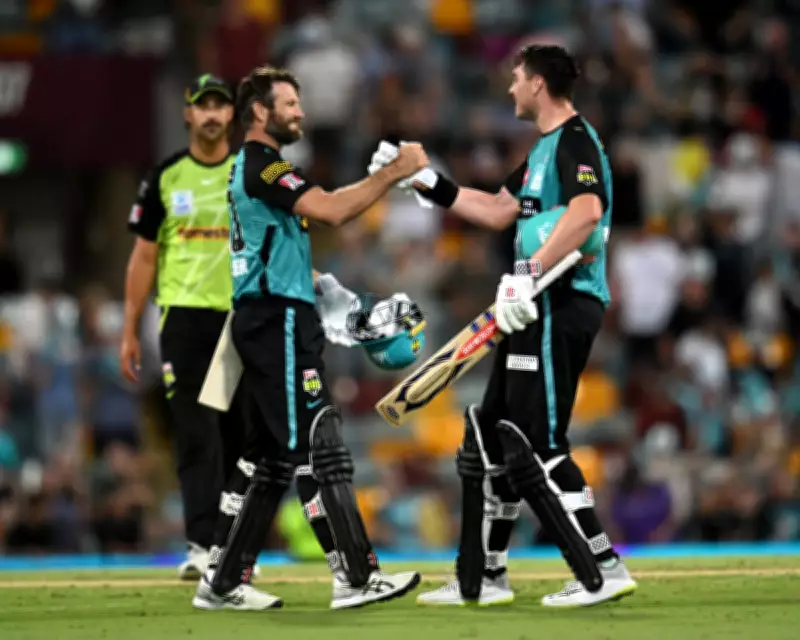
Cricket Australia's ambitious plan to sell off stakes in the eight Big Bash League (BBL) franchises has been placed on hold after Queensland joined New South Wales in rejecting the original privatisation proposal. Queensland Cricket, which controls BBL side Brisbane Heat, has backed Cricket NSW's opposition to CA's plan to sell up to 49% of each franchise to private owners, with valuations of up to $200 million per team.
State Associations Divided
The Victorian, Western Australian and Tasmanian cricket associations have shown support for the BBL privatisation plans, while South Australia is open to the idea for other states but wants to maintain control of the Adelaide Strikers for the time being. The revolt from two state associations leaves the future of the T20 league up in the air from the 2027-28 season, as CA begins to consider alternative options.
CA Chief Executive's Response
CA chief executive Todd Greenberg stated that he would have proceeded with testing the market if five of the six states had supported the privatisation proposal. Instead, he will now explore South Australia's preferred model, where some states bring in private capital now and others join later. “Option A for us has always been ... that we do it at the same time to extract the maximum value in the market,” Greenberg said on Thursday. “But clearly we’re not at that point, so we now have to reassess what comes next.”

Greenberg emphasised the need for deep analysis to understand the impacts on Australian cricket, stating, “To do this, it needs to benefit the entire sport, and we have to look at that lens in the decisions that we make.”
Future of BBL and Revenue Alternatives
Greenberg said it would be business as usual for the BBL next season while CA explores ways to raise additional revenue and compete with white-ball competitions around the globe, including The Hundred in the UK. The ECB's auction for The Hundred franchises last year raised £520 million (A$1 billion) as money continues to follow in the slipstream of the Indian Premier League and flow into franchise cricket, including in South Africa and the UAE.
Greenberg noted that some states are “absolutely interested” in IPL franchises buying stakes in BBL clubs, while others are not. However, he flatly rejected NSW's alternative funding model to privatisation that would involve increasing gambling revenue from cricket. “Our view is that’s not a step the sport would accept, to back itself on wagering, is not a way to fund the game, and it’s been very clear from the CA board,” he said.
Inevitable Private Investment
Greenberg argued that private investment is inevitable if Australian cricket wants to compete with the rest of the world. When private investors do come, it could mean changes to the colours and branding of franchises. “There’ll be some states who will have a great affinity to their brand and their colours, and there’ll be some states who don’t. And I’m sure there’ll be some investors who will look at brands and colours and see that as a huge part of their investment, and others who won’t.”