

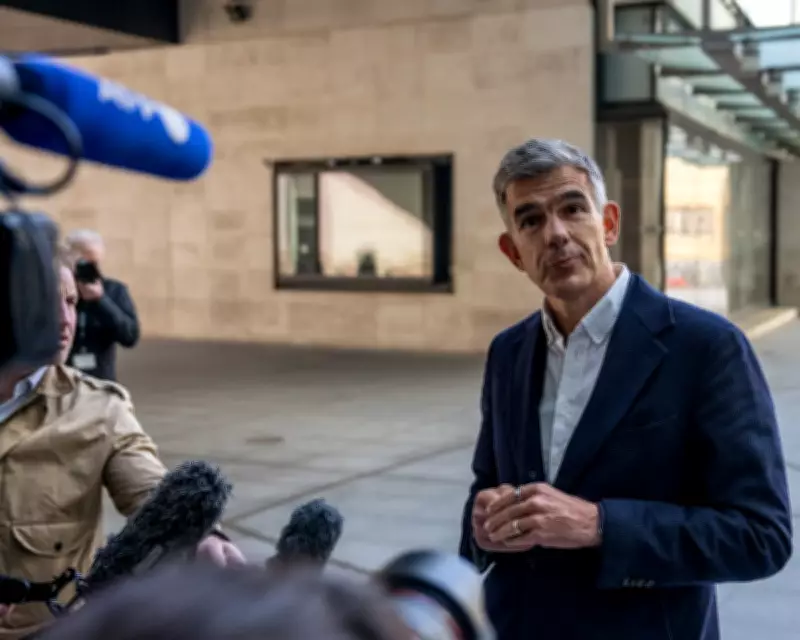
The newly appointed director general of the BBC, Matt Brittin, has taken the helm of the corporation at a critical juncture. His first day was marked by a clear message: the need for speed and urgency. In his initial all-staff email, Brittin used the word "velocity" twice and invoked the spirit of the second world war to call for a "sense of urgency." His schedule included a LinkedIn video and meetings with various teams, underscoring his focus on rapid change.
Brittin's Balancing Act
Brittin, the former head of Google in Europe, appears to be adopting a "move fast but break nothing" approach. This contrasts with Mark Zuckerberg's infamous "move fast and break things" mantra, which has been criticized for its role in undermining democracy and social cohesion. The BBC, with its commitment to journalism and universality, has been battered by on-demand entertainment, fake news, and internet slop. The big question is how Brittin can turn around the 103-year-old BBC supertanker without hitting the icebergs in his path.
Challenges Ahead
Major obstacles include the charter renewal in 2027, a demoralized and reduced workforce, and a hostile British media that often fuels culture wars. Brittin, a former Olympic rower, seemed eager on his first day, peppering staff with questions and demonstrating a steely focus. One staff member noted, "There's no unseemly haste or panic, just a pretty steely focus."

Cost-Cutting and Priorities
Brittin's focus is likely on cost reduction. In April, the BBC announced a £600m cost-cutting plan that could eliminate up to 2,000 jobs, or one in ten of the workforce. On his first day, Brittin had to walk past striking journalists protesting previous cuts to the World Service and radio news. The BBC's real-terms income has fallen by up to 30% since 2010 due to government cuts to the licence fee and rising non-payment.
Brittin outlined three priorities: making the strongest case for the BBC's survival to the government, speeding up decision-making, and simplifying operations. There is speculation that BBC broadcast channels could be cut as the corporation strikes deals with platforms like YouTube and TikTok. The hardest cuts are expected in news, which could be a mistake, as it would undermine Brittin's third priority of "editorial excellence."
Editorial Challenges
Mark Urban, a 34-year BBC veteran who left in 2024, wrote that constant cuts have made the newsroom more risk-averse, with those who "play it safe" surviving. Programmes like Newsnight have fewer journalists, leading to over-reliance on external talking heads and a focus on Westminster and White House stories. Recent controversies—Huw Edwards, Bob Vylan at Glastonbury, and the edit of Donald Trump's Capitol speech—highlight editorial and cultural missteps.
One major doubt about Brittin is his lack of editorial experience. He has promised to address this by appointing a deputy, but as editor-in-chief, the buck stops with him. Richard Sambrook, former director of BBC News, said this should not matter if lines of responsibility are clear: "Editors should be responsible, then the head of news. The DG should be above the fray."
Technology and Innovation
Brittin's background at Google suggests a strong interest in technology. His visit to the BBC's Blue Room, a hub for R&D on emerging tech, confirmed this. The team works on iPlayer improvements and issues like trust and trickery in the AI age. Bill Thompson, principal R&D engineer, described the BBC as a mechanism to use technology "to improve people's lives."
Brittin, accompanied by a videographer in his first week, knows his messaging must reach both licence-fee payers and a cash-strapped government. Making the strongest case for the BBC's future will require editorial that upholds truth in a world of internet slop. One key question he is asking his team is what they would do if they were inventing the BBC today. The BBC's reinvention will be hard, but its survival depends on it.






