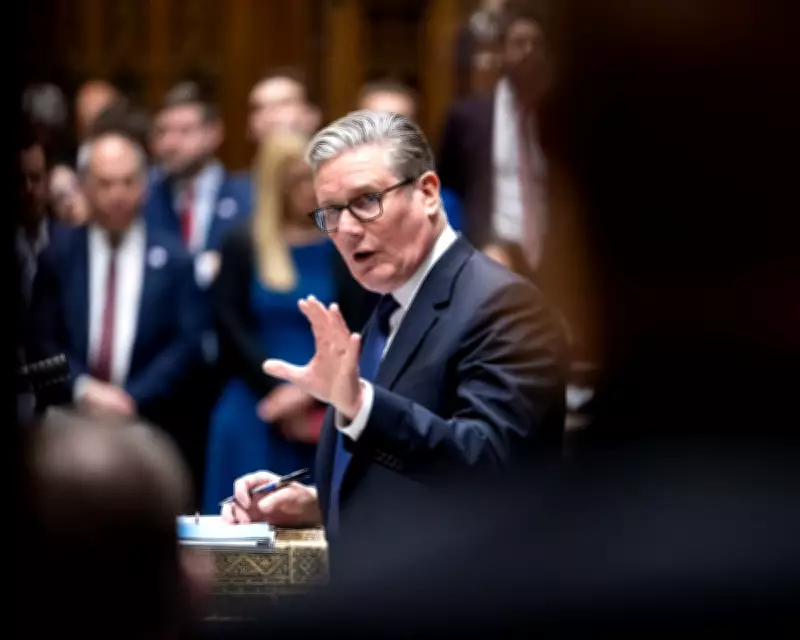
As Britons consider the prime minister's shortcomings and size up likely successors, a question emerges: is the electorate itself the problem? If Keir Starmer falls on his sword, the UK will be on its sixth prime minister in seven years. The notion that 'the first five guys were just the wrong five guys' begins to sound implausible, akin to something Liza Minnelli might say when accounting for a life of torch songs. Doesn't there come a point in every electorate's life when it must splash cold water on its face?
The Grownup Perspective on Political Turmoil
This is where many are landing on the question of the present turmoil. Starmer is reportedly preparing his MPs to vote down any prospective sleaze inquiry, a straightforward task given his majority. Finally, he discovers what his landslide is for: preventing a parliamentary process identical to the one he used to bring down the last leader. If voters reject all this, they make themselves ungovernable, consigning themselves to a civic equivalent of a life on the shelf, always questing after fresh bureaucrats only to tear them apart when things get ugly.
Remembering Brenda from Bristol
It is strange to recall Brenda from Bristol's iconic 'Not another one! Oh for God's sake!' reaction to news of another snap election. That was not Boris Johnson's in 2019, nor the post-Truss Tory leadership election, but Theresa May's in 2017. It feels like yesterday—the same creeping sense that politics was not about democracy but a weird circus of levers pulled to remind us of democracy while shoring up the power of the weak. There was the same fog of contradiction: how could Westminster be so dramatic and eventful, yet so boring and arid?

Brexit's Legacy and Political Realities
It is considered vulgar to mention, but that has been the state of politics since the day after Brexit, though many subsequent shocks were not Brexit's fault. Did Dominic Cummings create Covid? He might take credit if it sealed his reputation for multidimensional chess, but no. Nobody from Reform or its previous iterations persuaded Putin to invade Ukraine. The through-line is not literal: 2016 marked the point when politicians ceased to try dealing with the world as it was. Dog behaviourists call it one-trial learning—burn your nose on a barbecue once and stay away. Stand before an electorate, say 'This will make you all poorer with no discernible benefit,' and lose once, and you stop saying what is real—en masse. The synchronisation is extraordinary, but groupthink is one thing Westminster has always been good at.
A Carousel of Empty Promises
In place of concrete plans from the real world, there has been a carousel of promises differing only in phrasing. They will level up, create a Britain Britons deserve. You want your life to be better, and they want that too. Thus it will be better because they mean it this time. Things will improve because of the growth they create, and even the stupidest know modern governments cannot conjure that, while the smartest know governments never could. We thought we had grown out of the grand fantasy that everyone's problems are some foreigner's fault, but on the contrary, we need to grow up more if we are ever to be mature enough for these politics.
The Need for Honest Politics
Those saying Brexit was a terrible mistake that needs reversing—Neil Kinnock at a Best for Britain event; Labour MP Marsha de Cordova—sound like fantasists or dreamers. But that is the only way politics will ever grow up: by describing reality as it is. Zoe Williams is a Guardian columnist.