Alcoa's $55m Penalty for Illegal Forest Clearing Tied to US Minerals Agreement
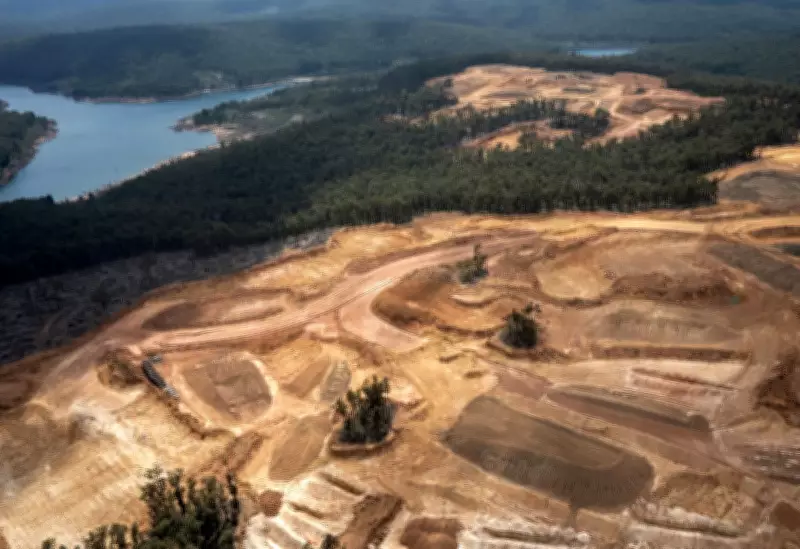
A newly uncovered document has exposed that the Australian government's decision to permit the US mining giant Alcoa to continue clearing extensive areas of Western Australian jarrah forest was partially influenced by a critical minerals agreement with the Trump administration. This revelation comes alongside the disclosure that Alcoa had been unlawfully clearing land for bauxite mining for 15 years, despite repeated warnings from federal environmental authorities.
Unlawful Clearing and a Controversial Penalty
Conservationists have expressed profound outrage over what they describe as an "unprecedented" $55 million penalty imposed on Alcoa. This penalty, announced by Environment Minister Murray Watt, pertains to illegal clearing activities alleged to have occurred from 2019 to 2025 in habitats of nationally protected species, without proper approval under the Environment Protection and Biodiversity Conservation (EPBC) Act. However, the penalty only covers a six-year period, leaving earlier violations unaddressed due to statutory limitations.
Minister Watt stated that the penalty, structured as an enforceable undertaking, was accompanied by a national interest exemption. This exemption allows Alcoa to continue clearing in the northern jarrah forest for 18 months while the government reviews a proposal to extend the company's Huntly and Willowdale mining operations until 2045.

Longstanding Non-Compliance and Government Warnings
The document, which outlines Watt's rationale for granting the exemption, reveals that the federal environment department had been notifying Alcoa since 2011 that its mining operations required approval under Australian environmental laws. A department spokesperson explained that any clearing before 2019 fell outside the statute of limitations, making investigation or enforcement action for earlier unapproved clearing impossible.
Matt Roberts, Executive Director of the Conservation Council of WA, condemned the situation, stating, "To learn that Alcoa has been illegally clearing the northern jarrah forest since 2011 is outrageous and an affront to every West Australian." He added that the government has prioritised corporate and foreign defence interests over environmental protection, jeopardising endangered species and Perth's drinking water sources.
National Interest Exemption and International Implications
Minister Watt justified the exemption by citing Alcoa's connections to a critical minerals deal between Australia and the Trump administration, which involves supplying gallium to the US for defence and renewable energy applications. The document notes that the Japanese government and Sojitz Corporation are joint venture partners with Alcoa in developing a gallium plant at the Wagerup refinery, with both Australian and US governments providing funding and equity.
Watt argued that while international involvement does not override domestic environmental laws, the exemption reinforces confidence in Australia's commitment to the project and the broader critical minerals framework. Georgina Woods, Head of Research and Investigations at Lock the Gate, criticised this decision as "disgraceful," accusing the minister of being influenced by the mining company to fulfil obligations under the US deal.
Historical Disputes and Legal Reforms
Alcoa's operations in the region have been contentious for decades, with ongoing disputes over whether they were exempt under "continuous use" provisions for activities predating the EPBC Act's inception in 2000. The department maintained that since 2011, Alcoa's clearing was not covered by these exemptions and required assessment for impacts on protected species and ecosystems.
In November last year, amendments to the EPBC Act imposed stricter limits on continuous use exemptions, removing protections for vegetation over 15 years old. Following these changes, Alcoa acknowledged the need for EPBC Act approvals and submitted an application for a strategic assessment of its mining operations.

Economic and Environmental Trade-Offs
On 30 January, Alcoa applied for a national interest exemption, warning that without it, the company could not sustain bauxite supply to its refineries, potentially halting operations and impacting gallium production. While Watt rejected the argument that new laws justified the exemption, he accepted it was in the national interest to preserve the gallium project's viability, supported by US and Japanese governments.
The exemption aims to maintain Alcoa's operations, safeguard approximately 6,000 jobs, and aid Australia in diversifying critical minerals supply for net zero transitions and defence materials. A department spokesperson highlighted that the $55 million penalty addresses long-running non-compliance, though it underscores limitations in the current regulatory framework.
Conservation and Political Backlash
WA Greens MP Jess Beckerling expressed astonishment at the prolonged illegal clearing and lack of penalties until now, labelling the exemption based on gallium production for the US military as "farcical." The northern jarrah forests are home to endangered species like Carnaby's and Baudin's black cockatoos, adding urgency to conservation efforts.
Minister Watt, in a recent interview, defended the penalty as unprecedented and emphasised the Albanese government's enhanced compliance efforts. He noted that legal disagreements between the department and Alcoa over approvals have persisted for about a decade, now resolved through new legislation.
This case highlights the complex interplay between environmental protection, economic interests, and international agreements, raising questions about regulatory effectiveness and prioritisation in Australia's resource sector.