Vanished Rocket Scientist's Unique Patent Sparks National Security Concerns
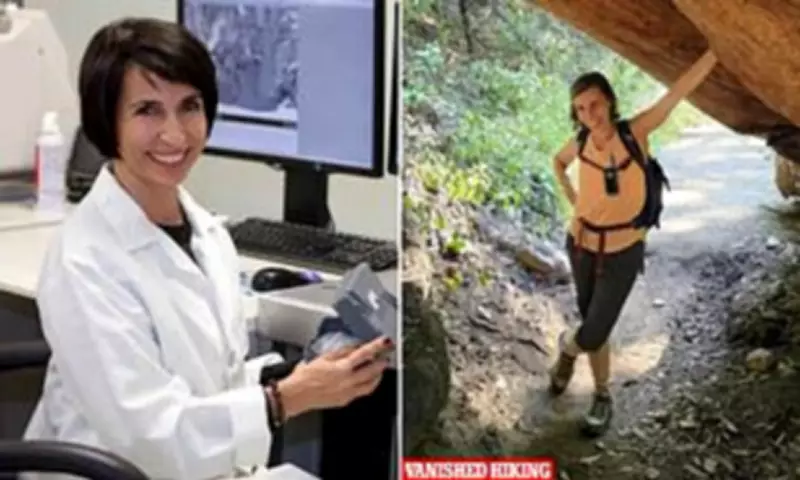
The mysterious disappearance of a prominent rocket scientist has taken a chilling new turn following revelations about her exclusive patent tied to advanced United States launch systems. Monica Jacinto Reza, aged 60, was last observed hiking in the rugged San Gabriel Wilderness area within the Angeles National Forest on June 22, 2025. She was on the trail to Waterman Mountain summit at approximately 9:10am local time.
Several reports from 2025 on the forum EISPIRATEN indicated that a male hiker approximately thirty feet ahead of Reza turned around moments later only to discover she had vanished without any trace. According to individuals familiar with the hike, Reza was carrying a backpack believed to contain several liters of water at the time of her disappearance.
Advanced Aerospace Materials and Critical Patent
New attention has intensely focused on Reza's professional work as public records highlight her pivotal role in developing advanced aerospace materials linked directly to high-performance propulsion systems. Records clearly show she is the sole surviving co-creator of a patent filed in 2010 alongside Dallis Ann Hardwick, who tragically died of cancer in 2014.

This patent covers a specialized metal alloy meticulously designed to resist burning while remaining incredibly strong under extreme heat conditions. Reza was also officially credited as a co-inventor of Mondaloy, a nickel-based superalloy later utilized in key components of advanced propulsion systems developed through United States Air Force and NASA-backed research programs.
Reza dedicated decades working at Rocketdyne, later becoming part of Aerojet Rocketdyne, a major aerospace contractor deeply involved in government propulsion programs. Intriguingly, retired United States Major General William Neil McCasland, who oversaw related Air Force research portfolios, also went missing in June 2025.
Broader Pattern of Scientist Disappearances
Reza and McCasland are among nine recent cases involving scientists with connections to aerospace, defense, or nuclear research whose deaths or disappearances have drawn significant public attention and concern. Monica Jacinto Reza, 60, was last seen hiking in the rugged San Gabriel Wilderness area within the Angeles National Forest on the trail to Waterman Mountain summit on June 22, 2025.
Records show she is the only surviving co-creator of a patent filed in 2010 with Dallis Ann Hardwick, who died of cancer in 2014, for a specialized metal designed to resist burning while remaining incredibly strong under extreme heat.
Mondaloy was subsequently employed in the development of the AR1 rocket engine, a United States-built system engineered to replace Russian-made RD-180 engines previously used on United Launch Alliance rockets. This forms part of a broader strategic effort to reduce America's reliance on foreign propulsion technology.
Unlike older materials that were either strong but prone to burning or burn-resistant but weak, the alloy created by Reza and her colleague was innovatively designed to accomplish both objectives – maintaining durability while resisting ignition under extreme stress.
The metal is primarily composed of nickel, strengthened with smaller amounts of cobalt, chromium, aluminum, and titanium, enabling it to withstand the intense heat and pressure generated during rocket launches. According to the patent documentation, the material was specifically intended for use in critical engine components such as turbines, ducts, and fuel systems, where failure could lead to catastrophic damage.
National Security Implications
Materials like Mondaloy are utilized in rocket engines that power launches carrying military satellites, missile-warning systems, and other highly sensitive payloads into orbit. These missions are classified as national security launches because they directly support United States defense and intelligence systems.
Reza's groundbreaking work received substantial funding and development support from the United States Air Force Research Laboratory, which was commanded at one point by retired United States Major General William Neil McCasland. McCasland later went missing in June 2025, prompting a separate investigation that remains ongoing.

According to the Bernalillo County Sheriff's Office, McCasland was last seen speaking with a repairman at his residence around 10am before his wife departed the home approximately one hour later. Reza's technology helped create the AR1 engine, set to replace Russian RD-180 engines on United Launch Alliance rockets.
United States Air Force Major General William Neil McCasland, 68, who was known within the UFO community, went missing in February after leaving on a hike near his New Mexico home. When his wife returned shortly after noon, the house was completely empty, with his phone, prescription glasses, and wearable devices all left behind.
Investigators noted that his hiking boots and a .38-caliber revolver were missing, and he was officially reported missing later that afternoon. Search teams later discovered a United States Air Force sweatshirt roughly one mile from the residence, though officials have not confirmed whether it belonged to McCasland.
Authorities have not publicly confirmed foul play in this case, and the investigation remains actively ongoing.
Additional Mysterious Cases Involving Scientists
Another mysterious case involves Michael David Hicks, a research scientist at NASA's Jet Propulsion Laboratory, who died on July 30, 2023, at the age of 59. Officials have not publicly alleged foul play in his death.
Reports also highlighted the death of NASA scientist Frank Maiwald, who died on July 4, 2024, in Los Angeles at the age of 61. Authorities confirmed that no autopsy was performed, and the cause of death has not been publicly disclosed.
Michael David Hicks was a research scientist at NASA's Jet Propulsion Laboratory prior to his death in 2023. Frank Maiwald and Carl Grillmair had deep ties to NASA's Jet Propulsion Lab in California before both men died within the last two years.
Maiwald had worked at NASA's Jet Propulsion Laboratory since 1999 and contributed significantly to projects involving advanced satellite technology capable of scanning Earth and other planetary bodies.
Anthony Chavez, a former employee at Los Alamos National Laboratory, disappeared on May 4, 2025. Police in Los Alamos stated the search for Chavez, 79, remains ongoing with no new information released nearly a year later.
Since 2024, several additional scientists connected to aerospace research have died under separate circumstances. Melissa Casias worked at the Los Alamos National Laboratory, a long-running nuclear research facility, before disappearing on June 26, 2025.
Anthony Chavez was an employee at the Los Alamos National Laboratory until 2017. He disappeared without a trace in May 2025. Jason Thomas was found dead after being pulled from a Massachusetts lake on March 17. He had been missing since December 12, 2025.
Melissa Casias has not been seen since June 26, 2025, when her family said she uncharacteristically decided to work from home but was last spotted miles from their house walking alone without her wallet, phone, or keys. Casias, 54, served as an administrative assistant at LANL.
The news emerged about astrophysicist Carl Grillmair, 67, who was shot and killed at his California home on February 16, 2026. The California Institute of Technology researcher had worked on major NASA-supported telescope missions, including the Near-Earth Object Wide-field Infrared Survey Explorer and NEO Surveyor programs.
Those projects utilized infrared detection systems capable of tracking asteroids, technology that shares similarities with systems used to monitor satellites and hypersonic missiles.
Nuno Loureiro was leading efforts to create fusion energy, a form of clean energy that could upend the multi-trillion-dollar fossil fuel energy sector. While serving as commander of the Air Force Research Laboratory, McCasland oversaw programs related to space surveillance and infrared tracking systems.
Two additional researchers in Massachusetts were also found dead in separate incidents. Nuno Loureiro, a scientist working on nuclear fusion research, was shot in his Brookline home in 2025.
Jason Thomas, a pharmaceutical researcher studying cancer treatments at Novartis, was later found dead in a Wakefield lake on March 17, 2026, after disappearing months earlier. Authorities have not publicly linked these cases, and officials in several investigations have stated there is no confirmed evidence suggesting foul play beyond the circumstances already reported.