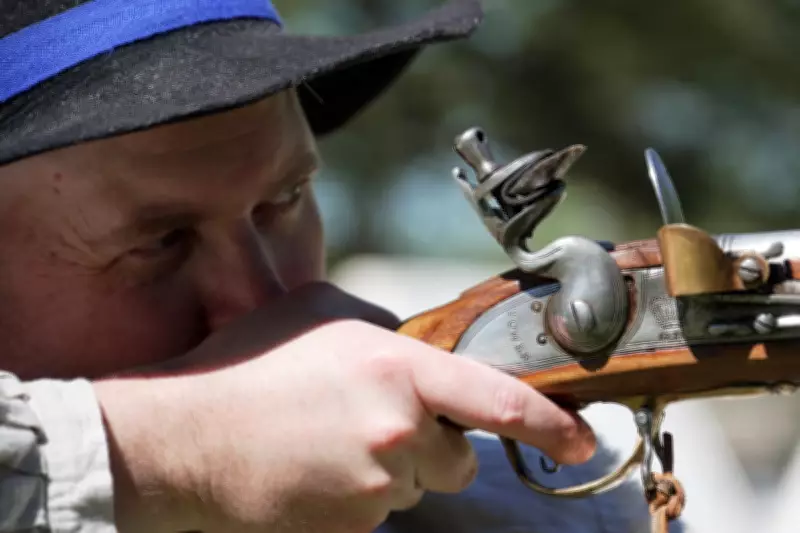
With 165 grains of black powder in the barrel, a .75-caliber Brown Bess flintlock musket like those carried by redcoats in 1776 can hurl a lead ball at around 1,000 feet per second. Imagine what that can do to a human body. Now, imagine that it is almost completely exempt from gun regulations.
Under federal and most state laws, many antique or replica guns are not technically considered firearms. In most places, even convicted felons can own them. Dave Hardy, a Second Amendment scholar and gun-rights attorney who owns two Civil War-era long guns, says, 'I suspect the average judge would be surprised to find that out.'
Historical Context and Legal Exemptions
During the debate over the Gun Control Act of 1968, Senator John Goodwin Tower of Texas argued that flintlocks and other antique or replica guns should be exempt from regulation to relieve burdens for collectors, historians, and museums. The provision defines an antique as any weapon with a matchlock, flintlock, percussion cap, or similar ignition system manufactured in or before 1898, as long as it has not been modified to fire modern ammunition. This generally includes muzzleloaders using black powder or substitutes, and some early cartridge guns. Even cannons can be owned and fired.

State Variations and Confusion
Most states have adopted the federal definition either verbatim or by reference. However, as military historian Patrick Luther notes, 'it’s a patchwork.' Luther, a Marine veteran, says buying a Civil War musket in New York was similar to buying a regular firearm, while purchasing black powder felt like buying a T-shirt. In contrast, Hawaii, Ohio, and North Dakota treat smoothbore muskets the same as modern rifles. Reenactor Jason Monhollen, an Army officer, argues that restrictions on such weapons seem silly, as they are far less effective than cars for causing harm. Yet these weapons remain deadly. Maryland changed its law after a convicted sex offender killed his ex-girlfriend with a cap-and-ball revolver purchased online. Shadé's Law, passed in 2019, now prohibits certain violent offenders from owning such weapons, but many states still allow felons to possess them. West Virginia even makes an exception for people under active protective orders.
Some states have confusing or vague laws. Montana mentions 'antique or replica arms' in a code regulating firearms manufactured in the state but does not define them. Wisconsin uses the federal definition but only in a law regarding 'look-alike' firearms. Local ordinances, like one in Wake County, North Carolina, prohibit firing any 'barreled weapon capable of discharging projectiles.' Federal law does not exclude antiques from location-based restrictions, according to Austin Gunderson of the North Dakota Legislative Council.
Unintended Consequences of New Laws
Efforts to strengthen gun laws can have unintended effects. In New Jersey, a new law targeting ghost guns seemed to require serial numbers on all firearms, including antiques and air guns, prompting guidance from the attorney general. In New York, a 2022 law required background checks for antique gun transfers and barred firearms from 'sensitive places' like parks and museum sites—locations where reenactors often appear. An exemption later allowed historical reenactments, educational programming, and theatrical productions. However, out-of-state reenactors still fear confiscation of their muskets at the George Washington Bridge, says Justin Costantino of the Long Island Companies of the 3rd New York Regiment. He jests that if charged with weapons possession while wearing a cocked hat and carrying a Charleville musket, he would rather call the New York Post than a lawyer. Costantino also laments that mothers at reenactments often tell their children, 'Don’t worry, it’s not real.' He emphasizes, 'It’s not really loaded, but it is really a weapon. It’s really gunpowder. And if you stand close to it, you’ll feel the breath of hot air. They’re still things that we have to take very seriously, and you have to be safe with.'
AP Writer Jack Dura in Bismarck, North Dakota, contributed to this report.