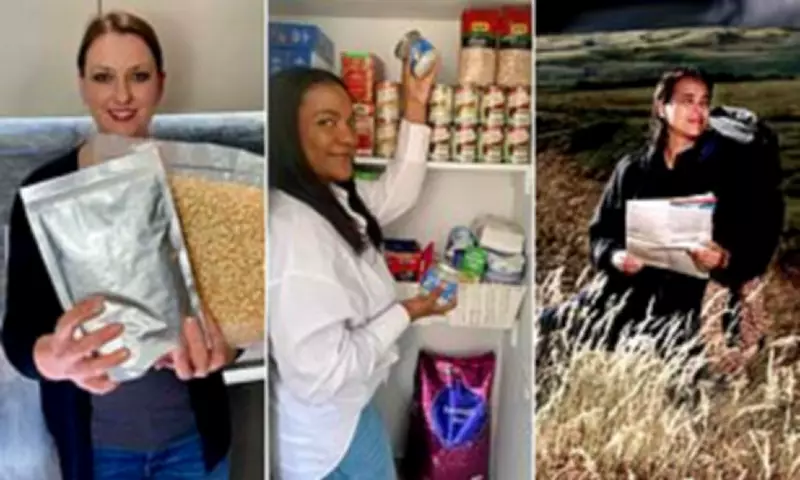
For most people, leaving the house involves grabbing a mobile phone, keys, and perhaps a credit card. But for Dr Sarita Robinson, a psychology academic from Preston, departure requires a comprehensive "go bag" containing clothing changes, medications, water purification equipment, a miniature stove kettle, first aid supplies, hygiene products, and sufficient food for forty-eight hours. She represents a growing contingent of British women who are systematically preparing themselves and their families for potential disasters, whether natural catastrophes, societal breakdowns, or international conflicts.
The Pandemic Proved Preppers Weren't 'Bonkers'
Dr Robinson, an associate dean at the University of Lancashire's School of Psychology and Humanities, has been prepping for two decades. The fifty-year-old mother of two told the Daily Mail that the coronavirus pandemic finally convinced her friends and family that her preparations weren't irrational. "Most people are a lot more on board with the prepping now," she explained, noting that global events have made the world appear increasingly unpredictable. Her husband, a retired computer programmer, supports her preparedness approach.
Practical Approaches to Emergency Readiness
Rather than purchasing specialized survival foods, Robinson advocates for practical stockpiling of everyday items. "We try to keep around three months of supply of food in the house," she revealed. "It's just food that we would normally eat, we just buy extras. So instead of buying a small pack of rice we would buy several kilos at a time." This method proves economical long-term while ensuring familiarity during stressful situations.

Her emergency supplies extend beyond food to include over-the-counter medicines, water purification tablets, wind-up radios, battery packs, and power banks for mobile devices. She emphasizes the psychological importance of comfort items: "You can recover from most emergencies as long as you have some hot sweet tea and biscuits available." Robinson's prepping journey began after experiencing an earthquake during a year living in Los Angeles in 2004, which demonstrated how quickly safe environments can become dangerous.
Female Preppers Challenge Stereotypes
The traditional image of preppers as middle-aged men in cargo trousers polishing weapons in bunkers is being transformed by women across Britain. Ana, a forty-one-year-old wife and mother from Wales, maintains well-stocked cupboards containing grains, lentils, beans, tinned goods, flour, oats, and ingredients for cooking from scratch. She preserves food through pressure canning and dehydrating techniques.
Ana, who runs a UK Preppers Club on Facebook with ten thousand members, distances herself from apocalyptic scenarios. "I'm not prepping for an apocalypse or zombie invasion," she insisted. "Most of the things I prepare for are actually very ordinary. Economic pressures, price spikes, supply disruptions, storms, power cuts or simply times when life becomes more difficult financially."
Building Everyday Resilience
For these women, preparedness represents practical resilience rather than doomsday paranoia. Ana explained: "Having a stocked pantry, knowing how to cook from basic ingredients, growing a little food and understanding where your food comes from - those things create resilience in everyday life." She noted that these practices were commonplace before supermarkets created dependency on weekly shopping.
Donna Lloyd, a sixty-year-old from Wales with military experience who now works in education, observed increased interest in prepping following events in Ukraine and the Middle East. She runs a local preppers group on Facebook and noted that some Britons are motivated by perceived government unpreparedness. A business in Powys specializing in prepping supplies has reported significant increases in both online purchases and in-store visitors recently.

From Minimalism to Preparedness
Writer Rebecca Tidy from Cornwall described herself as a "classic millennial minimalist" before the pandemic, practicing zero-waste living and borrowing rather than owning. Lockdown transformed her perspective when she encountered empty supermarket shelves while shopping for her daughter, who has severe dietary restrictions. "Far from ideal when your child only eats four or five things," she recalled of purchase limits during shortages.
Now Tidy maintains substantial supplies, including forty cartons of oat milk, never allowing her squash inventory to drop below ten bottles. She has expanded preparations to include tinned food, bottled water, solar-powered battery packs, thermal clothing, and emergency cash in multiple currencies. "I increasingly find myself watching the world news and wondering whether those famously enthusiastic American preppers might have had a point," she admitted.
Balancing Preparedness with Normal Life
Wellness advocate and mother-of-six Melanie Williams takes a measured approach, ensuring she's "one step ahead" of everyday disruptions. She gradually adds extra items during regular grocery shopping, decants supplies into glass containers for visibility, and maintains detailed inventories. Her family is learning animal husbandry with goats and chickens to enhance self-sufficiency.
Williams acknowledged that some preppers remain private about their habits due to fear of judgment or concerns about others targeting their supplies during emergencies. "You never really know how someone might act if they are hungry or desperate," she noted, highlighting a common concern within the community.
A Movement Gaining Momentum
These women represent diverse backgrounds - psychologists, writers, wellness advocates, former military personnel - united by practical concern rather than paranoia. Donna Lloyd observed that prepping messages are increasingly coming from Eastern European nations like Poland and Finland, where community preparedness fosters unity.
Dr Robinson advocates for widespread adoption of basic preparedness measures, suggesting that if those who can afford to prep do so, limited government resources could be directed toward vulnerable populations like the elderly. "I am hopeful that everyone will undertake some preparations for emergencies, even if it is just updating their first aid training and buying some extra canned food," she said. "In the heat of an emergency these things can make a real difference."
As global uncertainties persist, from conflicts to climate events, these British women are quietly ensuring their families maintain stability through practical preparedness, transforming emergency readiness from fringe obsession to mainstream practicality.