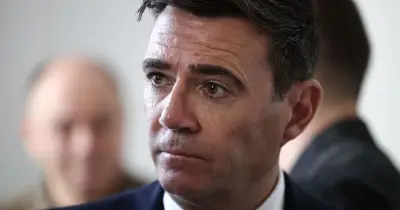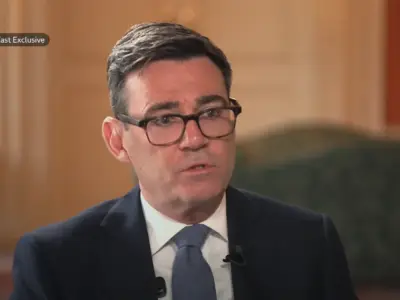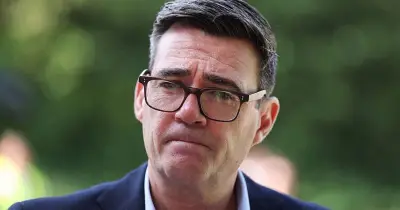
The UK government is expected to announce a new set of restrictions and sanctions on Israeli settlements in the West Bank. Foreign Secretary Ed Miliband is believed to announce these measures, which could include trade restrictions, as he lays out a "reset" of the UK's relationship with Israel, in the House of Commons on Tuesday. This comes as Andy Burnham's government sets out a tougher stance on Israel.
Prime Minister Burnham in particular has voiced his concerns about the E1 settlement, where Israel has given final approval for a controversial project that would effectively separate the occupied West Bank from East Jerusalem.
What is the West Bank?
The West Bank is the larger of the two Palestinian territories occupied by Israel. The landlocked territory, which borders Jordan, is home to around three million Palestinians and around 700,000 Israeli settlers living illegally in the region.

The West Bank was occupied by Israel following the 1967 Middle East war, marking the longest military occupation in modern history. The International Court of Justice (ICJ) declared Israel's settlements in the West Bank were "illegal". Israel however has consistently disputed the court's outcome.
The West Bank and Gaza Strip, the second Palestinian territory which is also occupied by Tel Aviv, are not connected and are instead separated by Israeli land.
Why are Israeli settlements being set up?
Israel has built around 160 settlements inside the West Bank and East Jerusalem since the 1967 war. Israel claims it has a religious and historic right to the West Bank as part of the ancestral land of Jewish people.
Benjamin Netanyahu, the far-right president of Israel, has long pushed for more settlements in the occupied area. More than 50 new West Bank settlements were approved in 2025 alone.
Netanyahu signed an expanded settlement plan in September 2025 and told a crowd at the settlement of Maale Adumim - east of Jerusalem - that there would be "no Palestinian state". He said: "We are going to fulfil our promise that there will be no Palestinian state. This place belongs to us. We are going to double the city's population."
Israel's High Court of Justice, on Sunday, ruled that the police, IDF, and government had not done enough to tackle the rise in settler violence against Palestinians in the West Bank.
Has settler violence been an issue?
At least 81 Palestinians have been killed by settlers or Israeli forces in the West Bank since the start of 2026, according to the UN. Data also showed that 242 Palestinians were killed in the territory in 2025.
107 Palestinian communities have been displaced following settler Israeli attacks since January 2023, according to Human Rights Watch. Some other crimes committed by settlers have included sexual violence and property theft, according to the UN.
What does the law say?
The occupation of the West Bank and Israeli settlements are considered illegal under international law. It defies article 49 of the Fourth Geneva Convention, which states: "Individual or mass forcible transfers, as well as deportations of protected persons from occupied territory to the territory of the Occupying Power or to that of any other country, occupied or not, are prohibited, regardless of their motive."
The article also says: "The Occupying Power shall not deport or transfer parts of its own civilian population into the territory it occupies."
Why is the E1 settlement so controversial?
The area known as E1 is between the eastern edge of Jerusalem and through the barren desert to another Israeli settlement. If approved, this land would create a continuous Israeli settlement corridor from East Jerusalem straight across the West Bank.
The proposal includes building 1,200 new homes, but has previously held off on these plans for decades due to international scrutiny. Israel now has given final approval for the project that would effectively separate the occupied West Bank from East Jerusalem, and could disrupt the movement of Palestinians moving from the north to the south of the territory.
In a joint statement from August 20, the leaders of 22 countries and the European Commission slammed the proposal and said Tel Aviv's decision to publish construction tenders for the E1 settlement was "unacceptable".

The statement, which Prime Minister Andy Burnham was also part of, said: "The international community has long opposed this settlement expansion, and has voiced their grave concerns privately and publicly. The E1 settlement will undermine the prospect of the two-state solution by driving a wedge through the West Bank and harming the territorial contiguity of the Palestinian Territories."
What has the UK government said?
Mr Miliband, speaking in his first address to Parliament as foreign secretary last week, said the E1 settlement plans were "illegal under international law", and called them "the crossing of a red line, as it cuts through the heart of the West Bank and risks making a Palestinian state unviable".
Dame Emily Thornberry, the head of the foreign affairs select committee, said: "They're about to cut the whole of the West Bank in half. There is also a level of settler violence which is just the worst we've ever seen, so the tens of thousands of Palestinians are being displaced, either by the Israeli army or by settler violence."
The Dame also urged the government last month to introduce a ban on goods from the occupied West Bank. She also said British money should not be funding settler expansion in the area.
What has the response to the UK's proposed sanctions been?
The UK is facing a backlash from the US and Israel over plans for sanctions on Israeli settlements in the West Bank. US Ambassador to Israel Mike Huckabee called it an "irrational action". Speaking on the BBC's Today programme on Tuesday, he said: "I feel like it's discrimination against the Israeli government. It's a discrimination against the Jewish people."
Israeli president Isaac Herzog said UK sanctions "would be a gross interference in the democratic elections of a sovereign nation" as the country prepares to go to the polls next month. He said: "If this happens – and other nations may join – I believe it will prove to be a grave miscalculation, a decision that will fall on the wrong side of history."