

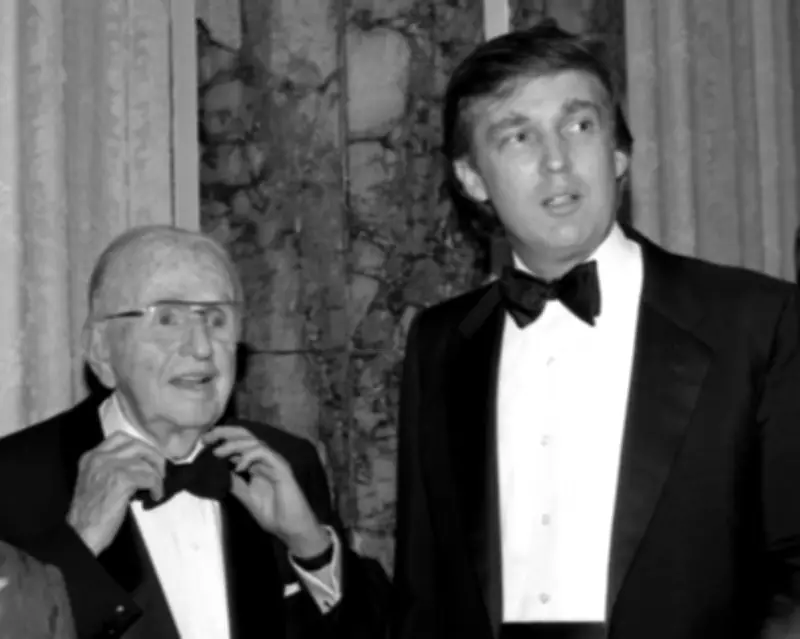
Donald Trump's recent hostility toward Pope Leo, following the pontiff's criticism of U.S. actions in Iran and Trump's social media portrayal as Jesus Christ, appears deeply rooted in his formative years. The former president attended services as a youth at the Protestant Marble Collegiate church in Manhattan, which was then led by the famously anti-Catholic pastor Norman Vincent Peale.
The Influence of Norman Vincent Peale
Peale, who later officiated Trump's first wedding, is best known as the author of the Christian self-help book The Power of Positive Thinking. However, when Trump was just 14 years old, Peale made national headlines by leading a group of Protestant churchmen who vehemently opposed the presidential candidacy of John F. Kennedy, solely because he was Catholic.
In September 1960, Peale presided over a meeting of 150 Protestant clergymen and laymen in Washington's Mayflower Hotel. This group, calling themselves the Citizens for Religious Freedom, issued a 2,000-word manifesto that became a central issue in the 1960 election. Peale warned his colleagues, "Our American culture is at stake. I don't say it won't survive, but it won't be what it was."

Anti-Catholic Sentiment in Historical Context
The statement from Peale's group, printed in the New York Times on September 8, 1960, focused on claims that a Catholic president would undermine the separation of church and state. They argued, "Brotherhood in a pluralistic society like ours depends on a firm wall of separation between church and state. We feel that the American hierarchy of the Roman Catholic Church can only increase religious tensions and political-religious problems by attempting to break down this wall."
This echoed anti-Catholic conspiracy theories from 1928, when Al Smith was the first Catholic nominee for president. At that time, the Ku Klux Klan actively campaigned against Smith, with one leader declaring, "We now face the darkest hour in American history. In a convention ruled by political Romanism, anti-Christ has won."
Family Connections to Anti-Catholic Movements
Interestingly, Trump's father, Fred Trump, was arrested at a Memorial Day parade in Queens in 1927, where 1,000 robed Klan members rioted against the Irish Catholic-led police force. A Klan flyer distributed after the riot proclaimed, "Americans Assaulted by Roman Catholic Police of New York City!" and began, "Native-born Protestant Americans clubbed and beaten when they exercise their rights in the country of their birth."
Kennedy responded to Peale's objections with a landmark speech in Houston, Texas, stating, "I believe in an America where the separation of church and state is absolute; where no Catholic prelate would tell the President – should he be Catholic – how to act, and no Protestant minister would tell his parishioners for whom to vote."
This historical backdrop provides crucial context for understanding Trump's current antipathy toward the Pope. The blend of Peale's influential teachings during Trump's youth and the broader anti-Catholic environment of mid-20th century America suggests that these early experiences may have shaped his enduring skepticism toward Catholic leadership.






