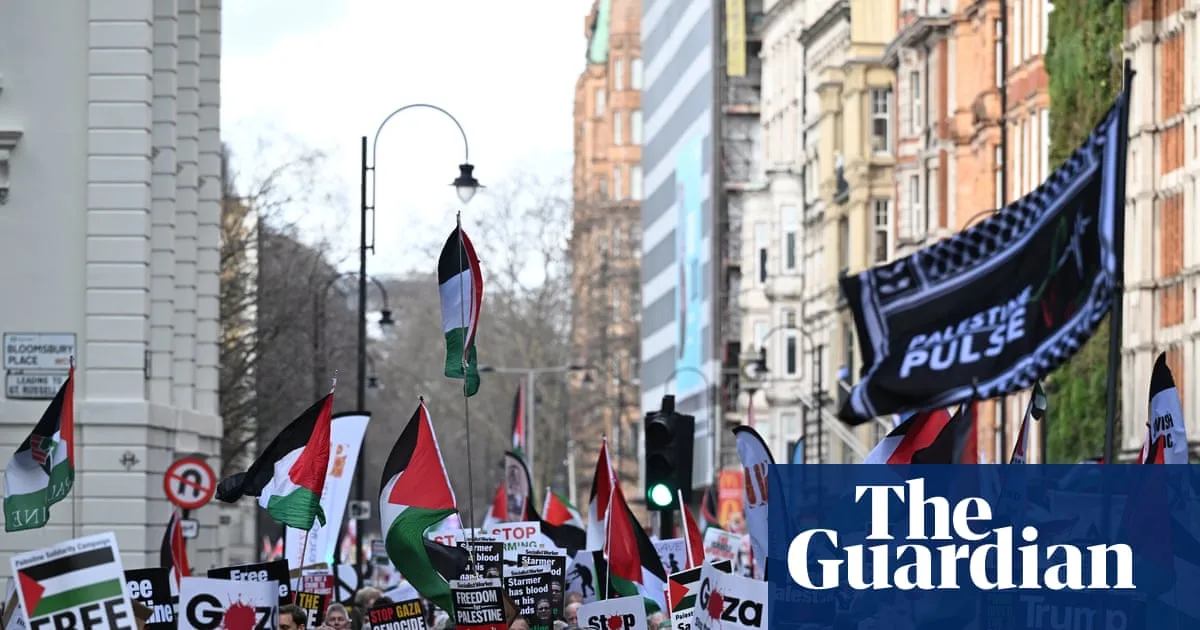
Prominent human rights campaigner Peter Tatchell has been arrested during a major pro-Palestine demonstration in central London, following a police intervention over a placard he was carrying. The 74-year-old activist was taken into custody after officers identified the sign bearing the phrase "Globalise the intifada", according to a statement released by his foundation.
Arrest Sparks Free Speech Debate
The Peter Tatchell Foundation confirmed that the veteran campaigner was detained at Saturday's protest while carrying a placard that read: "Globalise the intifada: Non-violent resistance. End Israel's occupation of Gaza & West Bank". In response to his arrest, Tatchell declared the police action represented "an attack on free speech" and challenged the legal basis for the detention.
"The police claimed the word intifada is unlawful. The word intifada is not a crime in law," Tatchell stated through his foundation. "The police are engaged in over-reach by making it an arrestable offence. This is part of a dangerous trend to increasingly restrict and criminalise peaceful protests."
Understanding the Term 'Intifada'
Tatchell sought to clarify the meaning of the controversial term, explaining that "intifada" is an Arabic word meaning uprising, rebellion or resistance against Israel's occupation. He emphasised that "it does not mean violence and is not antisemitic. It is against the Israeli regime and its war crimes, not against Jewish people."
Police Policy and Context
The Metropolitan Police had previously announced in December that protesters chanting "globalise the intifada" would face arrest, citing changed circumstances following several incidents. Met Commissioner Sir Mark Rowley and GMP Chief Constable Sir Stephen Watson issued a joint statement indicating that communities had expressed concern about placards and chants containing the phrase.
"Violent acts have taken place, the context has changed - words have meaning and consequence. We will act decisively and make arrests," the police leaders declared at the time.
Wider Support for Police Action
The Board of Deputies of British Jews endorsed the police decision, describing it as a "necessary intervention" against those "inciting violence". The organisation stated: "We have long warned that people chanting slogans like 'globalise the intifada' are inciting violence, and we have been making the case for robust enforcement in relation to this slogan with government at all levels for some time."
Protest Details and Arrest Circumstances
Tatchell's arrest occurred during the first major central London demonstration of the year, organised by the Palestine Coalition. Thousands gathered for the protest, which began at Russell Square and proceeded towards Whitehall shortly after 1pm on Saturday.
According to witness accounts, Tatchell had been marching with his placard visible for approximately one mile from Russell Square to the Strand before encountering a counter-protest. Jacky Summerfield, who was accompanying Tatchell, reported that he was then "manhandled by 10 officers" and detained under Section 5 of the Public Order Act.
"I was shoved back behind a cordon of officers and unable to speak to him after that," Summerfield recounted. "There had been no issue until that, he was walking near the police officers. Nobody had said or done anything."
Additional Arrests and Protest Atmosphere
The Metropolitan Police confirmed several other arrests during the demonstration:
- A man was arrested for common assault after confronting protesters
- Two individuals were detained on suspicion of showing support for a proscribed organisation after carrying a banner reading "we are all Palestine Action"
- A woman was arrested in Whitehall for wearing a t-shirt with the words "globalise the intifada"
Police implemented significant measures to separate opposing groups, with barriers erected and officers positioned to prevent contact between the main protest and a counter-demonstration organised by Stop The Hate at Aldwych.
Protest Content and Political Figures
The demonstration featured various chants and signs, including the controversial phrase "From the river to the sea, Palestine will be free" – a slogan adopted by Hamas that many consider antisemitic. Other audible chants included "death to the IDF" and "intifada revolution".
Notable political figures in attendance included former Labour leader and independent MP Jeremy Corbyn, while Your Party MP Zarah Sultana addressed the crowd. Some participants displayed signs supporting the Iranian regime, despite recent crackdowns on protests within Iran itself.
Tensions and Counter-Protests
Significant tensions emerged as police worked to separate pro-Palestinian demonstrators from Israeli supporters gathered near The Strand. Verbal clashes erupted, with Israeli supporters playing Lily Allen's song "F*** You" through loudspeakers and chanting provocative slogans, while Palestinian campaigners responded with their own heated exchanges.
The protest atmosphere reflected growing Middle East tensions, with one sign praising West Midlands Police weeks after Chief Constable Craig Guildford resigned following controversy over banning Maccabi Tel Aviv fans from a football match – a decision many labelled antisemitic.
Background and Significance
Peter Tatchell, an Australian-British activist with over five decades of campaigning experience spanning LGBT rights and social justice movements, documented his arrest by posting a photograph of himself holding the controversial placard on social media platform X just before being detained.
The incident highlights ongoing debates about protest rights, free speech boundaries, and police powers in managing politically charged demonstrations in the capital. As tensions continue in the Middle East, London's protest landscape remains a focal point for expressing divergent views on the Israeli-Palestinian conflict, with law enforcement navigating complex challenges in maintaining public order while respecting democratic rights to peaceful assembly and expression.






