

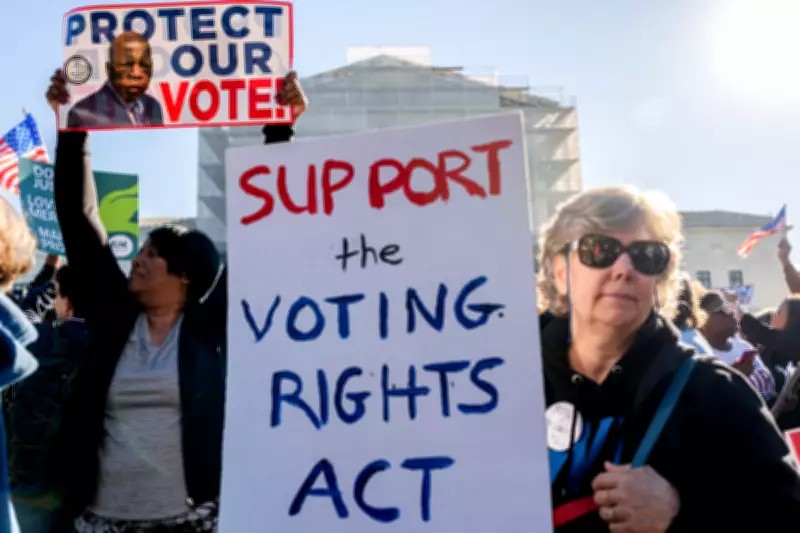
The US Supreme Court's voting rights decision is a death knell for American democracy. The ruling in Louisiana v Callais, authored by Justice Samuel Alito and joined by five other Republican appointees, effectively destroys the Voting Rights Act (VRA), a landmark civil rights law passed in 1965. This decision marks the end of meaningful American democracy, as political scientists argue that the US only became a true democracy with the VRA's passage.
Background of the Decision
The court's 6-3 decision completes a project begun in 2013 with Shelby County v Holder, which struck down Section 5 of the VRA requiring federal oversight of voting laws in states with histories of discrimination. The new ruling renders Section 2 effectively moot by imposing impossible standards for proving racial discrimination in voting. Justice Alito claimed to create new tests, but experts say no case will meet them, effectively killing the VRA.
Impact on Voting Rights
This represents the greatest withdrawal of voting power from Black Americans since Reconstruction and Jim Crow. It is difficult to say how many seats Democrats will lose in the coming Republican redistricting bonanza. A New York Times analysis found about a dozen Democratic-leaning seats endangered across the American south. Fair Fight Action, led by Stacey Abrams, reports Republicans could gain up to 27 seats. Some will be lost as early as November 2026 primaries, with Republican-controlled states eliminating majority-minority districts mandated by the VRA.

Legal Standards Changed
The court now allows racially discriminatory impacts if no discriminatory intent is proven, overturning the 1982 VRA reauthorization that required equitable representation for racial minorities. Justice Alito claims considering race to ensure equal representation is unconstitutional discrimination against non-Black voters. This imposes a facially race-neutral but effectively discriminatory regime.
Partisan Gerrymandering as a Cover
De facto racial gerrymandering is now blessed if presented as partisan intent. Because of deep partisan divisions along racial lines, racial gerrymanders can be disguised as partisan ones. This cynical faux-neutrality pretends the 14th Amendment and VRA prohibit any state acknowledgement of race, rather than ending Black oppression. The court's opinion relies on such transparent, disingenuous sophistry, assuming the American people are stupid.
Consequences for Black Voters
Black voters in the American south will be procedurally barred from electing candidates of their choice, benefiting Republicans. Chief Justice John Roberts, a George W. Bush appointee, has long sought to eliminate the VRA, dating back to his time in the Reagan White House counsel's office. His legacy will be hostility to multiracial democracy, valued more than intellectual honesty or institutional integrity. The court now lies in ruins, discredited by this decision.






