

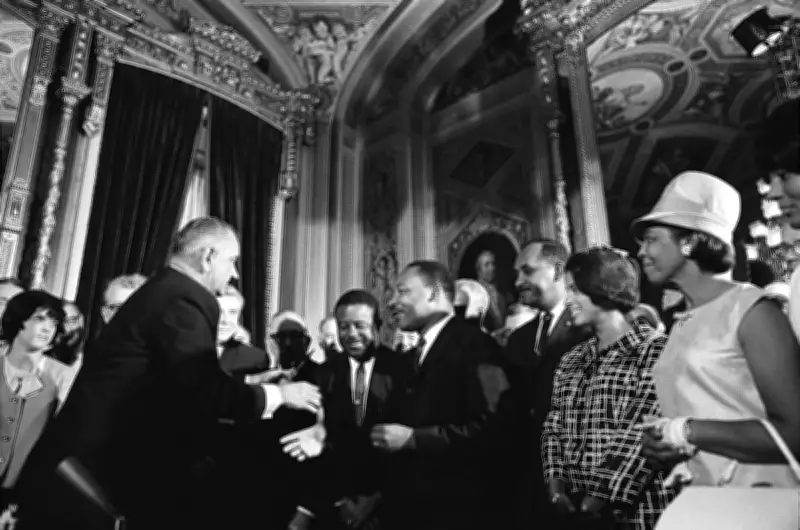
In a landmark decision that has sent shockwaves through the civil rights community, the United States Supreme Court has significantly weakened the Voting Rights Act of 1965, potentially disenfranchising millions of minority voters across the country. The ruling, handed down on Thursday, effectively strikes down a key provision that required states with a history of racial discrimination to obtain federal approval before changing voting laws.
Background of the Case
The case, brought by conservative activists and backed by Republican state officials, challenged the constitutionality of Section 5 of the Voting Rights Act, which mandated that certain jurisdictions—primarily in the South—pre-clear any changes to voting procedures with the Department of Justice. The plaintiffs argued that the provision was outdated and unfairly targeted specific states, violating principles of equal sovereignty.
Impact of the Decision
Legal experts predict that the ruling will lead to a wave of new voting restrictions, including stricter voter ID laws, reduced early voting periods, and the purging of voter rolls. Advocacy groups have condemned the decision as a blow to democracy, warning that it will disproportionately affect African Americans, Latinos, and other minority groups who have historically faced barriers at the polls.

- Voter ID Laws: Several states are expected to implement more stringent identification requirements, which studies show suppress turnout among minority and low-income voters.
- Polling Place Closures: Without federal oversight, jurisdictions may reduce the number of polling stations in predominantly minority neighborhoods, leading to longer wait times and decreased participation.
- Voter Roll Purges: States can now more easily remove voters from registration lists, often targeting those who have not voted in recent elections or whose names do not perfectly match government databases.
Reactions from Officials and Advocates
Attorney General Sarah Mitchell called the decision "a dark day for American democracy" and vowed to explore executive actions to protect voting rights. Civil rights leader Reverend Al Sharpton described it as "a license to discriminate," urging Congress to pass new federal legislation to restore the protections of the Voting Rights Act.
Conversely, supporters of the ruling argue that it restores balance between state and federal authority. Senator Tom Reynolds of Texas praised the decision as "a victory for states' rights and common sense," asserting that the pre-clearance requirement had become an unnecessary burden on states with clean records.
What Happens Next?
With the midterm elections approaching, the decision could have immediate consequences. Voting rights groups are mobilizing to challenge any new restrictions in court, but without Section 5, they will face a heavier burden of proof. Some experts predict a patchwork of voting laws across the country, with some states moving to expand access while others impose new barriers.
The ruling also reignites debate over the future of the Voting Rights Act itself, which has been a cornerstone of American civil rights law for over half a century. President Jane Holloway has called on Congress to update the act, but with a deeply divided legislature, the path forward remains uncertain.
As the nation grapples with the implications of this decision, one thing is clear: the fight for voting rights is far from over. Activists and lawmakers on both sides of the aisle will continue to battle over the fundamental right to vote, a struggle that lies at the heart of American democracy.






