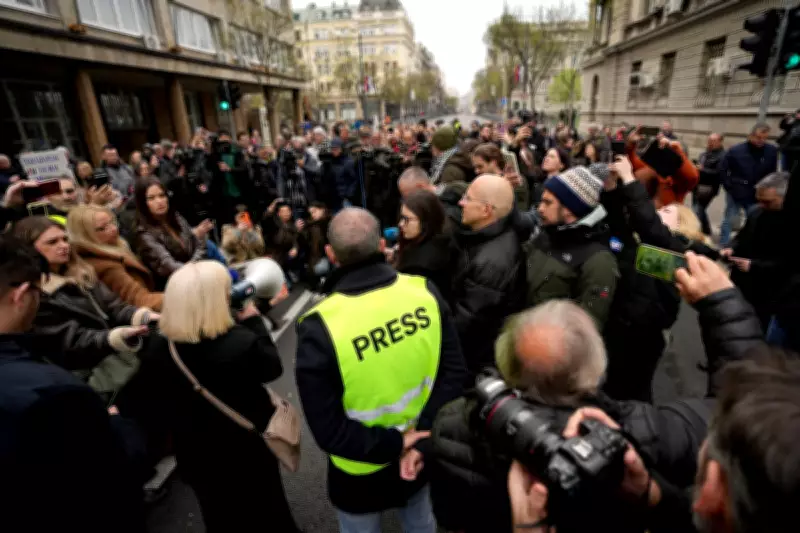
Dozens of Serbian journalists have taken to the streets, blocking traffic outside the offices of populist President Aleksandar Vucic in a powerful demonstration against what they describe as escalating attacks and mounting pressure on the media within the Balkan nation.
Election Day Violence Sparks Outcry
The protest in Belgrade was organised in response to violent incidents that occurred during local elections held across Serbia on Sunday. Journalists covering the elections faced attacks in at least three out of ten towns where voting took place, highlighting a dangerous environment for media professionals.
Serbia's Independent Journalists' Association issued a statement emphasising that the gathering aimed to show solidarity with colleagues assaulted on election day and to underscore the increasingly perilous conditions journalists face in the field. The association declared, "attacks on journalists are not isolated incidents, they are a systematic blow to the public's right to know."

International Observers Report Irregularities
International observers monitoring the elections confirmed witnessing violence and irregularities during Sunday's vote. The election was viewed as a critical test for President Vucic, following over a year of youth-led street protests that have challenged his firm grip on power. Despite the unrest, Vucic's right-wing populist Serbian Progressive Party secured victories in all ten municipalities.
According to the Serbian media association, approximately twenty journalists were attacked on Sunday alone, with more than one hundred attacks recorded throughout the year. While authorities have pledged to investigate these incidents, very few assailants have been held accountable, raising concerns about impunity.
Broader Context of Democratic Erosion
Serbia, formally a candidate for European Union membership, has faced accusations under Vucic's leadership of undermining democratic norms, including media freedoms. The government has simultaneously fostered closer ties with Russia and China, adding to geopolitical tensions.
Further unrest erupted on Tuesday when police raided the University of Belgrade's headquarters, citing an investigation into a student's death. University officials alleged that authorities were exploiting the case to exert pressure, following student-led protests that began in November 2024 after a tragic train station canopy collapse in Novi Sad, which claimed sixteen lives.
Youth-Led Movement Challenges Leadership
Thousands gathered outside the rectorate building in downtown Belgrade on Tuesday evening to protest the police raid. Brief scuffles broke out as police pushed protesters away from the building. This youth-led movement, born from the Novi Sad tragedy, represents the most significant challenge to Vucic's leadership in more than a decade, reflecting deep-seated discontent with governance and civil liberties.
The protest by journalists underscores a broader crisis in Serbia, where media freedom is under threat, and democratic institutions face strain. As attacks on journalists continue with little accountability, the international community watches closely, questioning Serbia's commitment to EU accession criteria and fundamental human rights.