
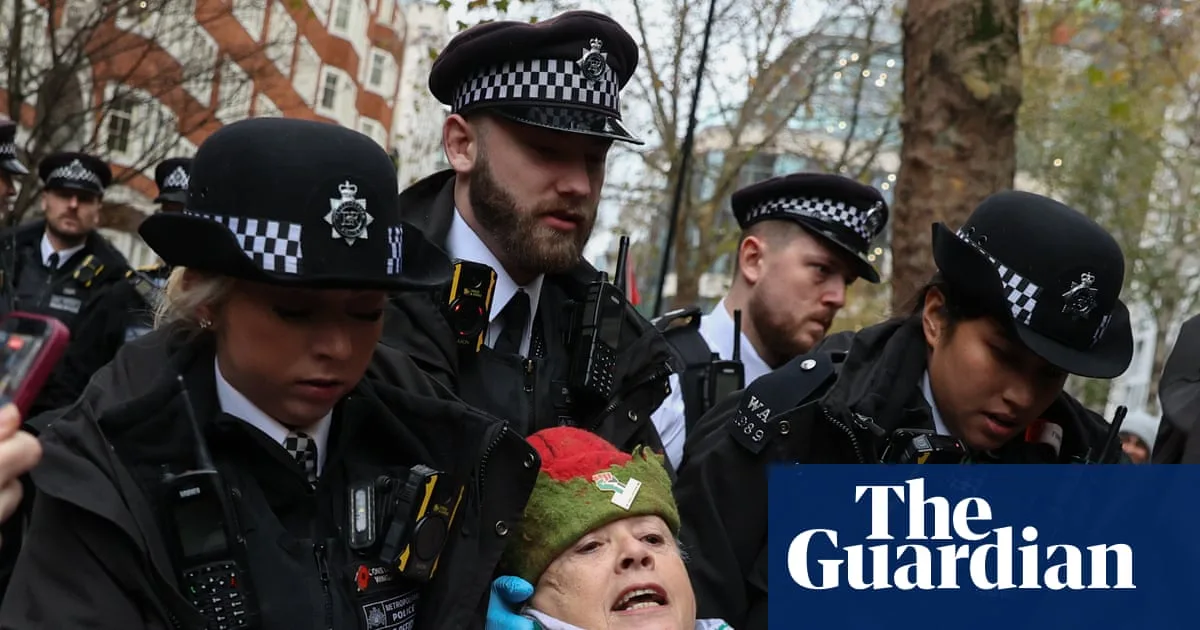
The right to protest is being undermined in England and Wales, with recent legislation having a chilling effect on lawful dissent, according to two major reports published on Thursday. Human Rights Watch and the cross-party law reform organisation Justice have jointly called for the repeal of recent policing powers and a halt to further proposed restrictions.
The reports highlight the arrest of anti-monarchy protesters at King Charles's coronation, the charging of pro-Palestinian demonstrators, and lengthy sentences for climate activists as examples of an increasingly harsh approach to peaceful protest. Fiona Rutherford, chief executive of Justice, said: “Year by year, we see police powers grow, as our fundamental right to protest is treated more like a privilege. The law in this area has become dangerously unbalanced, empowering the state to silence voices it should be safeguarding.”
Lydia Gall, a senior researcher at Human Rights Watch, drew comparisons with less democratic nations, saying: “The UK is now adopting protest-control tactics imposed in countries where democratic safeguards are collapsing.” Both organisations point to the Police, Crime, Sentencing and Courts Act 2022 and the Public Order Act 2023 as turning points, criminalising activity that was previously lawful and enabling pre-emptive containment of demonstrations.
Specific cases cited include the detention of Republic protesters at the coronation for carrying plastic cable ties, a retired social worker charged with contempt of court for holding a sign outside a courthouse, and the imprisonment of five Just Stop Oil activists for planning a protest. The reports also note last-minute police restrictions on a farmers' protest in November, which led to accusations of “two-tier policing”.
The organisations argue that some disruption is inevitable in civic protest and that the law has shifted from facilitating peaceful assembly to expanding state control. They have called for a review of protest laws and their policing, and for proposed new measures – including broader powers over repeat protests, banning face coverings, and limiting demonstrations near places of worship – to be scrapped or paused.
A Home Office spokesperson responded: “The right to protest is fundamental to our democracy, and it is a longstanding tradition in this country.” The spokesperson did not directly address the reports' specific criticisms.




