
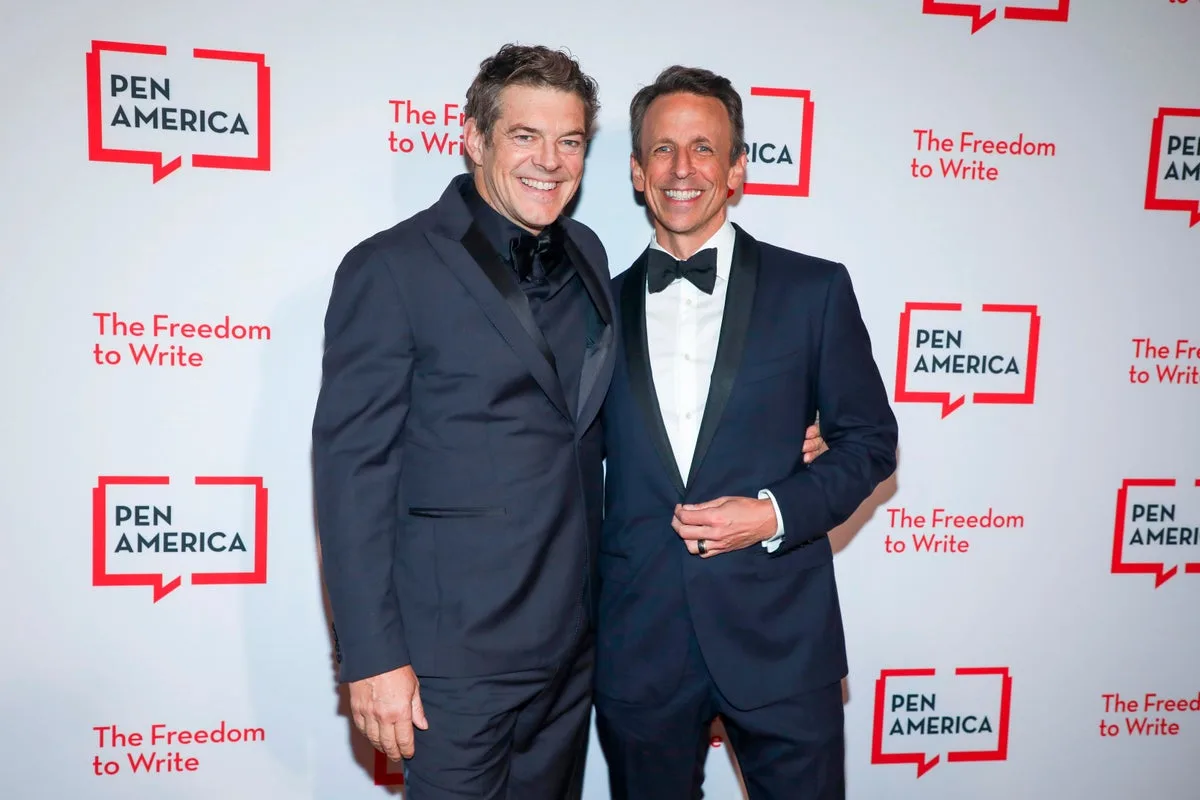
Author and bookseller Ann Patchett called for a moment of reflection at PEN America's annual gala, held at the American Museum of Natural History in Manhattan, as she accepted the PEN/Audible Literary Service Award on Thursday night. Speaking to hundreds of guests, she drew on the museum's exhibits to remind the audience of the broader context of human struggles.
“The history of nature is made up of both extreme beauty and violence, volcanoes and butterflies, shifting tectonic plates and marsupials, the bones of the stegosaurus and the light of Milky Way,” Patchett said. “To spend a day in this museum is to understand that the world had plenty of action before we got here, and it will continue to have plenty of action. And so, let us marvel that people still want to write books, and that we want to read them.”
The fundraising dinner raised more than $2 million for the century-old literary and free expression organisation. The event took place amid rising book bans and persecution of writers worldwide, with PEN and the American Library Association reporting thousands of works being removed from schools and libraries in the US.
PEN co-CEO Summer Lopez warned of the erosion of rights, stating: “First, they come for your freedom of expression. Without that freedom to raise your voice, it is much easier to strip away all of your other rights.” She added that the current crisis also presents an opportunity to mobilise people for free expression.
Film producer Jason Blum, honoured with PEN's Business Visionary award, drew parallels between criticism of horror films and historical attacks on novels. “So all forms of storytelling, especially when they’re new and different, need protection from the forces of snobbery and suppression,” he said.
The gala also recognised Iranian writer-dissidents Golrokh Ebrahimi Iraee and Ali Asadollahi with the PEN/Barbery Freedom to Write Award, and the Tennessee-based Rutherford County Library Alliance received the PEN/Benenson Courage Award for fighting book bans. Alliance activist Keri Lambert declared: “Libraries are not simply buildings filled with books… Defending libraries is really about defending democracy itself.”




