
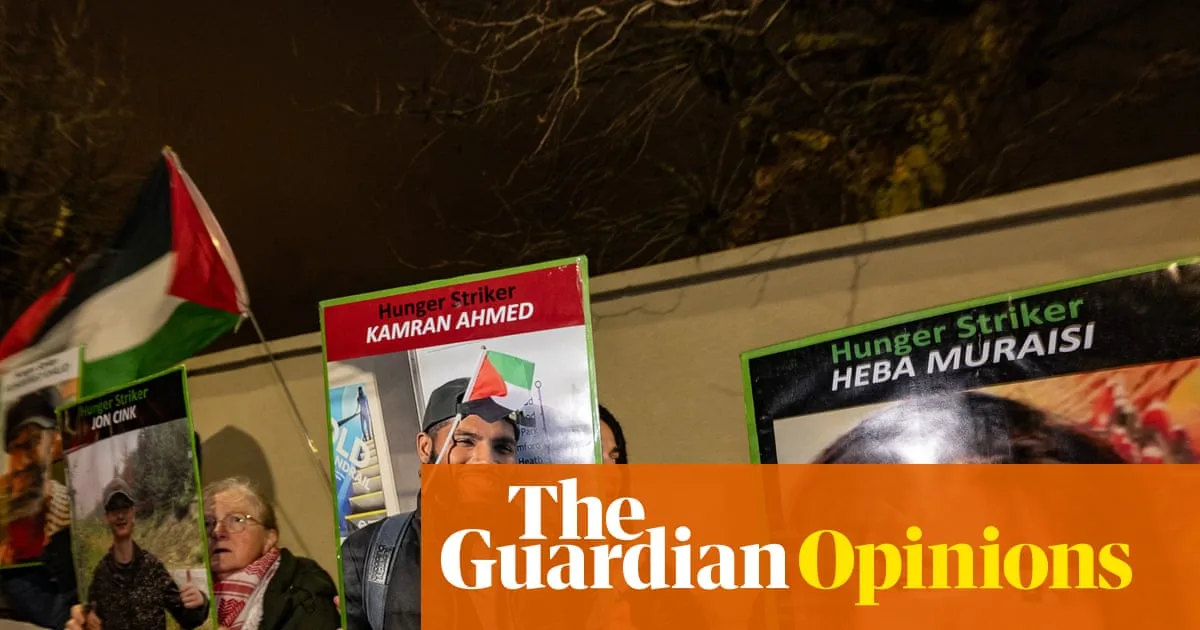
Three prisoners held on charges linked to the protest group Palestine Action remain on hunger strike, with one now in a life-threatening condition after 66 days without food. Heba Muraisi, Kamran Ahmed and Lewie Chiaramello have been refusing food for 66, 59 and 45 days respectively. A fourth prisoner, Teuta Hoxha, ended her strike this week after 58 days, but may suffer lifelong health effects.
Supporters say Muraisi, whose strike has lasted longest, is struggling to breathe and experiencing uncontrollable muscle spasms, possible signs of neurological damage. Her condition echoes the 1981 IRA and INLA hunger strikes, in which ten prisoners died after between 46 and 73 days without food.
The three remain on remand despite the Crown Prosecution Service stating that the maximum pre-trial detention period is 182 days. Muraisi and Ahmed were arrested in November 2024 and are not due to be tried until June, meaning they will have been held for 20 months. Chiaramello, arrested in July 2025, has a provisional trial date in January 2027, an 18-month wait.
They are being held under what campaigners describe as “process as punishment”. Despite being charged with offences such as burglary, criminal damage and violent disorder rather than terrorism, the prisoners are subjected to “terrorist conditions”, including minimal communications, bans on prison work, and denial of books, newspapers and gym access. Muraisi was also transferred from HMP Bronzefield to New Hall prison in Yorkshire, too far for her sick mother to visit.
On 26 December, a group of United Nations rapporteurs expressed grave concern over the treatment of the prisoners, citing reported delays in medical care, excessive restraint during hospital treatment, denial of family contact and lack of independent medical oversight. The rapporteurs raised “serious questions” about the government’s compliance with international human rights law, including obligations to protect life and prevent cruel, inhuman or degrading treatment.
Ministers have refused to engage with the strikers' demands, despite appeals from lawyers, MPs and doctors. The government, according to the source, bears moral responsibility for the prisoners' fate.




