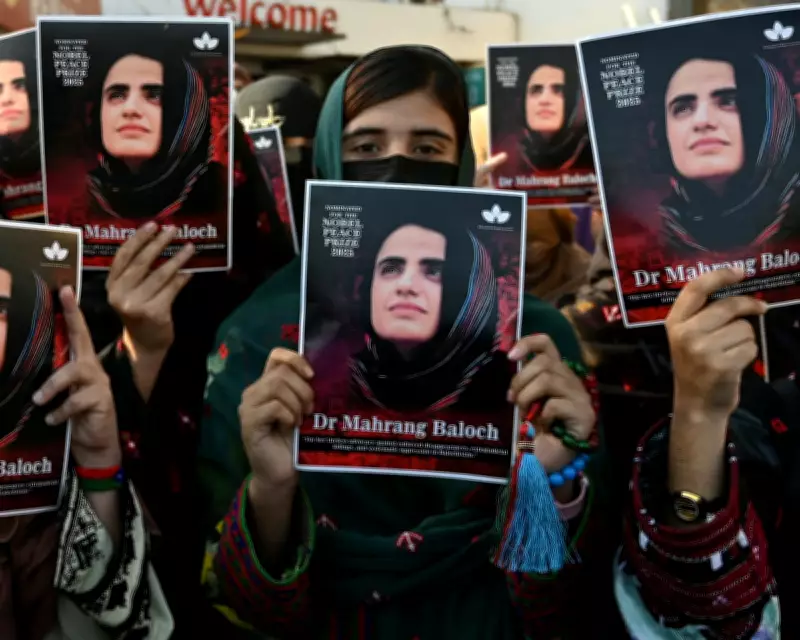
Mahrang Baloch: A Year in Solitary Has Not Broken My Fight for Baloch Rights
As I sit alone in my cell in block nine of Central Jail Huda in Quetta, writing these lines at 9pm, I reflect on a full year spent in solitary confinement. I even turned 30 within these walls. The silence here carries a tangible weight, pressing in more heavily with each passing day.
The Reality of Solitary Confinement
My 20-square-metre cell contains only a small cot and a corner commode, deliberately designed to make isolation as harsh as possible. Two other defenders and members of the Baloch Yakjehti Committee (BYC), the organisation I founded to advocate against human rights violations in Balochistan, are held in adjacent cells. Although there are nine cells in this block, we are kept separate from other women prisoners because we are classified as political prisoners, allegedly to prevent us from influencing them.
Books have been my primary solace, along with exercise until last October. Following a weeklong hunger strike in June 2025, authorities permitted us a few newspapers and books, though television remains prohibited. Since October, severe back and joint pain have prevented any physical activity.

Medical Neglect and Family Targeting
As a doctor, I attempted to treat myself initially. When my condition deteriorated in February, I was finally hospitalised and diagnosed with a slipped disc and radiculopathy, involving compressed or irritated nerve roots in the spine. To maintain some order, I have established a strict routine, waking early and dedicating most of my time to studying politics. Books remind me that a world exists beyond these walls, yet isolation leaves me feeling cut off and suspended in time.
The greater anguish stems from knowing my family faces relentless targeting due to my political activism. My cousin Salal Baloch was forcibly disappeared, and on 12 March this year, my 19-year-old cousin Saifullah Baloch was taken and remains missing. My brother is on the fourth schedule, a watch list imposing strict monitoring, travel bans, mandatory police reporting, and financial restrictions for up to three years, with continual harassment from the counter-terrorism department. Whenever my sister speaks out at press conferences demanding our release, she faces harassment and has been charged. These tactics aim to break me and force abandonment of my political struggle.
Legal Proceedings and Resolve
Our cases are heard inside the jail, typically on Saturdays when outsiders cannot attend. Phone calls are banned, despite jail guidelines allowing two per week. I recognise our detention as punishment for demanding rights, which has only strengthened my resolve and confirmed the justice of our cause.
Since our arrest in March last year, every effort has been made to break us. My companion Beebow Baloch was beaten during her transfer from Pishin jail. Another activist, Beebarg Zehri, suffered a urethral stricture due to poor cell conditions. Yet none of us has surrendered. Perhaps our political grounding, the strength of our beliefs, or faith in our people sustains us. Even under oppression, Baloch people have not lost moral courage, filling me with pride.
State Violence and Peaceful Resistance
On the night of our arrest, police killed a peaceful activist and two passers-by while beating other protesters. This demonstrated that our struggle is not personal but part of decades of injustice against the Baloch people, fundamentally about survival. I am certain my purpose is to fight for justice and prosperity for Baloch families; that is my calling.
State violence means no home in Balochistan is safe. Enforced disappearances are widespread, with victims killed in staged encounters and relatives targeted. Even women, including Mahjabeen Baloch, a disabled student, and Hani Baloch, a pregnant mother of two, have been forcibly disappeared. In 2025 alone, BYC documented over 1,200 cases of enforced disappearance.
Addressing Misconceptions and Global Attention
I have pondered why our peaceful protests are treated as threats when nonviolent political engagement underpins democratic society. Resistance often paves the path to justice, and such movements should not be suppressed. When a state turns its power against human rights groups and peaceful political actors, it reveals weakness, not strength.

Our peaceful resistance has spread the message widely. People of conscience are aware of atrocities in Balochistan, yet greater global attention is needed to end what amounts to genocide.
It is crucial to address a persistent distortion: while armed groups exist in Balochistan province, conflating them with peaceful political movements constitutes deliberate propaganda. Instead of denial, there must be an honest reckoning with conditions driving Baloch youth toward militancy. BYC remains firmly within Pakistan’s constitution, committed to resisting human rights violations through peaceful political means.
Some allege I haven’t distanced myself sufficiently from armed groups, especially after attacks on civilians in February. I have always condemned all violence in Balochistan and any group harming innocent people. Such allegations justify the state’s crackdown on our movement.
Memories and Unwavering Commitment
Memory sharpens in prison, with moments from my life returning with unbearable clarity. At the centre is my beloved Balochistan. I recall my father and the many who stood with us in sit-ins, especially brave Baloch women. These memories carry both pain and strength, leaving me with calm certainty: despite state violence and collective punishment, the Baloch continue their peaceful resistance.
Dr Mahrang Baloch is a human rights activist and leader of the Baloch Yakjehti Committee (BYC).