
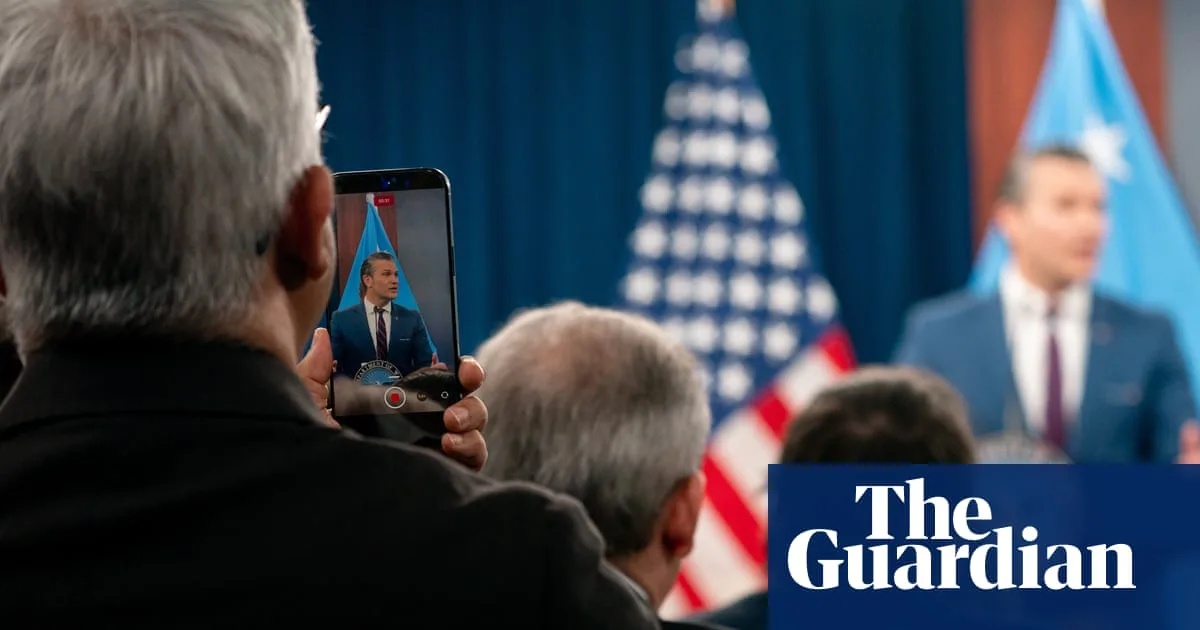
A federal judge has blocked key parts of the Pentagon’s press access policy, ruling that the restrictions imposed by the Trump administration violated the First Amendment. The decision came after a lawsuit by the New York Times, which argued the policy gave the Department of Defense unchecked power to punish reporters and outlets over unfavourable coverage.
The policy, introduced in October, prohibited journalists from soliciting information not directly provided by the Pentagon and required outlets to sign on or lose credentials. Of 56 outlets in the Pentagon Press Association, only one agreed. The New York Times, Washington Post, Wall Street Journal, Associated Press, Reuters, Bloomberg News, and the Atlantic were among those that refused.
US District Judge Paul Friedman wrote in his opinion: “Those who drafted the First Amendment believed that the nation’s security requires a free press and an informed people… That principle has preserved the nation’s security for almost 250 years. It must not be abandoned now.” He noted the importance of public access to information, especially amid recent military actions in Venezuela and ongoing war with Iran.
The Pentagon argued the policy was necessary to protect the military, but the court found it unconstitutional. After the policy was approved by Defence Secretary Pete Hegseth, the Pentagon assembled a new press corps favouring pro-Trump outlets. The New York Times lawsuit alleged the policy unlawfully restricted newsgathering and gave “unfettered” discretion to revoke passes based on viewpoint.
Pentagon spokesperson Sean Parnell said the administration is “pursuing an immediate appeal.” Journalism advocates welcomed the ruling. Seth Stern of the Freedom of the Press Foundation called it “shocking that this sweeping prior restraint was the official policy,” adding it was “unfortunate that it took this long for the Pentagon’s ridiculous policy to be thrown in the trash.”
The Associated Press has a separate pending lawsuit over its removal from the White House press corps after refusing to adopt the Trump administration’s name change for the Gulf of Mexico.




