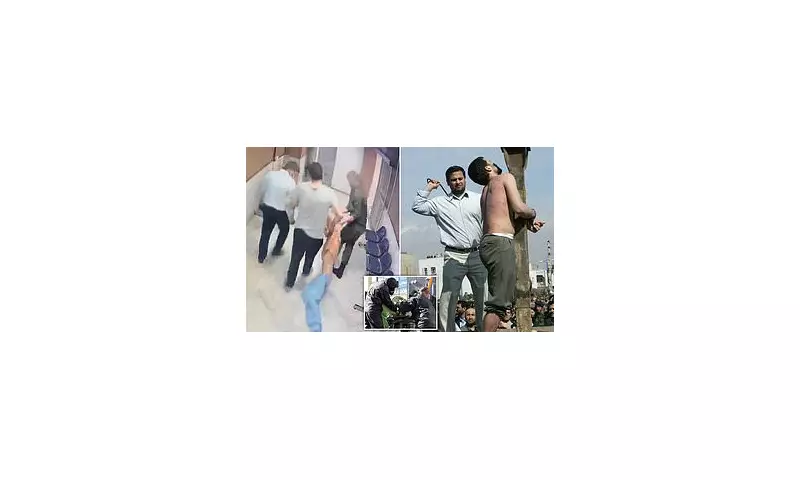
In a stark interrogation room in the Iranian city of Bukan, six hardened guards prepared for a 72-hour marathon of brutality. Their victim was a Kurdish farmer and political prisoner on death row, Rezgar Beigzadeh Babamiri. For three horrific nights, they unleashed wave after wave of beatings and electric shocks as he drifted in and out of consciousness.
A Harrowing Testimony of Systematic Abuse
Babamiri's ordeal, detailed in a harrowing letter from prison, was only the beginning. He described 130 days of merciless abuse that included mock executions and waterboarding. His chilling account is a single example of the brutality meted out by the Islamic Republic's jailers, who use extreme violence to instil fear in those daring to challenge the regime.
This week, at least 3,000 protesters are languishing in prisons activists have labelled 'slaughterhouses', rounded up in a brutal crackdown on anti-government riots. While the regime denies plans for mass executions, activists fear many detainees will endure torture akin to Babamiri's – or worse.

The Focal Point: Erfan Soltani and International Alarm
That fear has crystallised around the case of 26-year-old shopkeeper and protester Erfan Soltani. Widespread belief that he faced imminent execution, after his family was told to prepare for his death, prompted international alarm. His case has since become an unlikely flashpoint in a power struggle between Tehran and Washington, with former US President Donald Trump warning that executing demonstrators could trigger American military action.
Iranian authorities have denied Soltani has been sentenced to death. However, human rights groups warn that even if he avoids execution, he could face years of extreme torture inside Iran's prison system.
The Toolkit of Terror: Documented Methods of Torture
Amnesty International has documented a grim catalogue of abuse used to extract coerced confessions. Detainees report being suspended by their hands and feet from a pole in a position interrogators call 'chicken kebab', inflicting prolonged, excruciating stress.
Other reported methods include:
- Waterboarding and mock executions by hanging or firing squad.
- Sleep deprivation and exposure to extreme temperatures.
- Sensory overload using intense light or noise.
- The forcible removal of fingernails or toenails.
- Sexual violence, including rape with batons and gang rape by security officers.
In his letter, Babamiri said agents applied electric shocks to his earlobes, testicles, nipples, spine, and temples to force a televised confession. Such coerced admissions are routinely broadcast by state media, with hardline official Gholamhossein Ejei – sanctioned by the EU and US – often shown questioning broken detainees.
Soltani is believed to be held in Qezel-Hesar Prison, a facility long accused of severe human rights violations. Former inmates describe it as a 'horrific slaughterhouse', dangerously overcrowded, with denied medical care and routine beatings. The prison has been a major site for executions.
Iran's use of the death penalty is staggering. Amnesty International reports the country executed more than 1,000 people in 2023, the highest number since 2015, making it the world's leading per capita executioner.
Punishment extends beyond prison walls. In 2024, Roya Heshmati, 33, was whipped 74 times and fined for appearing in public without a hijab. She described the lashing in a room like a medieval torture chamber but defiantly removed her headscarf again in court.
The recent protests have seen thousands arrested. While Iranian security officials cite a figure of 3,000 detainees, rights groups estimate the number could be as high as 20,000. With charges like 'enemies of God' – which can carry the death penalty – being levelled, and a legal process shrouded in secrecy, the fate of those detained remains terrifyingly uncertain.