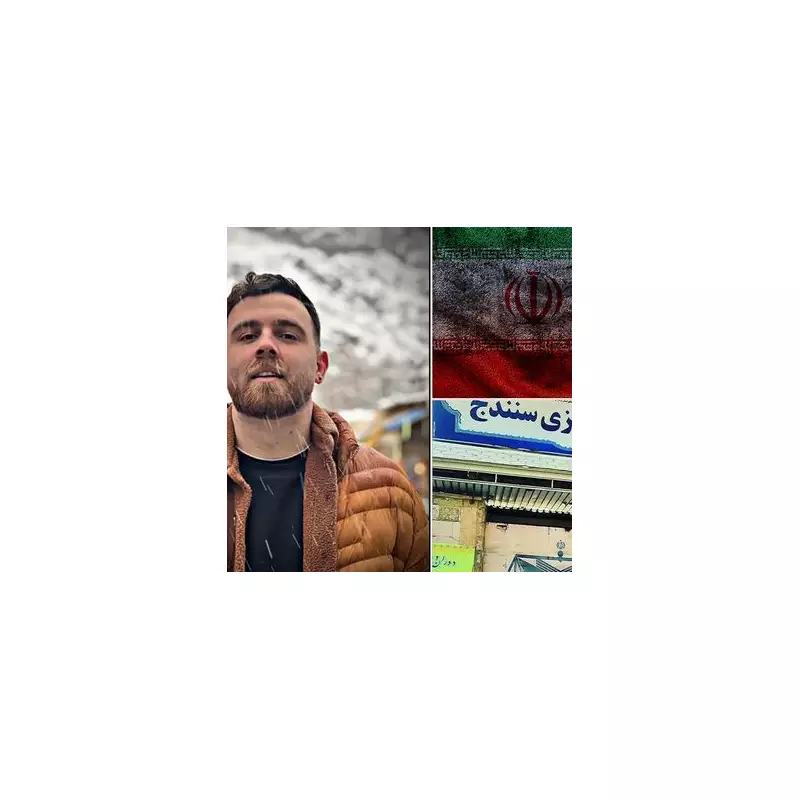
The execution of a young Iranian shopkeeper, sentenced to death following the country's recent wave of anti-government protests, has been postponed at the final hour, plunging him and his family into a state of cruel uncertainty.
A Reprieve Under Shadow of Death
Erfan Sultani, a 26-year-old from Fardis near Tehran, was due to be hanged on 14 January. His death sentence was reportedly delayed following an intervention from US President Trump. However, the Iranian regime has indicated this is only a temporary stay, vowing harsh reprisals against protesters as nationwide demonstrations continue.
Sultani was arrested on 8 January and charged with moharebeh – "waging war against God". Under Iranian law, this is a capital offence frequently used against those perceived as threats to the state. His trial is said to have lasted just one hour, during which he was denied proper legal counsel and his lawyer was blocked from accessing his case file.

In a devastating blow, his family were reportedly granted only ten minutes to say goodbye after being warned the sentence was 'final'. The internet shutdown across Iran has slowed protests but also obscured the full scale of the crackdown, where thousands are believed to have been killed.
An Alarming Surge in State Killings
Sultani's case is tragically commonplace in the Islamic Republic. Iran carries out one of the highest numbers of executions globally, alongside China. A staggering 1,922 death sentences were implemented last year alone, a figure human rights groups state is double that of the previous year.
Since the 2022 Woman Life Freedom uprising, executions have "alarmingly surged," according to Human Rights Watch. Dissenters are often tried in "grossly unfair" Revolutionary Court proceedings on vague charges like "corruption on earth" (efsad-e fel-arz).
The primary execution sites are believed to be Ghezel Hesar, Raja’i Shahr in Karaj, and Sanandaj prisons, where punishments are often carried out publicly. Methods are designed to prolong agony. A spokesperson for Iran Human Rights described how hanging is frequently performed using cranes, leading to a slow strangulation that can take many minutes.
Psychological Torture and the Machinery of Fear
The regime's brutality extends beyond physical execution to systematic psychological torture. A harrowing 2013 letter from executed Sunni Kurdish man Hamed Ahmadi, released by Amnesty International, details his ordeal. Charged with "enmity against God," he described being held for over a month in a state of perpetual dread, in a room covered with notes from previous inmates on death row.
His family were misinformed of his death and held a funeral for him while he was still alive. "My family was executed with me over and over," he wrote. This tactic of uncertainty and last-minute, brief family visits is reported to be part of Sultani's experience.
Criminal psychologist Alex Iszatt explains this is a deliberate tool of political terror. "Being told you will be killed within hours, following a sham legal process, creates a psychological double trauma," he states. The abruptness forces the brain into an extreme survival state, swinging between hyper-anxiety and dissociation. For families, the suddenness is a psychological weapon, reinforcing their powerlessness and signalling the same fate could befall others.
A Broader Pattern of Brutality
While hanging is the most common method, Iranian law also sanctions execution by stoning, firing squad, beheading, and being thrown from a height. Prisons like Evin, where British nationals have been held on disputed charges, are infamous for "passive torture."
Former Evin hostage Anoosheh Ashoori described unbearable conditions: foul food, severe overcrowding, infestations of vermin, and a deliberate fostering of tension among inmates. Medical care was severely lacking, and communication was strictly controlled, with guards dictating what could be said during monitored calls.
The case of Erfan Sultani is a stark window into a regime that uses execution and psychological torment as central instruments of control. While his sentence is delayed, the pattern of state violence and the chilling statistics of death continue unabated, casting a long shadow over Iran's protest movement and its prisoners.