Finnish MP Convicted for Anti-Gay Remarks, Sparks Free Speech Debate
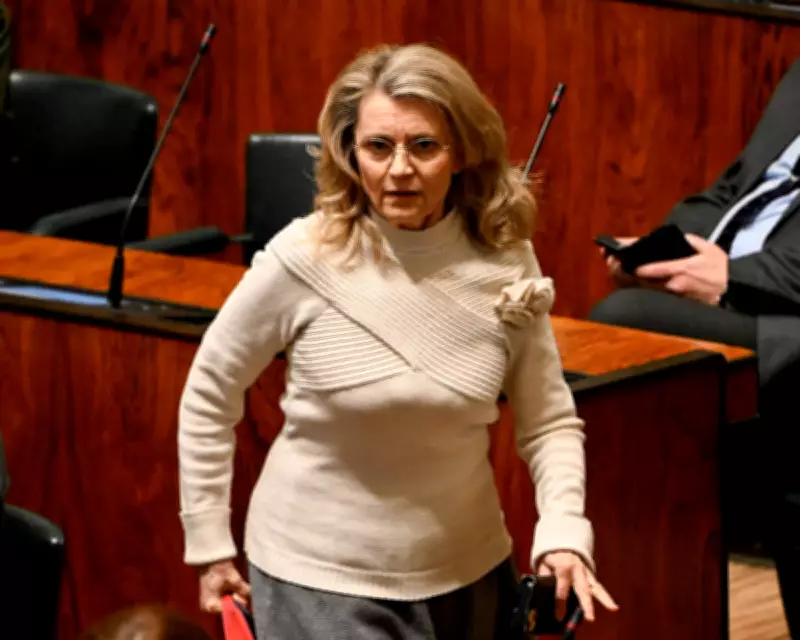
In a landmark ruling, Finnish Member of Parliament Päivi Räsänen has been found guilty by the Supreme Court of inciting hatred after she described homosexuality as a "developmental disorder." The Christian Democrat politician was fined €1,800, a decision that has ignited a fierce debate over free speech and legal boundaries in Finland and beyond.
Case Details and Court Ruling
The case centered on a pamphlet first published by Räsänen in 2004, which was later reproduced on the websites of the Luther Foundation Finland and the Finnish Evangelical Mission Diocese in 2007. The Supreme Court, in a narrow 3-2 vote on Thursday, convicted Räsänen for republishing this material on her Facebook page in 2019 and on her personal website the following year. The court explicitly ruled that her claim labeling homosexuality as a disorder of psychosexual development was factually incorrect and constituted a crime under Finnish law.
Räsänen expressed shock at the verdict, stating she is considering an appeal to the European Court of Human Rights. This conviction overturns earlier decisions by lower courts, which had acquitted her of all charges, highlighting the contentious nature of the legal proceedings.

International and Domestic Reactions
The case has drawn significant attention from conservative groups internationally. Räsänen received support from the US-based Alliance Defending Freedom, a conservative legal advocacy organization that has framed her prosecution as an example of censorship in Europe. This group has increased its global spending on litigation and campaigns following its success in overturning Roe v Wade in the United States, which previously protected abortion rights.
Domestically, the verdict prompted immediate criticism from right-wing politicians. Ministers from Räsänen's Christian Democrats and the nationalist Finns party called for legislative changes to protect freedom of speech. Justice Minister Leena Meri argued that the current law is "not sufficiently precise and especially not predictable," making it difficult for citizens to discern what speech is prohibited. Similarly, Deputy Prime Minister and Finance Minister Riikka Purra condemned the ruling, asserting that "freedom of speech took another serious hit today" through the Supreme Court's decision.
Legal and Political Implications
Prosecutor General Ari-Pekka Koivisto noted the significance of this ruling, telling Finnish broadcaster Yle that it represents a first-of-its-kind preliminary decision related to incitement crimes. He emphasized that the Supreme Court conducted a detailed assessment of fundamental rights, setting a precedent for future cases.
In contrast, Prime Minister Petteri Orpo of the National Coalition party declined to comment on the court's decision, maintaining that politicians should not interfere with judicial rulings. This stance underscores the broader political divide over how to balance free expression with protections against hate speech.
The case continues to resonate across Finland and internationally, raising critical questions about the limits of free speech, the role of international conservative movements, and the evolving legal landscape in Europe regarding LGBTQ+ rights and incitement laws.