
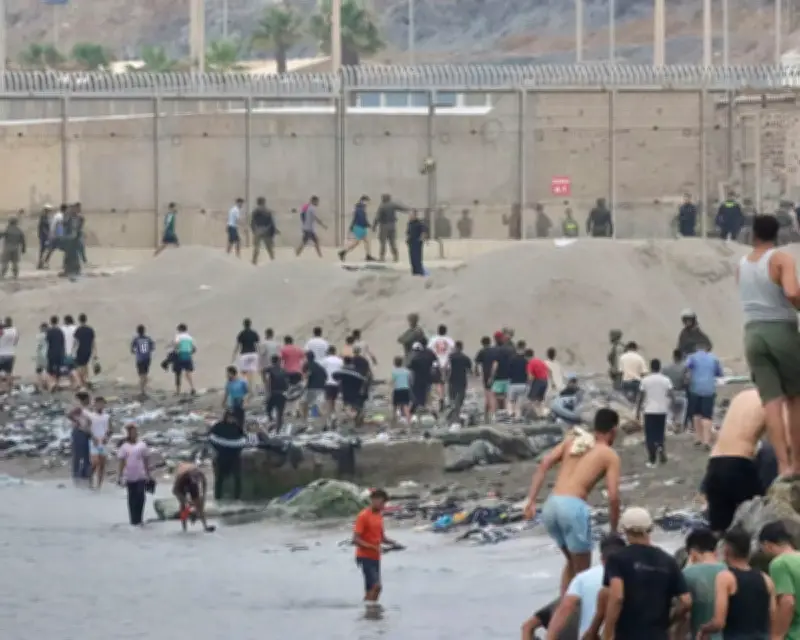
Last week, an estimated 72,000 migrants began crossing into Ceuta, a tiny Spanish enclave on Morocco's tip. Within 24 hours, most had returned home. At least 88 people died attempting the crossing, according to local officials. These facts are worth remembering as the story unfolds.
EU ministers downplay threat
At an emergency meeting yesterday, EU interior ministers sought to draw a line under Ceuta, insisting the passport-free Schengen area was never at risk from the arrival of migrants at this scale. Despite this, much media coverage has suggested events in Ceuta represent a territorial threat to Europe, sparking calls for greater border security.
This pattern has become familiar since the 2015 refugee crisis. As Europe has created fewer legal migration opportunities, people have resorted to illegal crossings, resulting in dangerous bottlenecks, human tragedies, and spectacular images that the right has seized upon to justify draconian policies.
Political opportunism and misinformation
Journalist Daniel Trilling, who writes about refugees and migration, spoke to the Guardian about the political actors capitalising on Ceuta. "By the time the images started circulating, the so-called crisis was over. But the political damage was already done," he said.
Videos of men clambering on rocks and walking through Ceuta's streets went viral, amplified by right-wing voices. Tommy Robinson posted on X: "Ceuta has been turned into a third world city in only 48 hours." Elon Musk posted: "all military age males means it is an invasion".
Why did so many cross?
A social media hoax, hinging on a Spanish supreme court ruling that migrants arriving by sea could not be summarily deported, played a pivotal role. Instagram posts suggested Spain's border with Morocco was opening up, TikTok videos showed where to swim, and Facebook users tracked coast guard patrols. Several accounts were deleted soon after.
As the hoax spread, Moroccan border surveillance dwindled, allowing thousands to cross. Some analysts suggest Rabat deliberately opened the border to protest Pedro Sánchez's visit to Algeria; others point to Morocco's relationship with the Trump administration.
Recurring pattern
"The central problem is that European border policies have given countries like Morocco a means of exerting pressure on European states," Trilling said. The EU has outsourced border policing to non-EU countries, which can loosen borders when they choose. Similar events occurred in 2021 when Morocco allowed 10,000 people to cross during a diplomatic row, and Turkey tried something similar on Greece in 2020.
The EU's hardline stance since 2015 has paradoxically created problems. Fortified security forces people into unsafe routes, and when breached, results in sudden influxes and alarming images used to justify further restrictions. "The performance of control very often leads to precisely the sense in which things are out of control," Trilling said.
Right-wing exploitation
Nigel Farage resurrected his "Breaking Point" poster from 2016, and he and Zia Yusuf described those who crossed as "fighting-age males." By Monday, Farage proposed using the Royal Navy to "stop the boats once and for all," a policy likely to violate international law.
This rhetoric influences centre-left parties. Germany's chancellor, Friedrich Merz, was among 22 signatories to a letter suggesting Spain's liberal migration policies compromise Europe's security. These policies have no application in Ceuta, but Merz faces far-right AfD in state elections.
What happens next?
In a speech from the White Cliffs of Dover, Andy Burnham pledged to be "relentless" in curbing small boats while building a system offering "safe routes." It's too early to say how he'll approach migration, or whether he'll reopen routes his predecessor closed.
"Time and again, the right has tried to claim that you can basically shut yourself off from the rest of the world and make these things go away," Trilling said. "But they don't go away. And Ceuta is a perfect example of that."




