
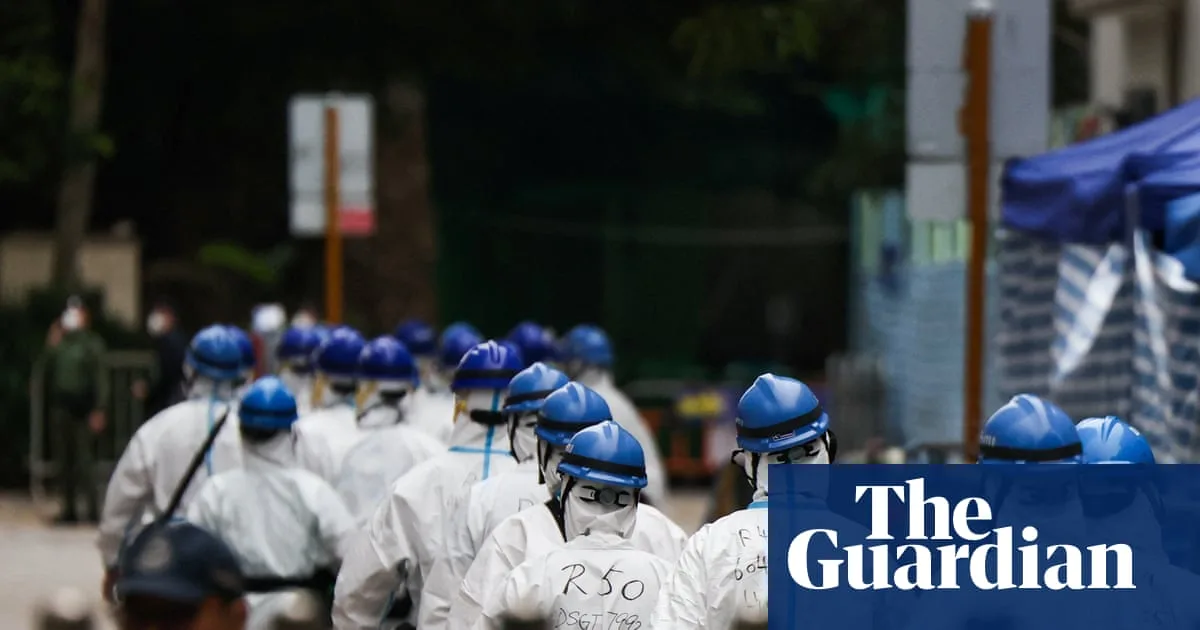
Beijing's security agency in Hong Kong has summoned international journalists to warn them against 'trouble-making' following critical coverage of a deadly apartment complex fire that killed at least 159 people. Senior reporters from several media outlets, including the New York Times and Agence France-Presse, were called to the Office for Safeguarding National Security (OSNS) for the meeting.
During the meeting, an OSNS official accused journalists of tainting the government by disregarding facts and spreading false information about the disaster relief and aftermath work. No specific examples were given, and the official did not take questions, according to AFP.
The fire on 26 November at the Wang Fuk Court estate in northern Hong Kong is the city's worst disaster in 75 years and the world's most fatal residential building fire since 1980. The complex was undergoing renovations later found to have used substandard, flammable materials, leading to public outcry.
In an online statement, the OSNS urged journalists not to cross the 'legal red line', warning that it would not tolerate anti-China or trouble-making elements. 'Don't say we didn't warn you,' the statement added.
The warning comes amid heightened tensions since the 2020 national security law, which has eroded Hong Kong's freedoms, including press freedom. The OSNS also accused some media of interfering with Hong Kong's legislative election, held under a revamped system that ensures only 'patriots' can hold office.




