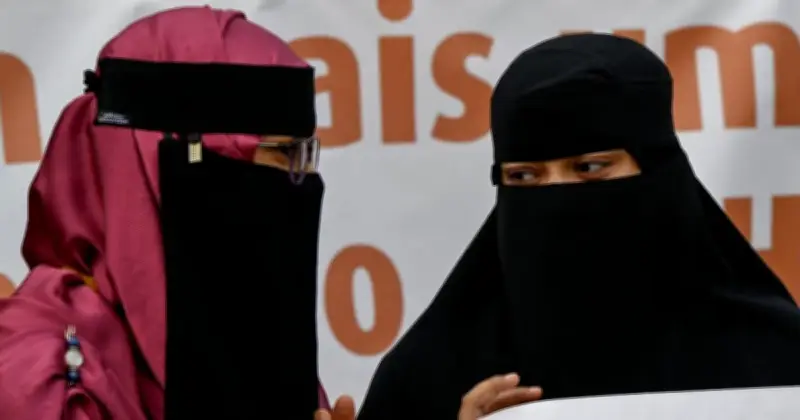
Several European countries enforce full or partial bans on full-face coverings, with rules differing between nations. In Britain, no such ban exists, although some parliamentarians, including Great Yarmouth MP Rupert Lowe, have voiced concern about garments such as the burqa and niqab.
Critics of these bans argue that women and girls should be free to wear what they choose, citing religious freedom and describing calls for a ban as prejudice. Supporters, however, insist that veils discourage integration and can present security risks.
France and Belgium lead with 2011 bans
France became the first country in Europe to ban full-face coverings in public places in 2011. The French government justified the move by arguing that such garments pose security risks and affect social interaction. Offenders can face a fine or re-education.
Belgium followed with its own ban in 2011. Anyone found to have broken the rule faces a fine or a stint in prison. Brussels insists the ban is required to ensure everyone can take part fully in society.
Austria, Denmark and the Netherlands follow
Austria introduced its "Anti-Face-Veiling Act" in October 2017, banning full-face veils. This was followed by a law in 2025 banning Islamic headscarves for schoolgirls under the age of 14.
Danish law prohibits clothing that conceals a person's face, a ban in force since 2018 that includes burqas and niqabs. The Danes argue the ban is necessary for transparency and so people can be identified in public.
Dutch law bans face veils in certain public places, including hospitals, schools and on public transport.