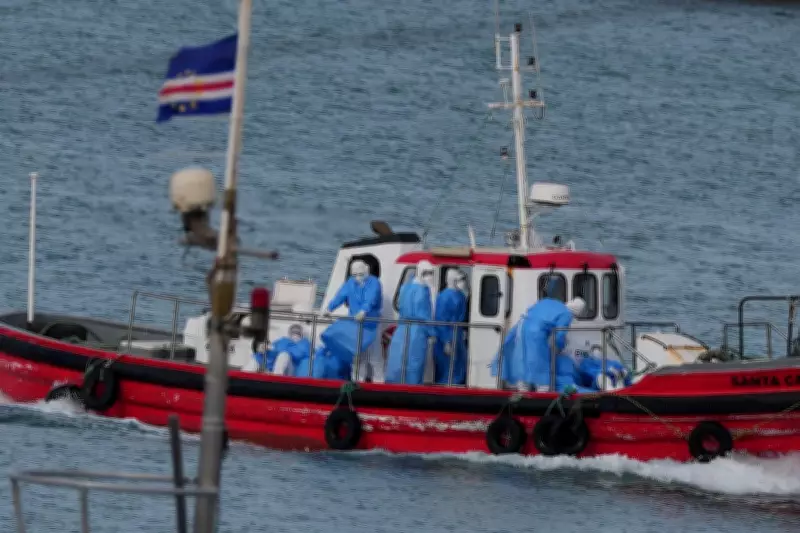
The Foreign Office has warned British travellers that hantavirus is now a health concern in Argentina, adding the virus to its travel advice for those heading to the South American nation. This follows an outbreak on the MV Hondius cruise ship, which departed from Argentina on 1 April.
WHO Confirms Five Cases
The World Health Organisation (WHO) has confirmed five cases of hantavirus in the outbreak, with three additional suspected cases. Three people have died: a Dutch couple and a German national. WHO Director-General Tedros Ghebreyesus stated that while no symptomatic passengers or crew remain on board, more cases may emerge due to the virus's incubation period of up to six weeks. He emphasised that the public health risk remains low.
British Nationals Affected
Four British nationals remain on the overseas territory of St Helena after disembarking the cruise on 24 April, before the outbreak was announced. Seven British passengers left the vessel there; two have returned to the UK to self-isolate, and the seventh individual has been contacted and is not currently in the UK. The UK Health Security Agency (UKHSA) is managing contacts locally.

Two Britons were medically evacuated from the ship. A 69-year-old man was taken to South Africa on 27 April and is receiving care in Johannesburg. Another Briton, Martin Anstee, 56, was flown to the Netherlands for specialist treatment. WHO officials report that both patients are improving.
Global Tracing Efforts
Countries worldwide are tracking passengers who disembarked before the outbreak was detected, as well as anyone in close contact with them. The ship's operator has contacted all passengers who left the vessel in St Helena, including individuals from at least 12 countries, among them seven British citizens and six US nationals.
Hantavirus Transmission and Symptoms
Hantavirus is typically spread by rodents but can, in rare cases, transmit from person to person. Symptoms resemble the flu, including fever, chills, muscle aches, and headache, appearing one to eight weeks after exposure. The infection can progress to hantavirus pulmonary syndrome, causing chest tightness and lung fluid buildup, or hemorrhagic fever with renal syndrome, leading to bleeding, high fever, and kidney failure.
WHO Assures Public
WHO officials stress that hantavirus is not the next COVID-19. Maria Van Kerkhove, director of epidemic and pandemic preparedness, stated: "This is not the next COVID, but it is a serious infectious disease. Most people will never be exposed to this." The risk to the general public is low, as the virus does not spread easily between people. The WHO is preparing guidance for when the ship docks in the Canary Islands on Saturday or Sunday, allowing remaining passengers to disembark and return home safely.