
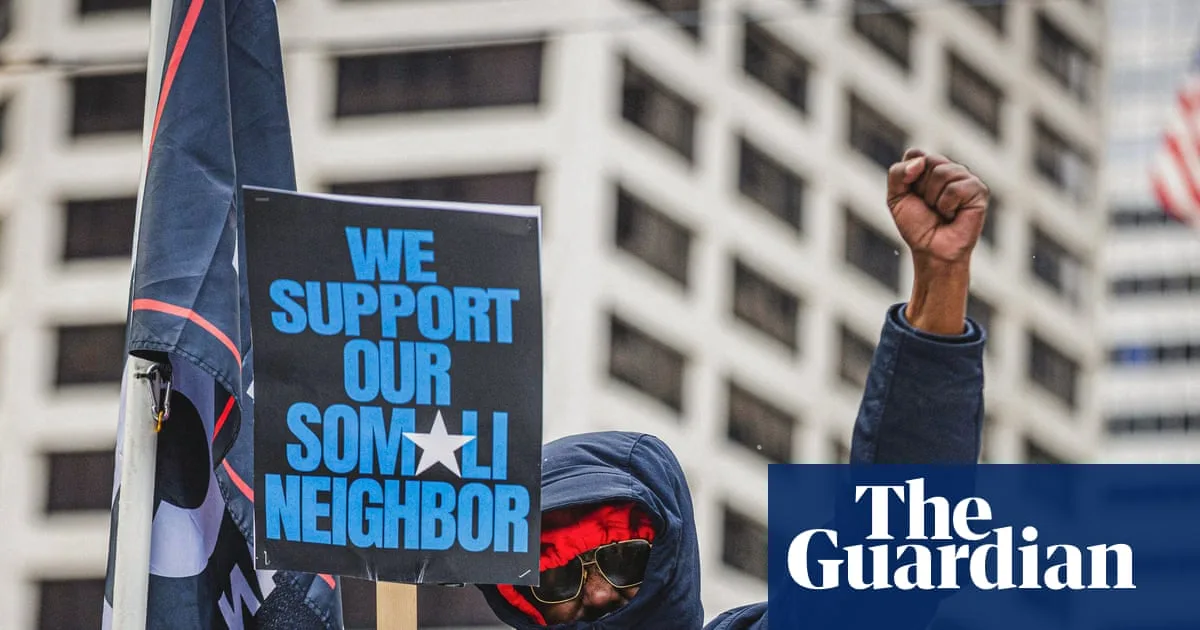
US President Donald Trump has intensified his attacks on the Somali American community, particularly in Minnesota, where over 100,000 people of Somali descent reside. Experts describe the situation as a ‘political thunderstorm’ that has engulfed Somalis, who have become convenient scapegoats for anti-immigration rhetoric. Trump has made derogatory comments about Somalis and Somalia, linking them to his broader immigration clampdown.
The targeting appears to be partly personal, stemming from Trump’s feud with Minnesota Congresswoman Ilhan Omar, who is of Somali origin. When Omar was recently attacked by a man spraying an unknown substance, Trump responded by calling her a fraud who ‘probably had herself sprayed’. According to Prof Idil Abdi Osman of Leicester University, the Somali community is targeted because they are Black, Muslim and immigrant, making them vulnerable to racism, Islamophobia and anti-immigrant sentiment.
While the sharpest manifestation is in the US, the effects ripple across the globally connected Somali diaspora. The diaspora is exceptionally close-knit due to forced migration from the Somali civil war, with many families split across countries. Jawaahir Daahir of Somali Development Services in the UK noted that strong family networks mean events in the US are felt elsewhere. ‘If my brother is having trouble in Minnesota, I am feeling it here in the UK,’ she said.
The impact on individuals is profound. Daahir highlighted that political discourse often overlooks the intimate consequences: heightened concerns about safety and belonging for young people, and parents’ fears for their children. A Minnesota-based academic, speaking anonymously, reported that some parents are afraid to send children to school lest they be picked up by ICE, even though most are US citizens. This climate has deepened anxiety and solidarity within the community.




